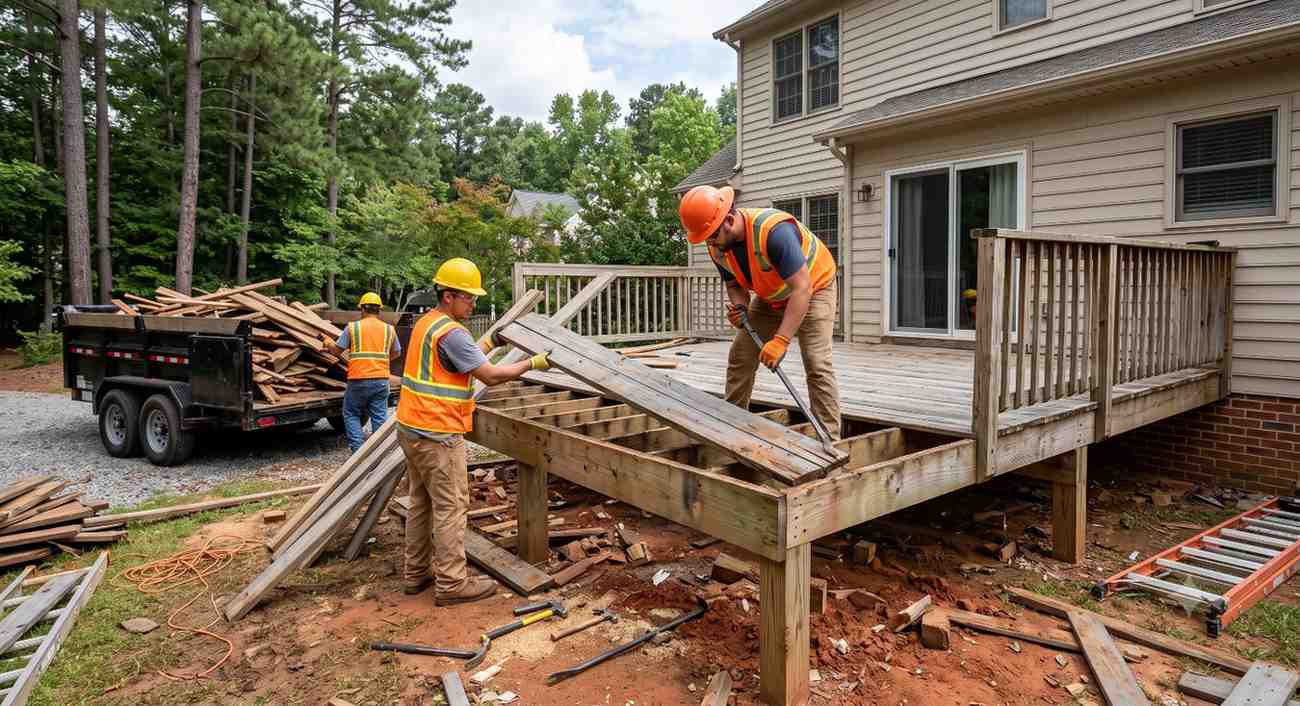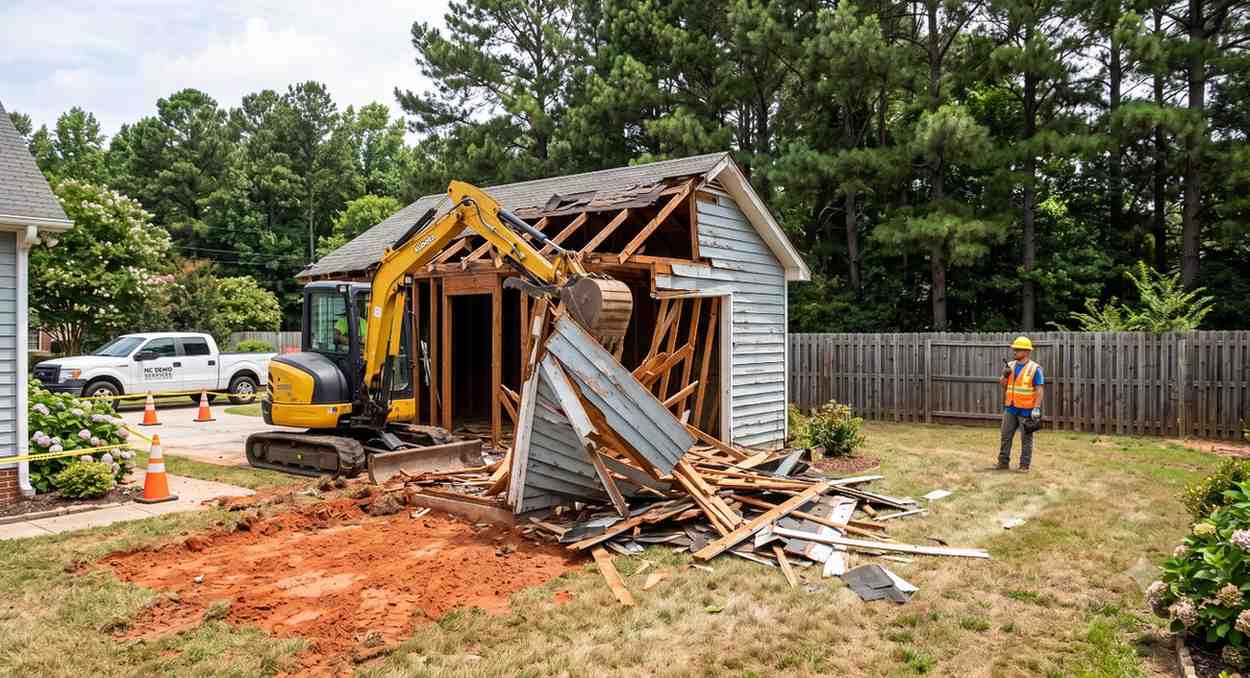
Shed removal cost in NC depends on the shed’s size, building material, foundation type, condition, and how much is hauled away. Small wood or metal sheds on skids cost the least; large sheds on a concrete slab or packed with junk cost more. Disassembly is cheaper than full demolition. A free on-site quote gives the most accurate number.
The old wooden shed in the backyard has a caved-in roof, the door won’t close, and it’s become a home for everything except the lawnmower. Or maybe you’re clearing space for a garden, a patio, or a bigger replacement, and the existing shed has to go.
Either way, the first question is what it’ll cost — and shed removal cost in NC isn’t one flat number. It depends on the shed’s size, what it’s built from, what’s sitting underneath it, and how much has to be hauled away.
Below, we break down every factor that sets the price for North Carolina homeowners. The aim is simple: help you budget with confidence and skip the mid-project surprises.
What Determines Shed Removal Cost in NC
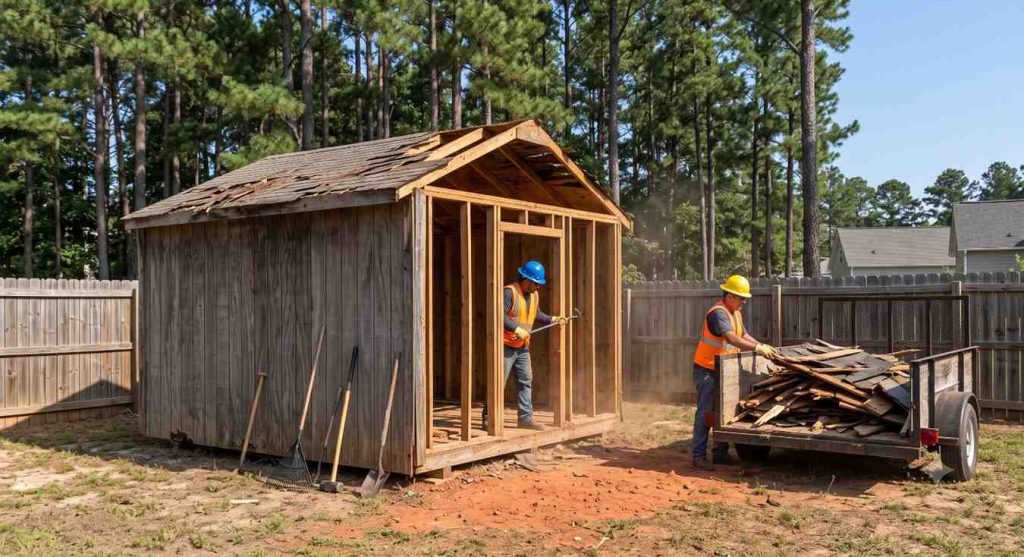
Most shed removals are priced after a quick look at the structure, because a handful of variables swing the number. Knowing them helps you read a quote instead of guessing.
Size is the first factor. A small 8×8 garden shed is a fraction of the work of a 12×20 workshop with a loft and a real roof.
Material changes both the method and the debris. A light vinyl or metal shed comes apart quickly, while a heavy wood-framed structure with shingles produces more weight to haul.
Foundation is the variable most people forget. A shed sitting on skids or gravel lifts away cleanly, but one anchored to a concrete slab adds breaking and concrete removal to the job.
Condition and contents matter too. A collapsing shed needs careful handling, and a structure stuffed with old tools, paint, and clutter adds volume that has to be hauled away as junk.
Access rounds it out. A shed tucked behind a narrow gate or fence may force hand work instead of a machine, which adds labor time.
These are the same core drivers behind larger outbuilding teardowns. If your project is bigger than a shed, the cost logic in our garage demolition cost in NC guide maps closely to what you’ll see here.
Shed Material and Foundation: The Two Biggest Variables
Two sheds of the same size can price out very differently based on what they’re made of and what’s underneath. These details move the quote more than almost anything else.
Wood-framed sheds are the most common in North Carolina backyards. The framing and siding break down quickly, and much of the clean lumber can be recycled rather than landfilled.
Metal and vinyl or resin sheds are usually the lightest lift. They often unbolt or disassemble panel by panel, and the metal is typically recyclable, which can trim disposal costs.
Prefab and kit sheds vary. Some come apart along their original seams; others were sealed and anchored in ways that take more effort to dismantle.
Then there’s the foundation, which is where costs can jump.
| Foundation Type | Removal Effort | Cost Impact |
|---|---|---|
| Skids or gravel pad | Lift and haul | Lowest |
| Paver or block base | Light disassembly | Low |
| Concrete slab/pad | Break, excavate, haul | Highest |
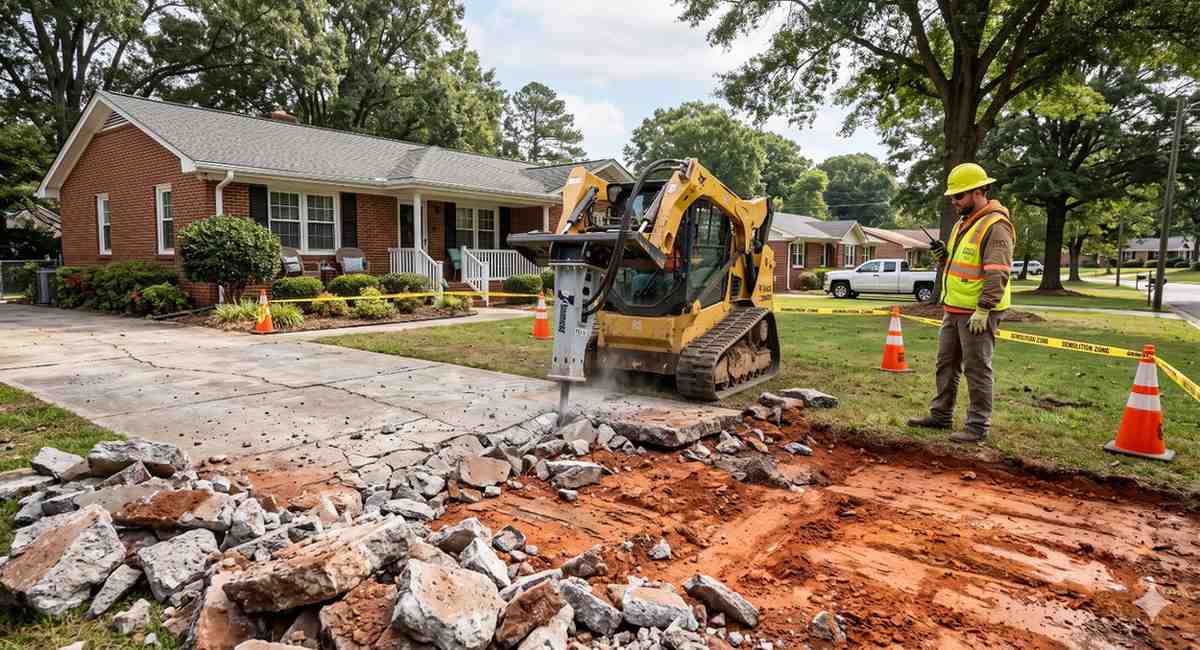
If your shed sits on a concrete pad you want gone, that slab is essentially its own mini-project. The same per-square-foot factors covered in our concrete driveway removal cost guide — thickness, reinforcement, and access — apply to a shed pad too.
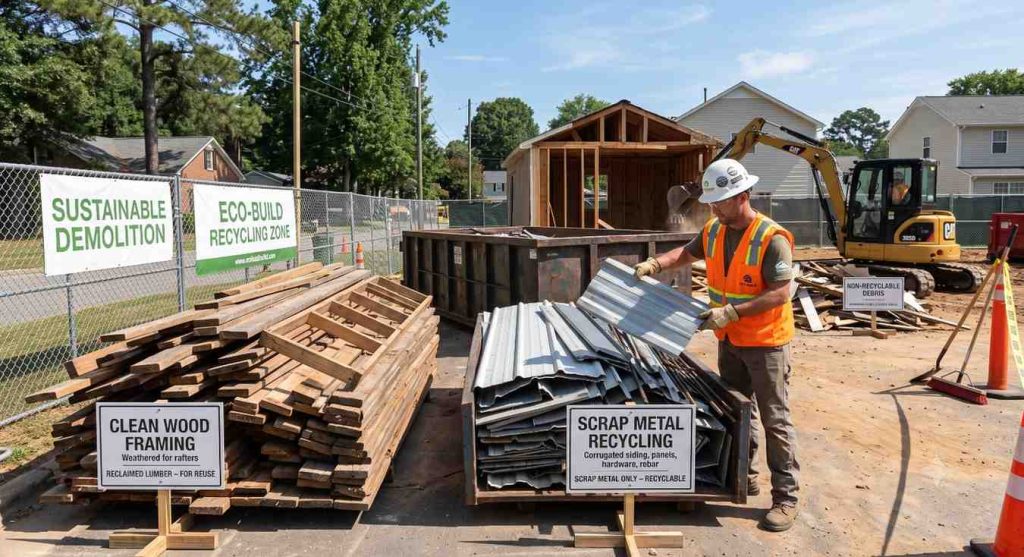
Recycling recovers some value here. Clean wood, scrap metal, and crushed concrete can frequently be diverted through concrete recycling and other channels instead of paying full landfill weight.
Disassembly vs Demolition (and What’s Inside)
How a shed comes down — and how full it is — shapes both your cost and your options. It’s worth thinking through before you book anything.
Disassembly keeps the structure mostly intact. If the shed is still sound, careful disassembly can let it be relocated, sold, or donated, and that often costs less than a full teardown.
Demolition is the route for sheds that are rotted, collapsing, or simply not worth saving. A crew breaks the structure down and hauls it off, which is faster but generates more debris.
Here’s a real-world scenario. Say you’ve got a sturdy 10×12 wood shed in a Piedmont North Carolina backyard you no longer need — disassembly might let a neighbor or charity take it, lowering your cost and keeping it out of the landfill.
Compare that to a storm-damaged shed with a sagging roof and years of stored junk inside. That job needs careful demolition plus removal of everything inside, which is why a packed, damaged shed costs more than its size alone suggests.
Clearing the contents first is the single biggest thing you control. The fuller the shed, the more the price climbs, since loose items are billed by the volume hauled away.
Permits, Utilities, and Disposal in North Carolina
A little prep keeps a shed removal legal, safe, and clean. Skipping it is how a simple job grows complicated.
Permit rules vary across North Carolina by city and county. Small accessory structures are often exempt, but anything tied to a slab, utilities, or an HOA may need a quick check with your local building department first.
If your shed has electrical service, plumbing, or a slab with footings, utilities must be disconnected before work begins. Call NC 811 before any digging so buried lines running to the shed are marked — a free step that prevents dangerous and costly mistakes.
Disposal is where the eco-conscious choices live. North Carolina recyclers accept many construction and demolition materials, and following NC DEQ guidance on construction debris keeps usable wood, metal, and concrete out of the landfill.
Donation is worth a look when the shed is still sound. A structure in good shape can sometimes go to a neighbor or local charity instead of the dump, which lowers both your cost and your footprint.
How to Keep Shed Removal Cost Reasonable
Trimming this bill is easy in the right places; cutting corners on disposal isn’t. These moves lower your cost the smart way.
Empty the shed first. Removing tools, clutter, and stored junk yourself means the crew isn’t billing volume to haul what you could have cleared.
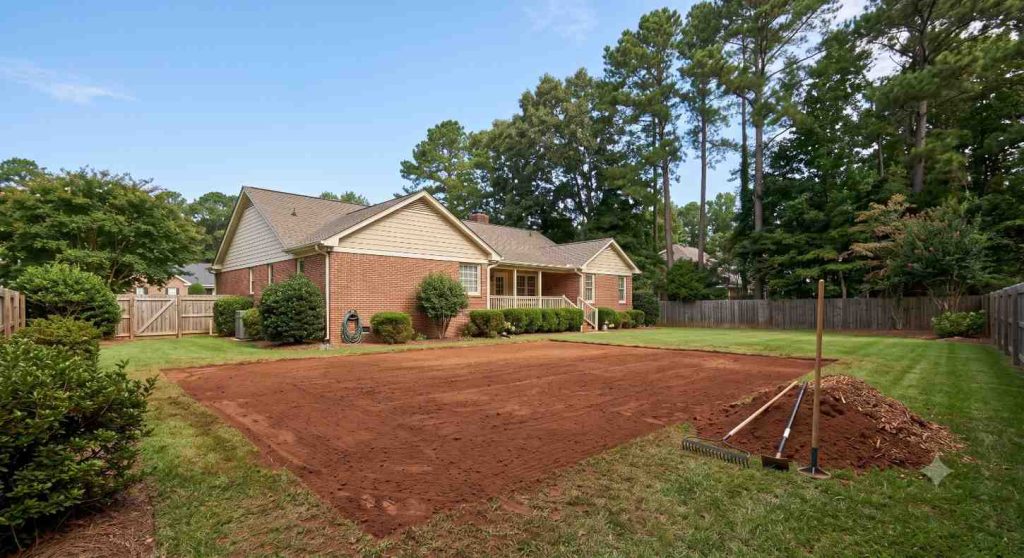
Decide the slab question early. If you don’t need buildable ground, leaving a concrete pad in place avoids the breaking and excavation that come with full removal.
Bundle related yard work. Clearing several projects at once spreads mobilization costs, and the same applies to bigger jobs like pool removal cost in NC or a larger teardown such as mobile home demolition cost in NC.
Get multiple quotes and compare scope, not just price. A bid that looks cheap but excludes hauling, slab removal, or final land grading often costs more once those line items reappear.
Key Takeaways
- Shed removal cost in NC is driven by size, material, foundation, condition, and contents — not a flat rate.
- Sheds on skids or gravel are cheapest to remove; sheds anchored to a concrete slab cost the most.
- Wood, metal, and vinyl sheds break down differently, and lighter materials usually cost less to haul.
- Disassembly is often cheaper than demolition and can let a sound shed be donated or relocated.
- Emptying the shed yourself is the easiest way to lower the price, since contents are billed by volume.
- Small accessory structures are often permit-exempt, but check locally if a slab, utilities, or an HOA is involved.
- Disconnect utilities and call NC 811 before any digging for slabs or footings.
- Recycling wood, metal, and concrete reduces disposal weight and your total cost.
Frequently Asked Questions
Q: How much does it cost to remove a shed in NC?
A: There’s no flat rate — cost depends on size, material, foundation type, condition, and how much is hauled away. A small wood or metal shed on skids sits at the low end; a large shed on a concrete slab or packed with junk costs more. A free on-site quote prices your specific shed accurately.
Q: Is it cheaper to disassemble or demolish a shed?
A: Disassembly is often cheaper for a sound shed, and it can let the structure be relocated, sold, or donated. Demolition is the practical route for rotted, collapsing, or storm-damaged sheds that aren’t worth saving, though it generates more debris to haul.
Q: Do I need a permit to remove a shed in North Carolina?
A: Often not for a small accessory structure, but it varies by city and county. If the shed is tied to a concrete slab, has utilities, or sits under HOA rules, check with your local building department first. A licensed contractor can confirm requirements for you.
Q: Does removing the concrete slab cost extra?
A: Yes. A shed on skids or gravel lifts away cleanly, but a concrete pad has to be broken, excavated, and hauled, which adds to the job. If you don’t need level, buildable ground, leaving the slab in place lowers your cost.
Q: What happens to my old shed and its materials?
A: A responsible crew recycles or donates what it can — clean wood, scrap metal, and crushed concrete are often diverted from the landfill. A sound shed may be donated to a neighbor or charity, while damaged structures are demolished and disposed of properly.
Q: How long does shed removal take?
A: Most residential sheds come out in part of a day, especially when emptied and accessible. Large sheds, heavy materials, a concrete slab, or tight backyard access can extend the timeline and raise the cost.
Get an Accurate Number for Your Shed
Every shed is different, so the only reliable way to know your cost is a quick look and a free quote. Carolina Demo & Removal has handled shed removal across North Carolina and South Carolina since 2010, with the crew, equipment, and recycling to do the job cleanly and safely.
We’ll assess the shed, explain what’s driving your number, and give you a clear, no-surprise estimate that includes hauling and cleanup. Call (888) 643-4199 or request a free quote online to get started.