Pool removal cost in NC depends on pool type, size, removal method, site access, and disposal. Above-ground pools cost the least; inground concrete and gunite pools cost the most. A full removal runs higher than a partial fill-in. Most North Carolina homeowners get a custom quote because no two backyards demolish the same way.
That old in-ground pool out back hasn’t held clean water in three summers, and now it’s a green hazard you mow around. Maybe the liner’s shot, the kids have moved out, or you’re done paying to maintain something nobody swims in.
Whatever the reason, the first question is almost always the same: what will this actually cost? Pool removal cost in NC isn’t a single number — it swings with pool type, removal method, site access, and how your yard gets restored afterward.
Below, we break down every factor that moves the price for North Carolina homeowners. By the end you’ll know how to budget with confidence and avoid the surprises that catch people off guard.
What Drives Pool Removal Cost in NC
No two pool projects price out the same, but the same handful of variables show up on every quote. Understanding them helps you read an estimate instead of just reacting to the bottom line.
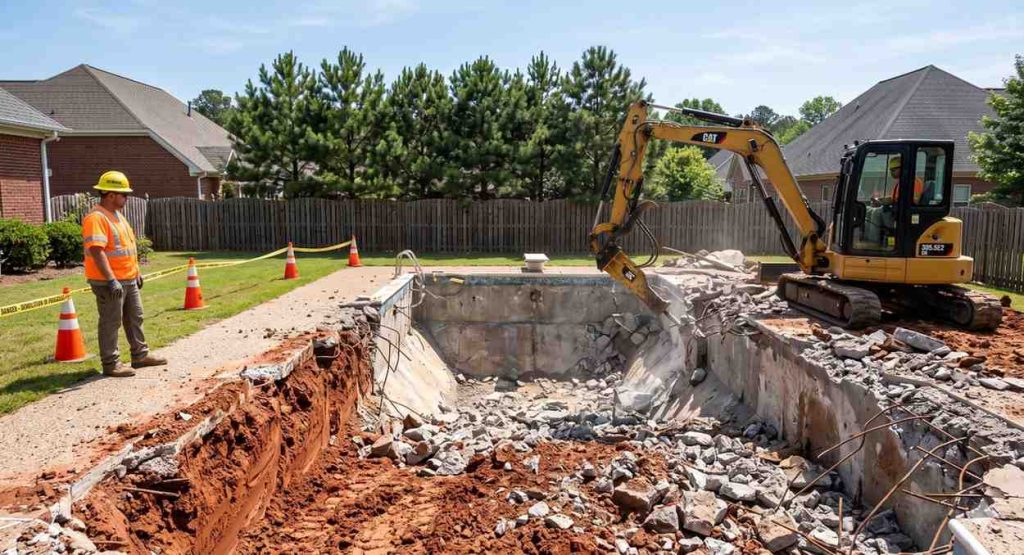
Pool type and material is the biggest driver. An above-ground pool is mostly disassembly and hauling, while an inground gunite or concrete shell takes excavators, breakers, and serious labor to demolish.
Vinyl-liner and fiberglass pools sit in the middle of the range. Concrete and gunite land at the top because breaking and hauling reinforced concrete is heavy, slow work that’s tough on machinery.
Size, depth, and water volume scale the job directly. A small 12-foot above-ground round is a different animal than a deep 20-by-40 inground with an attached spa.
Removal method matters just as much — a partial fill-in costs less than a full removal, which we’ll compare in detail below. Site access is the quiet cost multiplier: a narrow gate, a steep slope, tight setbacks, or a long haul path to the street all add time and equipment.
Disposal and restoration round out the quote. Hauling broken concrete and debris to a proper facility, importing clean backfill, compacting it, and grading the area for new sod are all real line items.
One factor specific to our region deserves a mention. North Carolina’s red clay holds water and compacts unevenly, so proper layering and compaction during backfill is essential to prevent settling later. For a full breakdown tailored to your yard, our pool removal team in North Carolina can walk the site and explain what’s driving your number.
Above-Ground vs Inground Pool Removal
These two jobs share a name and almost nothing else. Knowing which one you have sets your expectations for cost, timeline, and crew size.
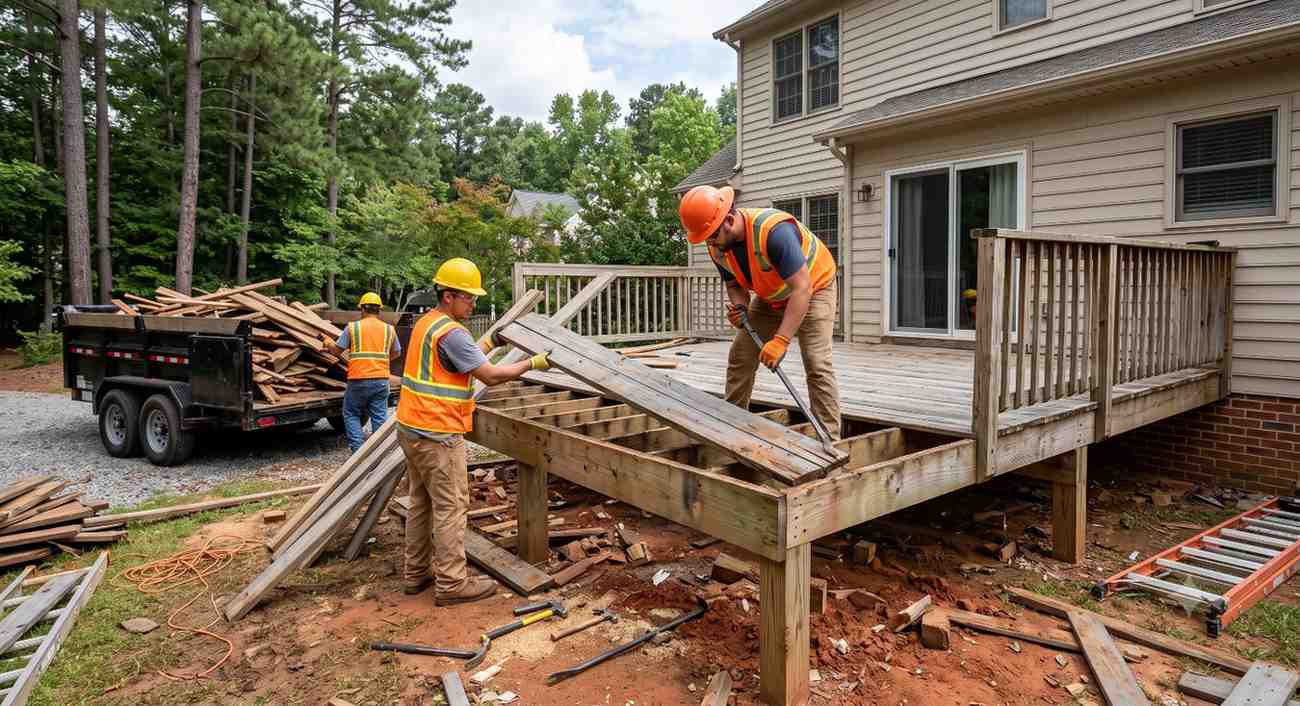
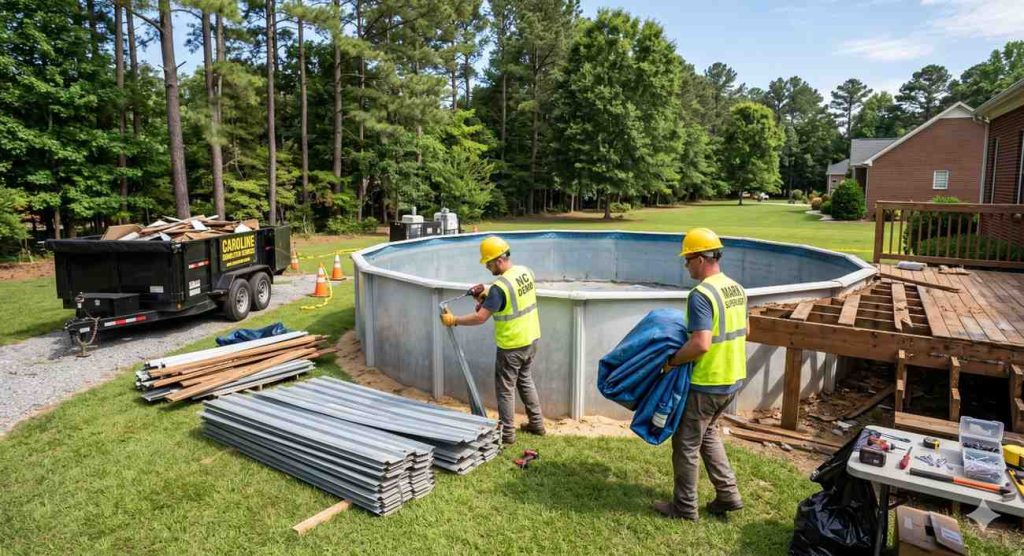
An above-ground pool is essentially a teardown-and-haul project. The frame unbolts, the liner pulls out, and components load onto a trailer — often in a single day, sometimes with a deck demolition added on if a wooden deck wraps the pool.
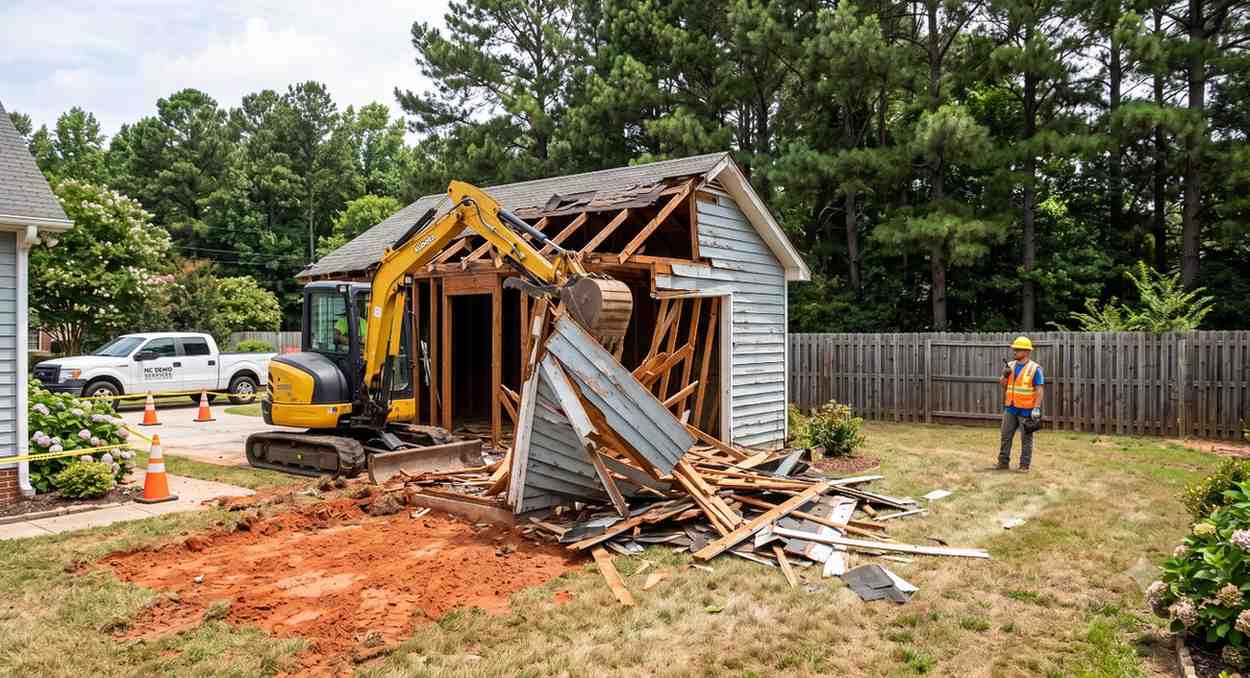
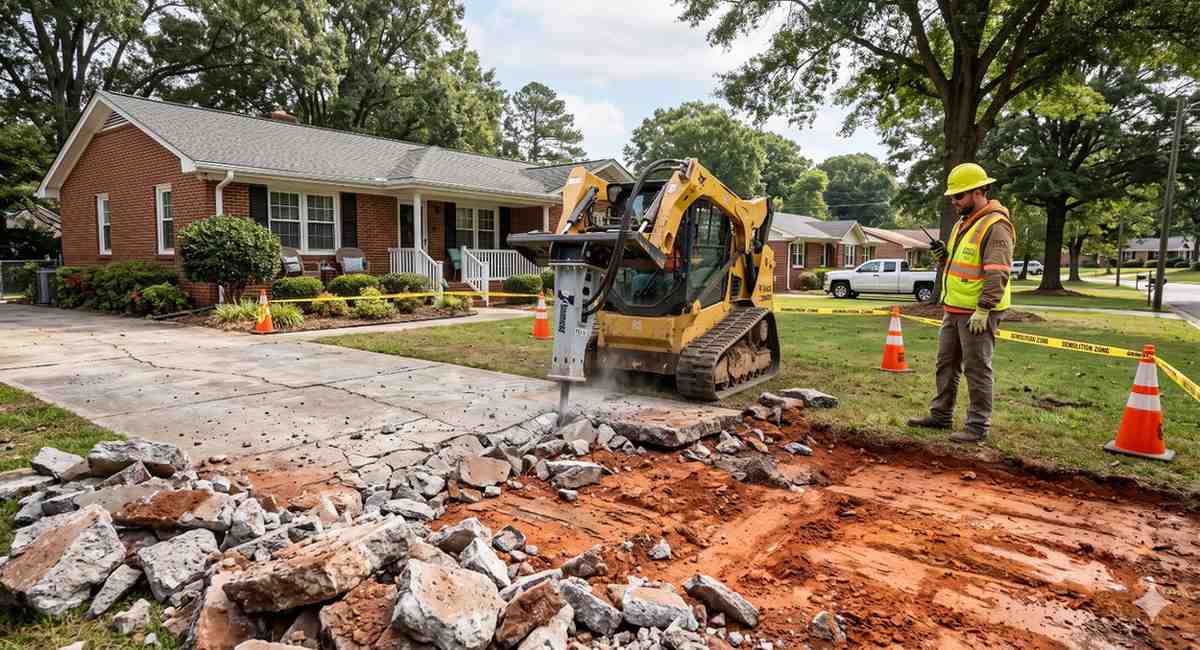
Inground pools are embedded several feet into the earth with concrete, rebar, plumbing, and electrical systems. Removing one means excavation, demolition, hauling, and rebuilding the cavity with engineered fill — a far bigger undertaking that drives the higher end of pool removal cost in NC.
| Factor | Above-Ground | Inground |
|---|---|---|
| Typical scope | Disassemble, haul, regrade surface | Excavate, demolish, backfill, compact |
| Equipment | Hand tools, truck/trailer | Excavator, breaker, skid steer, loader |
| Timeline on site | Often part of a day | Two to five working days |
| Permit likelihood | Lower (varies by city) | Higher (varies by county) |
| Relative cost | Lowest | Highest |
Here’s a real-world scenario. Say you’ve got a 24-foot above-ground oval in a Piedmont backyard with a small attached deck — that’s typically a quick, lower-cost job, and the deck just needs partial demo to free the pool wall.
Compare that to a 1970s gunite inground in an older Charlotte-area neighborhood. That project needs heavy machinery, debris hauling and junk removal, and careful site restoration — which is why the two quotes can look like they’re for different planets.
Partial Fill-In vs Full Removal: The Choice That Moves Your Price
For inground pools, this single decision affects both your upfront cost and what you can do with the land for years. It’s worth understanding before you sign anything.
A partial removal, often called a fill-in, breaks the top few feet of the pool walls, punches drainage holes in the floor, and backfills the cavity. It’s the faster, more budget-friendly path — generally meaningfully cheaper than a full removal.
A full removal pulls everything out: the entire shell, steel, plumbing, and electrical get demolished and hauled away, then the hole is filled with compacted engineered backfill. It costs more and takes longer, but it leaves clean, buildable, restriction-free ground.
| Consideration | Partial Fill-In | Full Removal |
|---|---|---|
| Upfront cost | Lower | Higher |
| Timeline | Faster (often 1–3 days) | Longer (often 2–5 days) |
| Future building over footprint | Usually restricted | Typically allowed |
| Resale disclosure | Required | Cleaner story for buyers |
| Settling risk | Higher if compaction is poor | Lower with engineered fill |
The catch with a partial fill-in is permanence. Because pool material stays buried, most areas treat that footprint as non-buildable, and you’ll generally have to disclose it to future buyers.
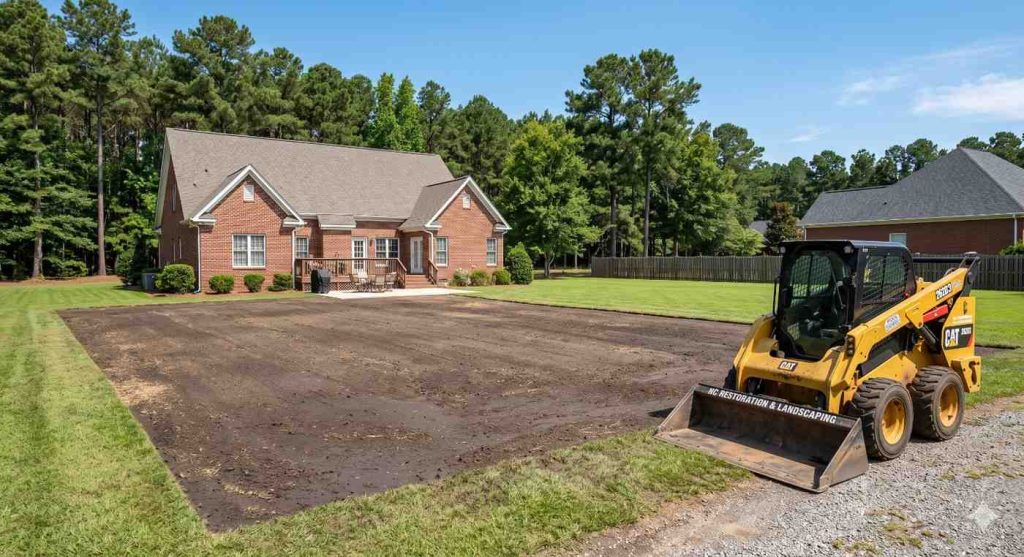
A full removal sidesteps both issues. If you ever plan a patio, addition, garage, or a fresh landscape over that spot, full removal plus proper land grading is usually the better long-term call. The right excavation and backfill work is what keeps that restored yard stable for decades.
Permits, Utilities, and Site Prep in North Carolina
Demolition isn’t just smashing concrete — the prep work protects you legally and physically. Skipping it is how projects turn expensive in a hurry.
Permit rules vary across North Carolina by county and municipality, and inground removals are more likely to require one than above-ground jobs. A reputable contractor pulls the right demolition permit and confirms local requirements before the crew shows up.
Before anyone digs, call NC 811 — the free statewide locator service marks buried utilities so excavation doesn’t strike a gas, power, or water line. This step is non-negotiable for any inground job with an electrical pad or buried plumbing.
Utilities also have to be safely disconnected first. Electrical to the pump and lights, any gas to a heater, and the water and plumbing lines all need proper shutoff before demolition begins.
Draining the water is its own task with rules attached. Chlorinated pool water shouldn’t dump into storm drains, so follow NC Department of Environmental Quality guidance — dechlorinated water is typically discharged slowly onto your own lawn, never toward storm sewers or a neighbor’s property.
One more local courtesy: many North Carolina HOAs want advance notice before a pool removal, especially when it changes visible landscaping. A quick check now avoids a fine later.
How to Keep Pool Removal Cost Reasonable Without Cutting Corners
Saving money on a teardown is smart; cutting corners on backfill is not. These moves lower your cost the right way.
Get multiple quotes and compare scope, not just price. A cheaper number that skips proper compaction or disposal often costs more when the yard settles into a depression two winters later.
Bundling services usually beats hiring piecemeal. When the same crew handles demolition, concrete recycling, debris hauling, and grading, you avoid paying separate mobilization fees for each.
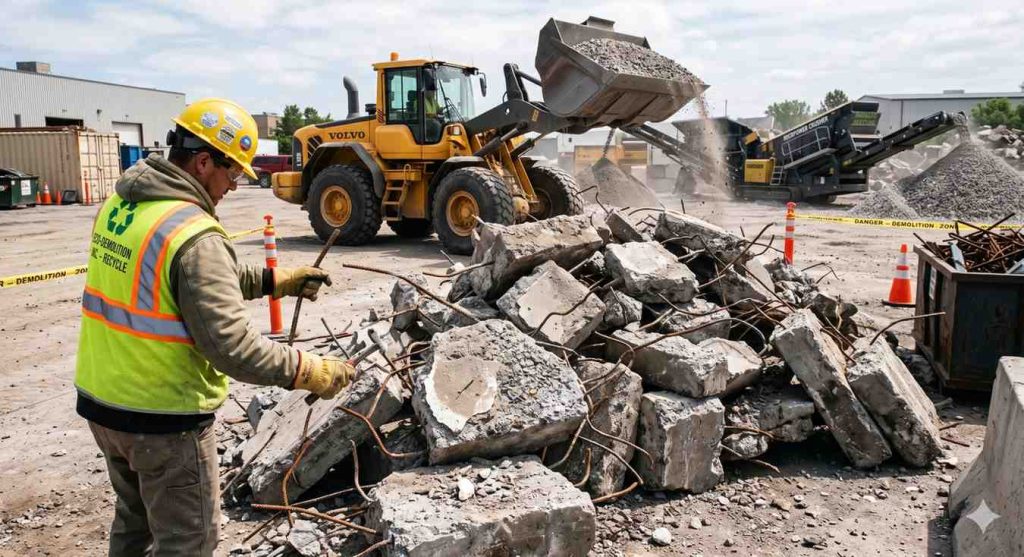
Recycling is both greener and often cheaper than straight disposal. Crushed concrete, steel rebar, and clean fill can frequently be reused or recycled, which trims hauling and landfill costs.
Match the method to your real goal. If you’ll never build on that footprint and just want the hazard gone, a partial fill-in may be plenty — but if resale or future construction is on the horizon, full removal protects your property value.
Key Takeaways
- Pool removal cost in NC is driven mostly by pool type, size, removal method, site access, and restoration — not a flat rate.
- Above-ground pools are the cheapest and fastest to remove; inground concrete and gunite pools sit at the top of the range.
- A partial fill-in costs less than a full removal but limits future building and requires disclosure to buyers.
- A full removal costs more yet leaves clean, buildable ground with no disclosure baggage.
- North Carolina’s red clay makes proper compaction critical — poor backfill leads to settling and sinkholes.
- Always call NC 811 before digging, disconnect utilities, and follow NC DEQ rules when draining the water.
- Check HOA and local permit requirements early, since they vary by city and county across the state.
- Recycling concrete and steel plus bundling services is the safe way to lower your total cost.
Frequently Asked Questions
Q: How much does it cost to remove an inground pool in North Carolina?
A: There’s no flat rate — cost depends on pool type, size, whether you choose partial or full removal, site access, and restoration. Concrete and gunite pools cost the most because they’re labor- and equipment-intensive. The most reliable way to budget is a free on-site estimate, which prices your specific yard rather than a generic average.
Q: Is partial pool removal cheaper than full removal?
A: Yes. A partial fill-in breaks the top of the shell, drains the floor, and backfills the cavity, so it uses less labor, hauling, and fill than a full removal. The trade-off is that the footprint is usually non-buildable and must be disclosed when you sell.
Q: Do I need a permit to remove a pool in NC?
A: Often, yes — especially for inground pools — but requirements vary by county and municipality across North Carolina. Above-ground removals frequently need less. A licensed contractor confirms local rules and pulls the correct demolition permit before work starts.
Q: How long does pool removal take?
A: An above-ground pool can often come out in part of a day. An inground removal typically runs two to five working days, depending on size, method, access, and how much restoration the site needs.
Q: Can I build on the spot where my pool used to be?
A: Only reliably after a full removal with properly compacted, engineered backfill. A partial fill-in leaves material underground that generally can’t support new structures, which is why most areas treat that footprint as non-buildable.
Q: What happens to the old pool concrete and debris?
A: A responsible contractor sorts and recycles what it can — concrete is often crushed and reused, and steel is recycled — while the rest is hauled to a proper facility. Recycling reduces landfill waste and can help keep your hauling costs down.
Get a Real Number for Your Yard
Every backyard demolishes differently, so the only accurate way to know your pool removal cost is a walk-through and a free quote. Carolina Demo & Removal has handled residential pool removals across North Carolina and South Carolina since 2010, with the equipment, permits, and eco-friendly recycling to do the job safely and clean.
We’ll explain your options — partial or full, above-ground or inground — and give you a clear, no-surprise estimate. Call (888) 643-4199 or request a free quote online to get started.