Concrete driveway removal cost per square foot in NC depends on slab thickness, whether it’s reinforced with rebar or wire mesh, site access, and disposal. Thin, unreinforced slabs with easy machine access sit at the low end of the per-square-foot range. Reinforced, thick, or hard-to-reach driveways cost more. A free on-site quote gives the most accurate number.
Cracks have spread across the driveway, a slab has heaved up by the garage, and you’re ready for a fresh pour — but the old concrete has to come out first. The moment you start pricing it, you’ll see contractors quote concrete driveway removal cost per square foot, and that number can swing a lot.
Two driveways of the same size can price out very differently depending on what’s hidden inside the slab and how easy it is to reach. Below, we explain exactly what moves that per-square-foot figure for North Carolina homeowners.
By the end you’ll understand why one quote beats another and how to keep your cost reasonable without cutting corners.
What Determines Concrete Driveway Removal Cost Per Square Foot
Contractors price most driveway demolition by the square foot, but that rate isn’t fixed — it climbs or drops based on a handful of variables. Reading those variables helps you compare bids instead of just chasing the lowest number.
Slab thickness is a big one. A standard four-inch residential driveway breaks up quickly, while a six-inch slab poured for heavy trucks takes more equipment and time, pushing the per-square-foot rate up.
Reinforcement is the factor most homeowners forget. Concrete with rebar or wire mesh has to be cut apart, and the steel costs more to haul and dispose of — more on that in the next section.
Site access quietly drives the price. A wide, open driveway lets a skid steer or excavator work fast, while a narrow gate, a steep slope, or tight landscaping may force hand tools, which roughly doubles labor time.
Project size works in your favor as it grows. Mobilization and setup costs spread across more square footage, so larger driveways often have a lower per-square-foot rate than small slabs.
Disposal and hauling round out the quote. Broken concrete is heavy, dump fees are charged by weight, and distance to the nearest facility all factor in — though concrete recycling can offset some of that.
One more variable is simply who you hire. A licensed, insured crew that handles the full scope — demolition, concrete removal, hauling, and site cleanup — protects you from the surprise charges that come with a low bid that leaves gaps.
Reinforced vs Unreinforced: The Rebar Factor
This is the single biggest reason two same-size driveways quote differently. It’s worth understanding before you read your estimate.
Unreinforced concrete is just a plain slab. It breaks fast under a hydraulic breaker, hauls cleanly, and sits at the lower end of the per-square-foot range.
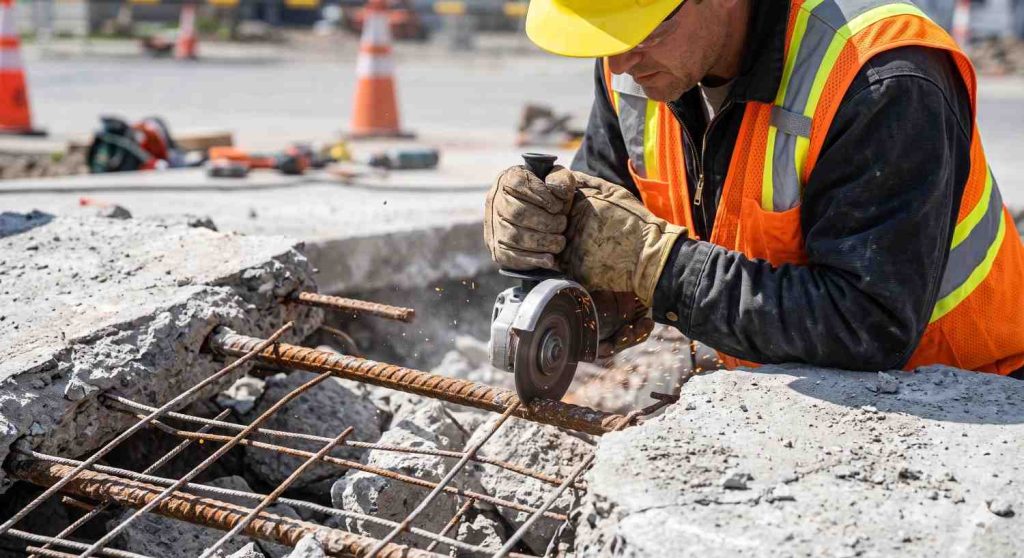
Reinforced concrete contains rebar or wire mesh that holds the slab together. Crews have to break the concrete and cut the steel, then separate and dispose of it, which adds labor, equipment, and disposal weight.
| Factor | Unreinforced Slab | Reinforced Slab |
|---|---|---|
| What’s inside | Plain concrete | Rebar and/or wire mesh |
| Demolition speed | Faster | Slower |
| Steel handling | None | Cut, separate, recycle |
| Disposal weight | Lighter | Heavier |
| Per-square-foot rate | Lower end | Higher end |
Here’s a real-world scenario. Say you’ve got an older single-car driveway in a Piedmont North Carolina neighborhood, poured thin with no rebar — that’s typically a quick, lower-cost job a machine can chew through in hours.
Compare that to a thick, mesh-reinforced two-car driveway built for an RV or work trucks. That slab needs more breaking, more steel cutting, and heavier debris hauling, which is why its per-square-foot rate lands higher even though it’s the same material.
What the Per-Square-Foot Price Actually Covers
A per-square-foot quote isn’t one charge — it’s several phases bundled into a single rate. Knowing what’s inside that number tells you whether a low bid is missing something.
Labor usually makes up the largest share. Breaking concrete, cutting reinforcement, and loading debris is physical, skilled work, and the rate reflects whether a machine or hand tools are doing it.
Equipment is the next piece. A driveway removal often calls for a skid steer or excavator with a breaker attachment, plus saws for clean edge cuts where the new pour will meet existing concrete or asphalt.
Hauling and disposal close it out. Concrete is dense and heavy, dump facilities charge by the ton, and that weight is exactly why recycling crushed concrete can trim the total.
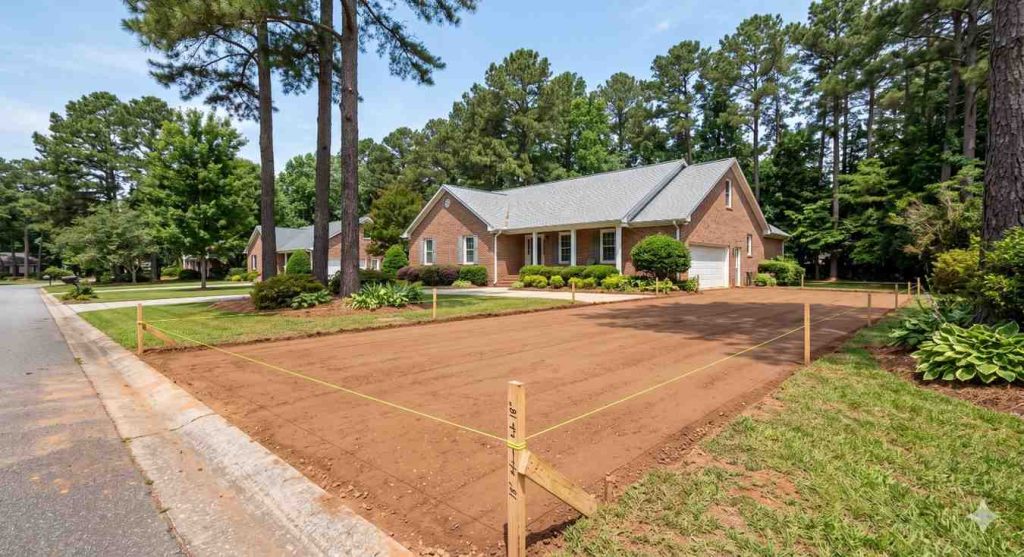
Many quotes also include basic site restoration. Once the slab is gone, the exposed sub-base often needs land grading so the area drains correctly and is ready for a new pour, sod, or gravel.
Ask any contractor what their per-square-foot rate includes. A complete number covering demolition, hauling, disposal, and cleanup beats a cheaper figure that leaves you arranging debris removal on your own afterward.
Permits, Utilities, and Right-of-Way in North Carolina
Driveway removal looks simple, but the prep work keeps you legal and safe. Skipping it is how a budget job turns expensive fast.
Permit rules vary across North Carolina by city and county, and they’re more likely to apply when the work touches a public street or right-of-way. Always confirm requirements with your local building department before the crew starts.
If your driveway connects to a state-maintained road, the apron in the right-of-way may fall under NCDOT driveway permit rules. A reputable contractor checks this so a removal-and-replace doesn’t run afoul of state encroachment requirements.
Before any digging or edge excavation, call NC 811 — the free statewide locator marks buried gas, power, water, and communication lines. This step matters because driveways frequently run over or beside shallow utilities.
Utility location protects more than the crew. Striking a buried line during excavation can mean dangerous repairs and fines, all of which a quick free locate request prevents.
How to Lower Your Concrete Driveway Removal Cost
Trimming this bill is smart; cutting corners on disposal or grading is not. These moves lower your cost the right way.
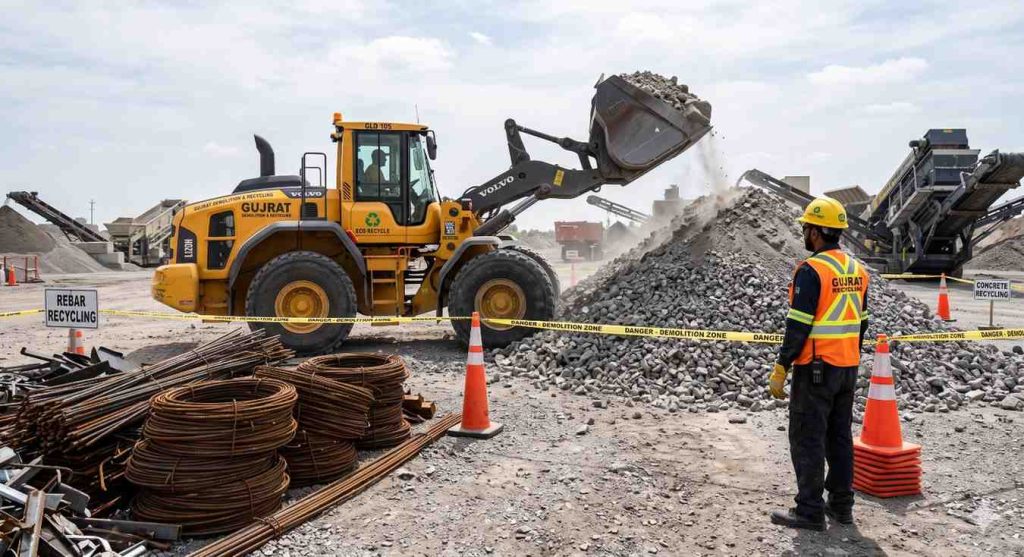
Recycle the concrete instead of landfilling it. Crushed concrete can often be reused as fill or base material, which reduces both hauling weight and dump fees — and it’s the greener choice.
Bundle removal with your new install. When the same crew handles demolition and preps the site for the next contractor, you avoid paying separate mobilization charges twice.
Give the crew machine access. Clearing gates, fences, and landscaping so a skid steer can reach the slab keeps the job off hand tools, which is where labor hours pile up.
Get multiple quotes and compare scope, not just price. A bid that looks cheap but excludes hauling, disposal, or grading often costs more once those line items reappear.
Key Takeaways
- Concrete driveway removal cost per square foot in NC is driven by thickness, reinforcement, access, project size, and disposal — not a flat rate.
- Reinforced concrete with rebar or wire mesh costs more per square foot than a plain unreinforced slab.
- Thicker slabs and hard-to-reach driveways push the rate up because they demand more equipment and time.
- Larger driveways often have a lower per-square-foot rate thanks to spread-out setup costs.
- A complete quote should cover demolition, hauling, disposal, and basic grading — confirm what’s included.
- Recycling crushed concrete and bundling removal with a new pour are the safe ways to lower your cost.
- Call NC 811 before any digging, and confirm permits — including NCDOT rules for aprons on state roads.
- Good machine access is the single easiest way to keep labor hours and cost down.
Frequently Asked Questions
Q: How is concrete driveway removal cost per square foot calculated in NC?
A: Contractors weigh slab thickness, whether it’s reinforced with rebar or mesh, how accessible the driveway is, project size, and disposal weight. Thin, unreinforced slabs with easy machine access fall at the low end; thick, reinforced, or hard-to-reach driveways land higher. A free on-site quote prices your specific driveway accurately.
Q: Does rebar increase the removal cost?
A: Yes. Reinforced concrete has to be broken and have its steel cut and separated, which adds labor, equipment, and disposal weight. Removing a reinforced driveway almost always costs more per square foot than an identical unreinforced slab.
Q: Do I need a permit to remove a concrete driveway in North Carolina?
A: Sometimes — requirements vary by city and county, and are more likely when the work touches a public street or right-of-way. If your driveway apron meets a state-maintained road, NCDOT rules may apply. A licensed contractor confirms local requirements before starting.
Q: Can the old concrete be recycled?
A: Yes, and it’s often the smarter choice. Crushed concrete can frequently be reused as fill or base material, which lowers hauling weight and dump fees while keeping debris out of the landfill.
Q: How long does driveway removal take?
A: Most residential driveways come out in a day or less when a machine has clear access. Thicker slabs, heavy reinforcement, or hand-tool-only access can stretch that timeline and raise the cost.
Q: Should I remove the driveway myself to save money?
A: For a small, thin, unreinforced slab, some homeowners rent tools and try it. For anything thick, reinforced, or near utilities, a professional crew is safer and usually faster — and they handle hauling, disposal, and grading you’d otherwise arrange yourself.
Get an Accurate Number for Your Driveway
Every slab is different, so the only reliable way to know your concrete driveway removal cost per square foot is a quick walk-through and a free quote. Carolina Demo & Removal has handled driveway and concrete demolition across North Carolina and South Carolina since 2010, with the equipment, permits, and recycling to do the job cleanly and safely.
We’ll measure the site, explain what’s driving your rate, and give you a clear, no-surprise estimate that includes hauling and cleanup. Call (888) 643-4199 or request a free quote online to get started.