Executive Summary: Key Statistical Baselines
- Procuring comprehensive operational estimates reveals price variances of up to 40% among regional contractors, underscoring the necessity of strict quotation audits.
- The baseline demolition cost per sq ft in NC currently ranges from $4 to $15, with median residential projects stabilizing between $4 and $10.
- Subsurface extraction, including foundation removal, increases baseline expenditures by $1 to $3 per square foot.
- Unidentified hazardous materials, such as asbestos, escalate targeted area pricing up to $25 per square foot due to mandatory environmental compliance protocols.
- Rural North Carolina properties generally reflect a 15% to 25% reduction in per-square-foot demolition costs compared to high-density urban zones.
- Municipal permitting ($100 to $500) and variable debris-disposal tonnage fees often cause initial budget overruns if omitted from preliminary forecasts.
The Fiscal Reality of Demolition Pricing Structures
Property owners evaluating the demolition cost per sq ft in NC frequently encounter pricing models that lack transparency. Standard quotations often omit critical logistical variables, leading to severe budget overruns. Accurately projecting demolition expenditures requires analyzing a complex matrix of structural density, site accessibility, and regulatory compliance, rather than relying solely on spatial footprint metrics.
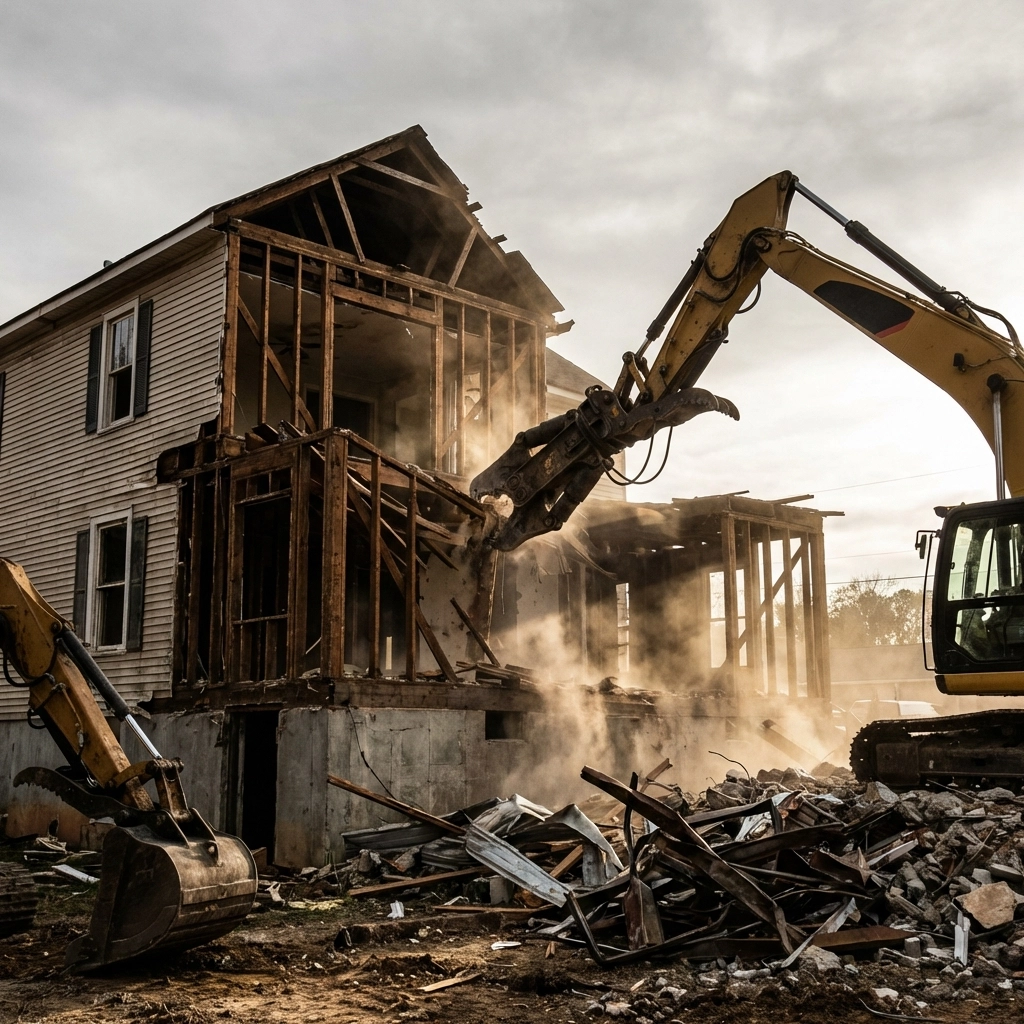
Primary Variables Influencing Demolition Cost Per Sq Ft in North Carolina
Square Footage and Economies of Scale
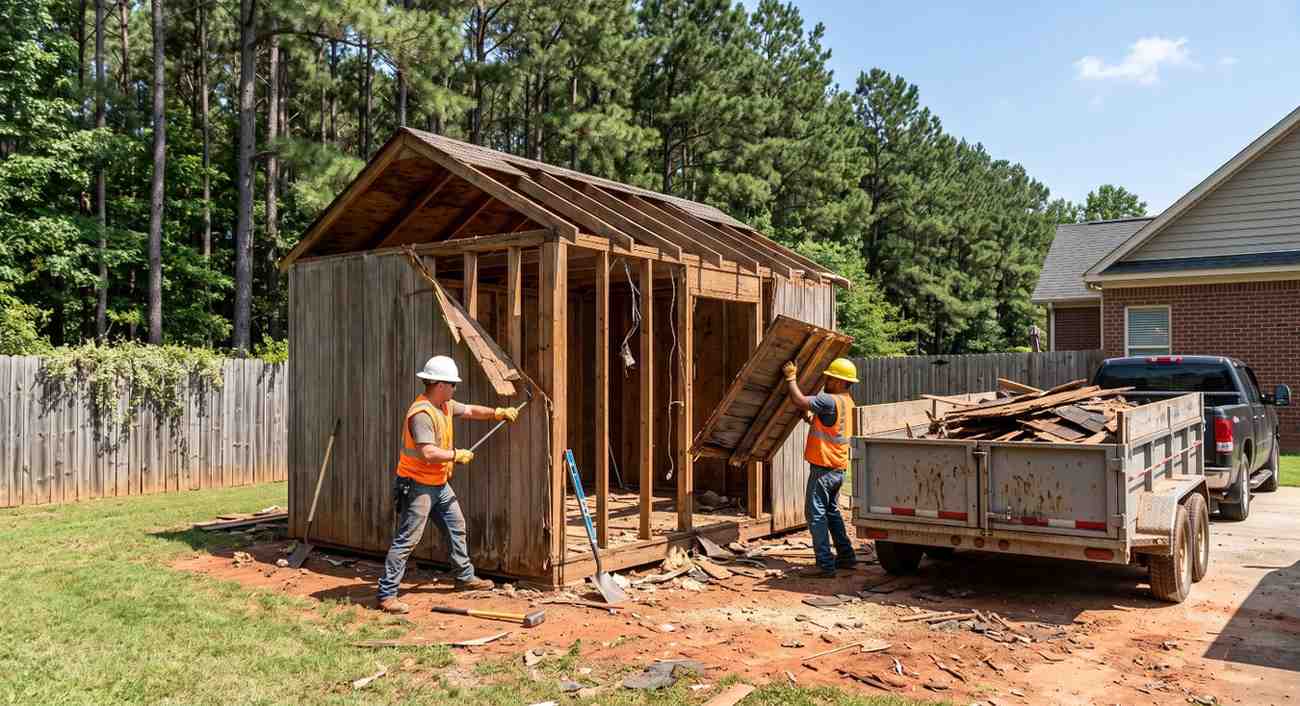
Contrary to standard real estate assumptions, expansive structures do not strictly correlate with a linear increase in per-square-foot demolition costs. A highly optimized economy of scale dictates these metrics. A 1,200-square-foot structure may command $8 per square foot, whereas a 3,000-square-foot facility frequently drops to $6 per square foot. Heavy equipment mobilization, municipal permitting, and crew allocation represent fixed overhead costs that become diluted across larger spatial footprints.
Carolina Demo and Removal identifies optimal efficiency thresholds—where the cost per square foot stabilizes at its lowest level—typically within the 1,500 to 2,500-square-foot operational range.
Foundation Complexity and Excavation Depth
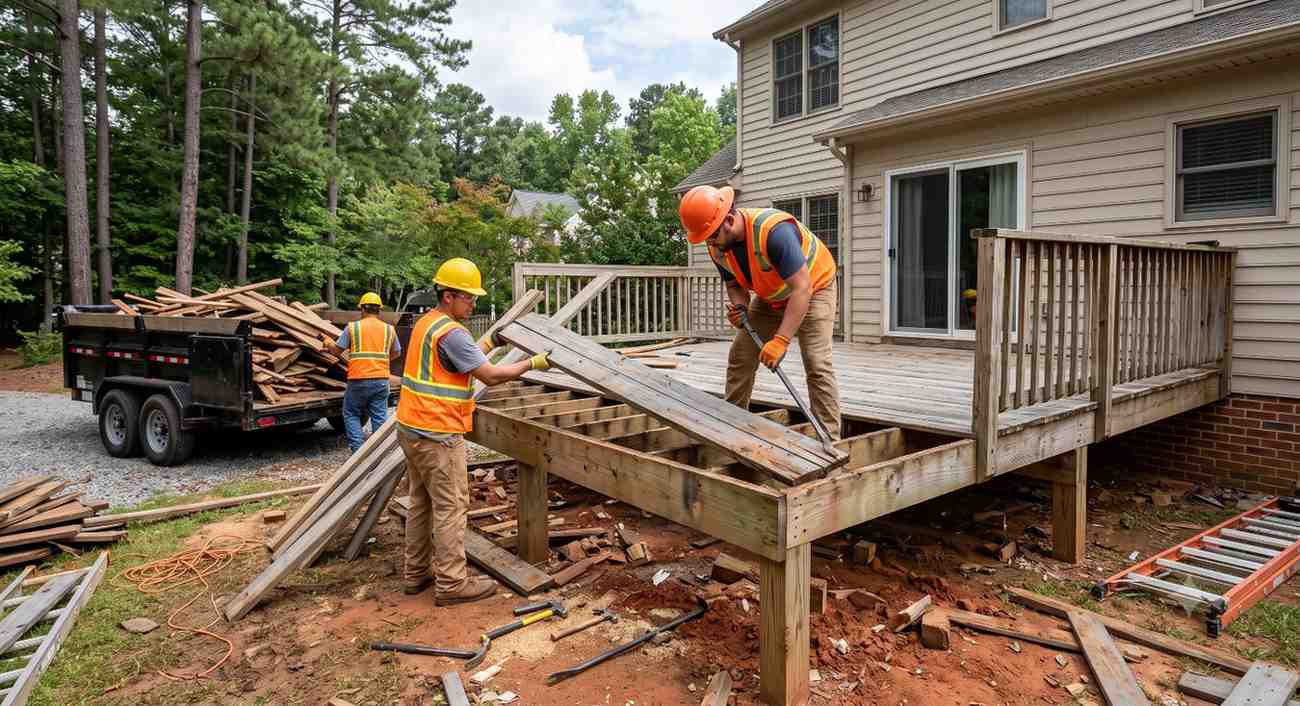
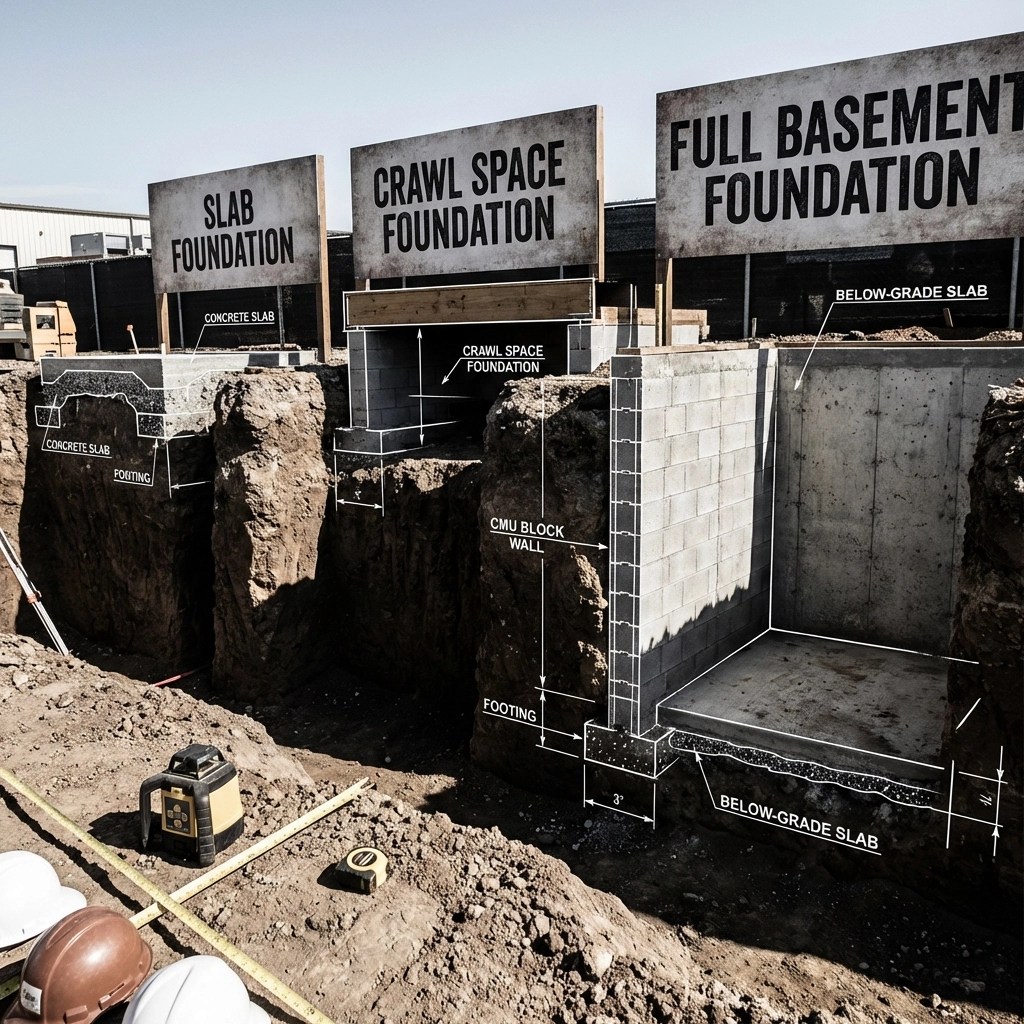
Subsurface structural removal fundamentally alters pricing algorithms. Standard demolition, including basic slab removal, averages $4 to $10 per square foot. Conversely, leaving the foundation intact reduces the operational baseline to $3 to $7 per square foot. However, complex subterranean infrastructure—such as structurally compromised footings, soil contamination, or deep subterranean walls—pushes removal parameters to $12 to $18 per square foot.
Properties requiring extensive subterranean excavation require specialized engineering approaches. Implementing strict basement removal protocols necessitates an immediate 30% to 50% capital addition to base structural demolition costs due to the required heavy excavation and subsequent soil grading.
Five Fiscal Errors in Demolition Budgeting
Error 1: Bypassing Hazardous Material Diagnostics
The primary catalyst for demolition budget collapse is the retroactive discovery of hazardous compounds such as lead paint, contaminated soil, or asbestos. Standard demolition cost-per-square-foot projections assume clean, uncontaminated building materials. When toxic elements are identified post-mobilization, mitigation costs spike to $25 per square foot within the affected zones.
Executing professional asbestos abatement before initiating structural teardown requires a preliminary investment of $300 to $800, thereby preventing catastrophic project delays and regulatory fines.
Error 2: Excluding Utility Disconnection Fees
Preliminary per-square-foot estimates rarely incorporate municipal and private utility severances. Safely capping electrical, natural gas, municipal water, sewer, and telecommunications infrastructure adds an aggregate $500 to $2,000 to total operational expenditures and must be executed by licensed technicians prior to heavy machinery deployment.
Error 3: Miscalculating Permitting and Debris Disposal Logistics
Debris removal is based on tonnage and tipping fees. Depending on the North Carolina county, landfill diversion and disposal fees range from $0.50 to $2.00 per square foot. Standard municipal building permits range from $100 to $500, but properties in historic districts or environmentally protected zones face specialized permitting requirements that can reach upwards of $2,000.
Error 4: Misaligning Demolition Methodology
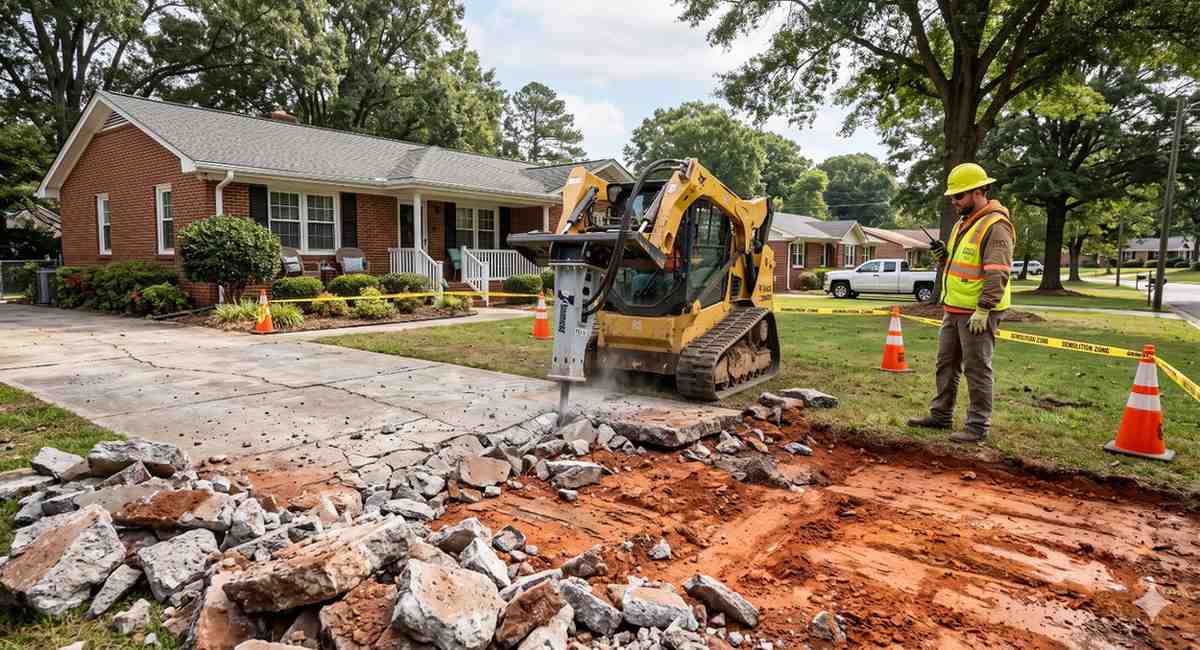
Selecting an inappropriate mechanical approach directly inflates operational budgets. For instance, executing precision concrete removal within high-density environments demands targeted, selective demolition techniques and specialized pneumatic equipment.
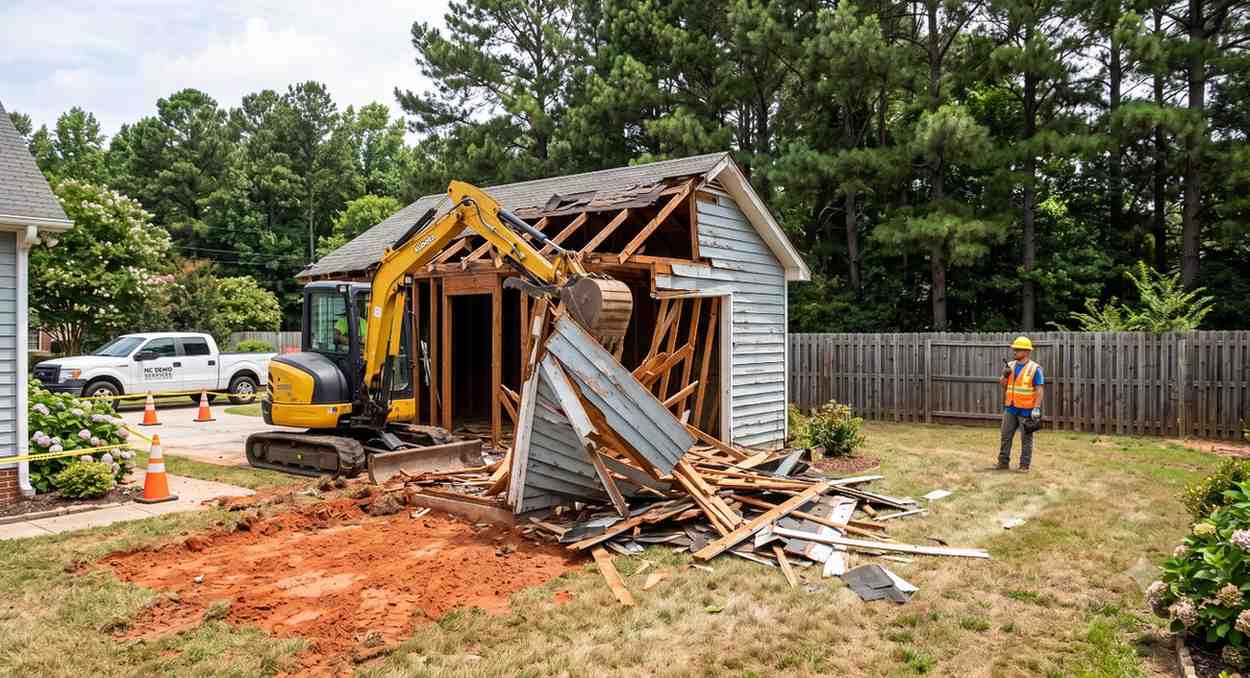
Utilizing generic heavy machinery for precise operations increases labor hours, driving the cost per sq ft up by 25% to 40%. Conversely, total structural leveling requires aggressive, broad-scale building demolition protocols to maximize timeline efficiency.
Error 5: Accepting Anomalously Low Quotations
Quotations presenting figures well below the $ 4-per-square-foot threshold require immediate auditing. Sub-market estimates universally exclude mandatory operational phases, such as ecological compliance, specialized disposal, or final site grading. Accurate demolition pricing relies entirely on empirical site diagnostics and comprehensive service integration.
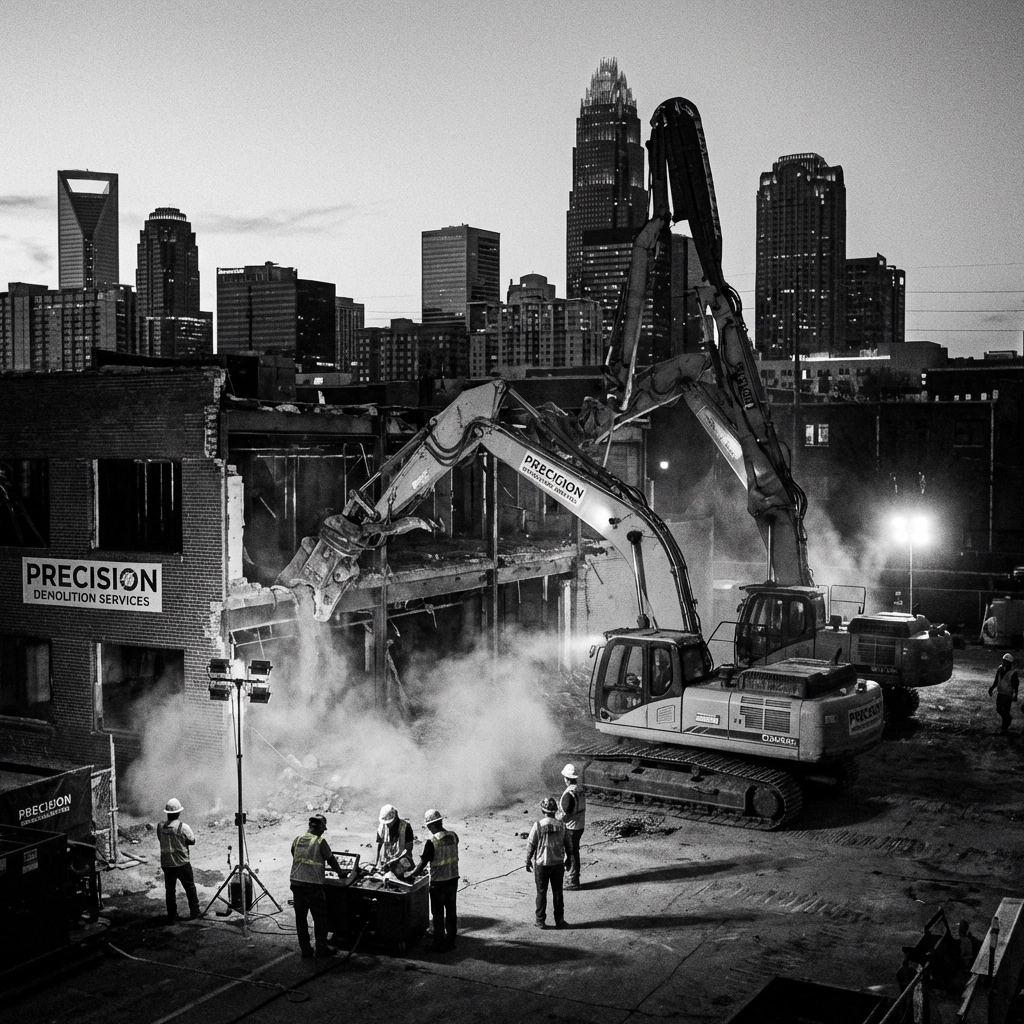
Operational Efficiencies at Carolina Demo and Removal
Transparent Pricing Architectures
Quotations generated by Carolina Demo and Removal consolidate all logistical phases: municipal permitting, tonnage disposal, site remediation, utility coordination, and hazardous material protocols. When a project is assessed at $7 per square foot, it represents the finalized operational expenditure, eliminating retroactive change orders.
Heavy Machinery and Labor Optimization
Deploying specialized, high-capacity machinery reduces structural teardown timelines by 30% to 40% compared to standard general contractors. This timeline compression directly mitigates hourly labor expenditures. In large-scale commercial demolition initiatives, this equipment optimization frequently reduces total project duration by 50%.
Vendor Network and Disposal Procurement
Through established logistical networks with North Carolina disposal facilities, Carolina Demo and Removal secures tipping fee rates 40% to 60% below retail parameters. These aggregated savings directly suppress the client’s final demolition cost per sq ft.
Integrated Service Execution
Fragmenting a project across multiple subcontractors introduces severe logistical friction. Managing targeted concrete slabs removal, environmental compliance, and heavy hauling through a single operational entity eliminates communication breakdowns and strictly controls financial output.
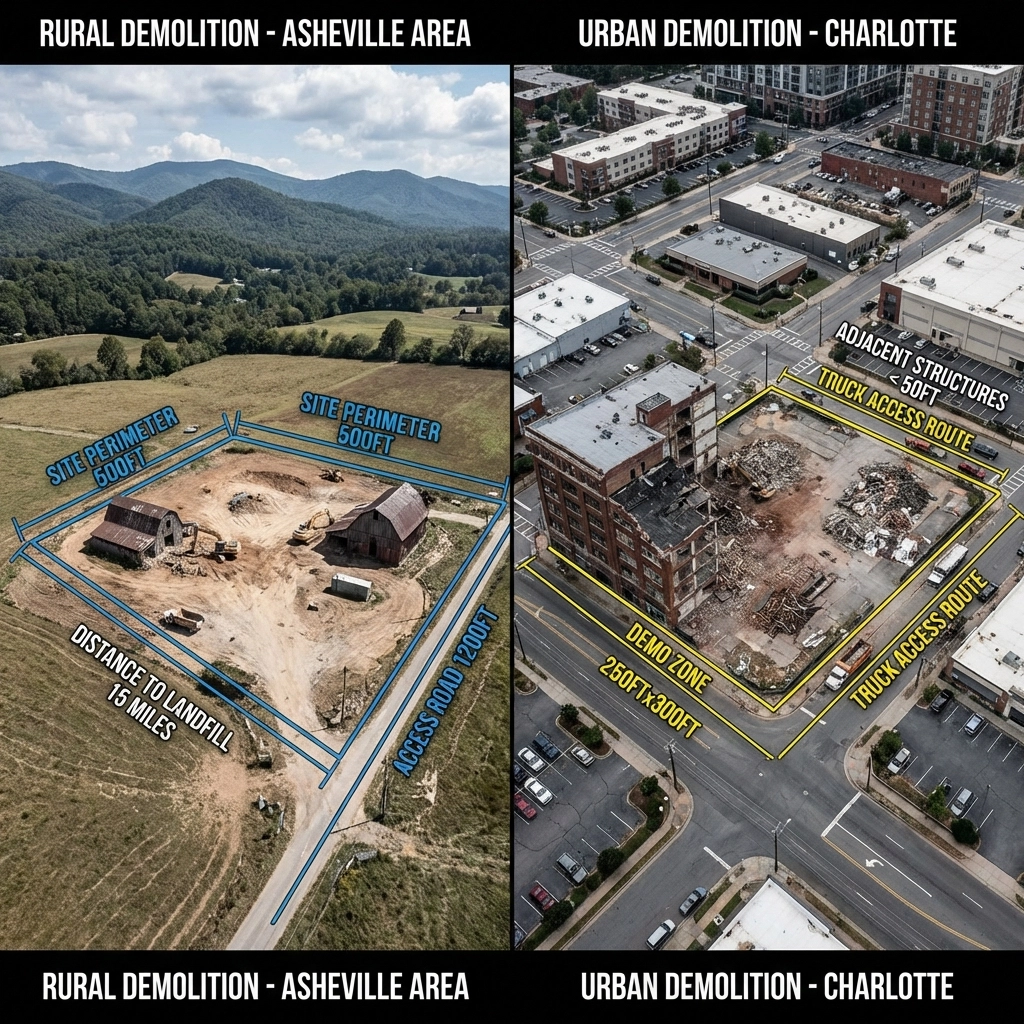
Geographic Price Variances in North Carolina
Urban Density vs. Rural Accessibility
High-density municipalities such as Charlotte and Raleigh exhibit a $1 to $3 per-square-foot premium over rural North Carolina areas. Urban projects mandate rigorous compliance with noise ordinances, complex traffic routing, and elevated municipal tipping fees. However, dense urban grids benefit from reduced transit times to processing facilities.
Rural properties benefit from relaxed operational scheduling and lower regional labor rates. Executing complex civil demolition requires balancing these rural labor savings against the logistical burden of longer heavy-haul distances to designated landfill sites.
Seasonal Market Fluctuations
The North Carolina demolition sector experiences distinct seasonal pricing variance. High-demand spring and summer operational windows drive regional pricing up by 10% to 15%. Conversely, securing contracts during the winter quarter frequently yields 15% to 20% discounts. The region’s temperate climate ensures that structural demolition remains operationally viable year-round, with minimal weather-related delays.
Requisite Documentation for Accurate Quotations
Essential Quotation Parameters
A professionally structured demolition cost per sq ft analysis must explicitly detail the following metrics:
- Precise spatial footprint calculations and utilized measurement methodologies.
- Explicit inclusion or exclusion of subsurface foundation infrastructure.
- Calculated tonnage projections and specified disposal facilities.
- Designation of municipal permit acquisition responsibilities.
- Post-demolition site grading and environmental cleanup parameters.
- Verified commercial liability insurance and municipal bonding.
Indicators of Contractor Instability (Red Flags)
Property owners must reject proposals from contractors exhibiting the following traits:
- Issuing financial estimates prior to physical site topography and structural assessments.
- Refusal to produce itemized, legally binding written proposals.
- Submitting baseline pricing below the $4 per square foot threshold without explicit logistical justification.
- Failure to produce active North Carolina licensing, liability coverage, and commercial references.
Initiating Project Assessment
Carolina Demo and Removal provides rigorous, data-driven site diagnostics to establish precise demolition cost per sq ft metrics. Certified estimators evaluate structural density, subsurface complexity, and ecological requirements to engineer a quotation grounded in empirical data.
Contact Carolina Demo and Removal to secure an itemized operational assessment and ensure your property transition is managed with absolute fiscal transparency and engineering precision.
Frequently Asked Questions: Demolition Cost Per Sq Ft in NC (2026)
Q: What is the current median demolition cost per sq ft in North Carolina?
A: The demolition cost per sq ft in NC currently tracks between $4 and $15. The majority of standard residential teardowns stabilize between $4 and $10 per square foot, contingent on foundation specifications and the presence of hazardous materials.
Q: Are subsurface foundation extractions included in standard per-square-foot baselines?
A: Standard baselines frequently exclude subterranean extraction. Removing concrete footings and foundations typically adds $1 to $3 per square foot to the core operational budget. Contracts must explicitly define whether the estimate covers total subsurface extraction or strictly above-grade demolition.
Q: How do environmental hazards alter the demolition cost per sq ft?
A: Identifying hazardous elements such as asbestos or lead paint mandates specialized environmental compliance protocols, escalating costs up to $25 per square foot within the contaminated zones. Pre-demolition ecological diagnostics prevent severe budget destabilization.
Q: What drives the cost differential between urban and rural North Carolina properties?
A: Rural properties generally reflect a 15% to 25% reduction in demolition cost per sq ft due to lower median labor rates, simplified heavy machinery access, and relaxed municipal scheduling ordinances, though extended transit routes to disposal sites can neutralize a portion of these savings.
Q: What municipal permits are mandatory for North Carolina demolition operations?
A: Regulatory requirements mandate structural building permits (averaging $100 to $500) and localized utility disconnection authorizations. Demolishing historically designated or environmentally sensitive structures requires specialized municipal reviews, which can cost up to $2,000.
Q: How do structural economies of scale influence per-square-foot pricing?
A: Heavy machinery mobilization and permit acquisitions function as fixed overhead costs. Consequently, larger structures benefit from economies of scale. A 1,200-square-foot footprint may baseline at $8 per square foot, while a 3,000-square-foot facility drops to $6 per square foot.
Q: What logistical phases must an authoritative demolition quote include?
A: An empirical demolition cost per sq ft quotation must explicitly detail labor allocation, machinery deployment, municipal permitting, utility severances, tonnage disposal fees, and final topographical grading.
Q: What is the standard operational timeline for a structural demolition?
A: Residential demolitions typically reach completion within 1 to 3 operational days, contingent upon structural density and foundation complexity. High-density commercial properties require 1 to 2 weeks of sustained operations.
Q: Can pre-demolition site preparation reduce the final cost per sq ft?
A: While executing interior clearing and establishing unobstructed machinery access routes reduces preliminary labor hours, attempting primary structural demolition without specialized engineering equipment and municipal licensing invariably inflates total project costs and introduces severe liability risks.
Q: What credentials validate a demolition contractor’s operational authority?
A: Verification requires cross-referencing active North Carolina state contractor licensing, commercial general liability insurance, surety bonding, and historical commercial references. Legitimate entities supply this documentation proactively.