Shed removal in North Carolina typically costs a few hundred dollars for a small wood shed up to significantly more for large, multi-material structures with concrete foundations. Most professional shed removals take half a day to a full day. Small wood or metal sheds without foundations are often a feasible DIY project, while larger sheds, sheds with concrete pads, and sheds containing hazardous materials should be handled by a demolition contractor.
Every backyard in North Carolina seems to have one — a shed that served its purpose twenty years ago and now leans slightly to the left, has a door that doesn’t close, and stores nothing but spiders and old paint cans. At some point, repairing it costs more than it’s worth, and the best move is to take it down.
Shed removal is one of the more straightforward demolition projects, but “straightforward” doesn’t mean “effortless.” The right approach depends on what the shed is made of, what it’s sitting on, how big it is, and whether you’d rather spend a Saturday doing it yourself or have a crew knock it out in a few hours. This guide covers everything — materials, methods, DIY vs. professional removal, what to do with the foundation underneath, cost factors, and how to handle the debris.
Shed Types and Why the Material Matters
The material your shed is made from determines how it comes apart, what tools you need, and where the debris goes.
Wood Sheds
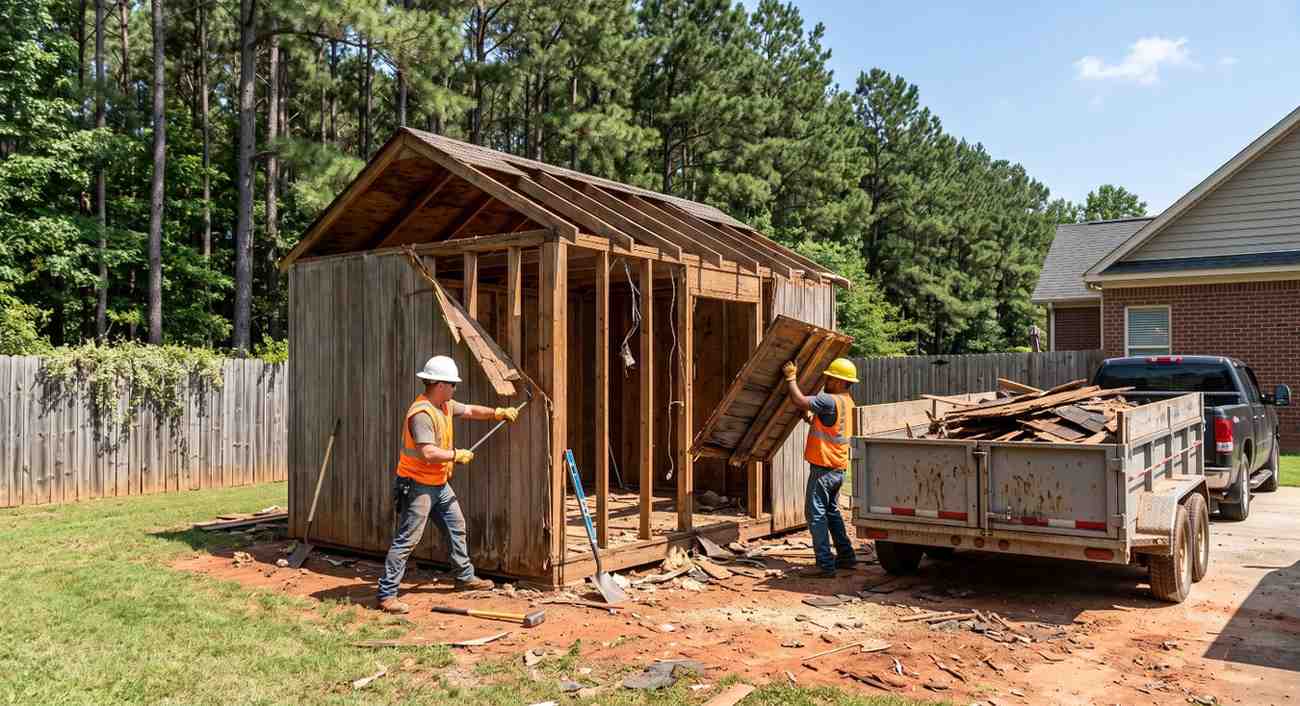
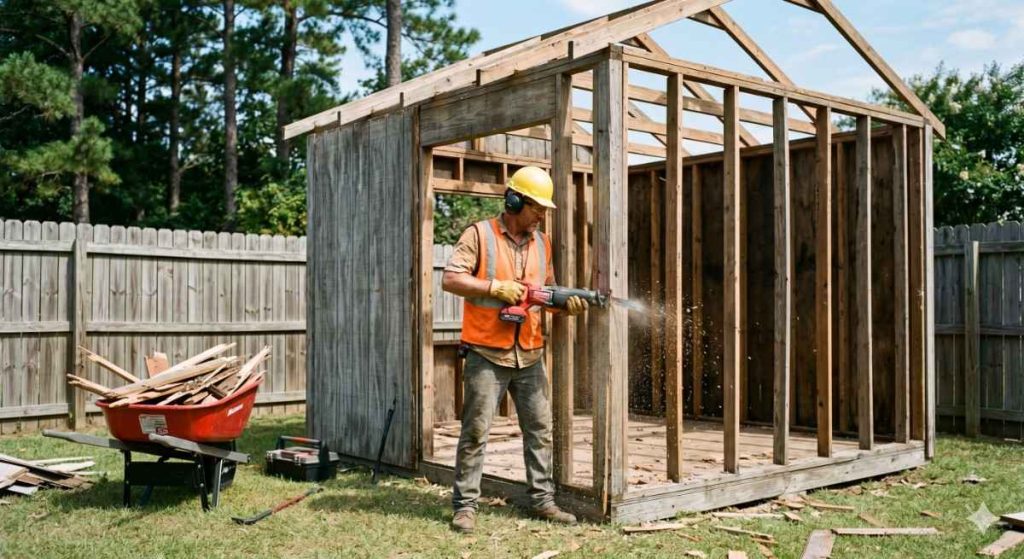
Wood is the most common shed material across North Carolina, especially in older neighborhoods. Wood sheds range from simple 8×10 utility sheds to large 12×20 workshop-style buildings. Teardown is relatively straightforward — walls are disassembled panel by panel or pulled apart with a pry bar, roofing is stripped, and the framing is broken down into manageable pieces.
The main concern with older wood sheds is what they were treated or painted with. Sheds built before the mid-1990s may have been painted with lead-based paint. Pressure-treated lumber from before 2004 likely contains chromated copper arsenate (CCA), which requires special disposal — it can’t be burned or sent to a standard mulching facility. If you’re not sure how old the wood is, treat it as CCA lumber and dispose of it at a facility that accepts treated wood.
Metal Sheds
Prefabricated steel or aluminum sheds are typically the easiest to disassemble. Most are held together with screws and bolts — no nails, no adhesives. With a cordless drill and socket set, many metal sheds can be taken apart panel by panel in a few hours. The metal has scrap value, so recycling is the natural disposal route. A small metal shed may even pay for part of its own removal in scrap proceeds.
Vinyl and Plastic Sheds
Resin and vinyl sheds (the Rubbermaid and Suncast type) are lightweight and usually bolt together. Disassembly is quick — most can be broken down by one or two people in under an hour. The downside is that the plastic panels are bulky and not widely recyclable, so they often end up in landfills.
Brick or Block Sheds
Less common in residential settings, but some NC properties — especially older estates and farmsteads — have brick or concrete block outbuildings. These require heavier tools (a sledgehammer at minimum, often a jackhammer or small excavator) and produce heavy debris that needs to be trucked out. Brick and block removal is not a DIY job for most homeowners.
DIY Shed Removal vs. Hiring a Professional
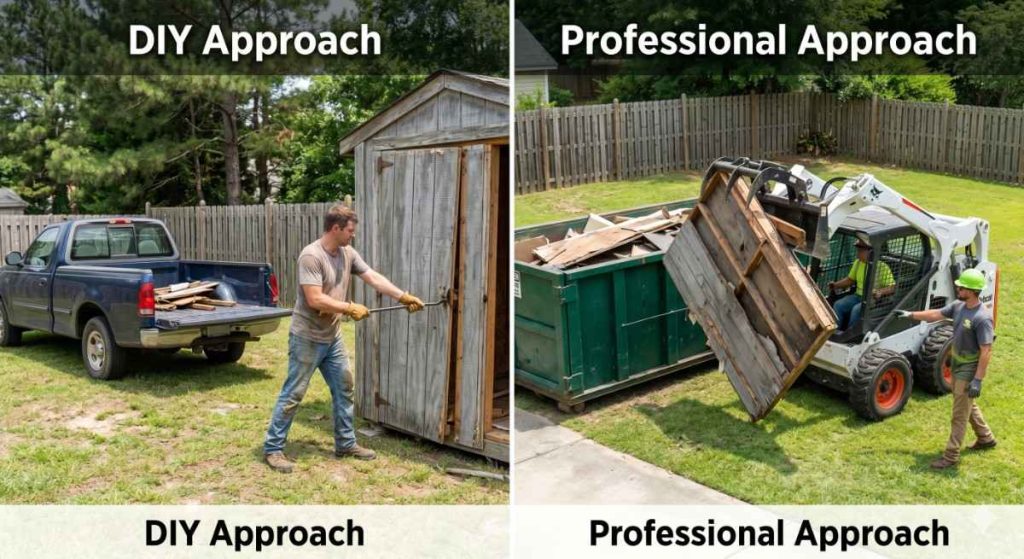
Shed removal is one of the few demolition projects where DIY is genuinely viable — but only under the right conditions.
DIY Makes Sense When:
The shed is small (under 120 square feet), made of wood or metal, sitting on a gravel pad or concrete blocks (not a poured slab), and located where you can get a truck or trailer close enough to load debris. You’ll need basic tools: a reciprocating saw, a pry bar, a hammer, a drill, work gloves, safety glasses, and a way to haul the material — either a pickup truck with multiple trips or a rented dumpster.
Budget a full day for a standard 10×12 wood shed if you’re working with one helper. Metal sheds go faster. Factor in dump fees or dumpster rental on top of your time.
Hire a Pro When:
The shed is large (over 150 square feet), made of brick or block, sitting on a poured concrete slab or frost-wall foundation, located in a tight spot with difficult access, or built before the mid-1990s and potentially containing lead paint or CCA-treated lumber. Also, hire a pro if you simply don’t have the tools, the truck, or the weekend to spare.
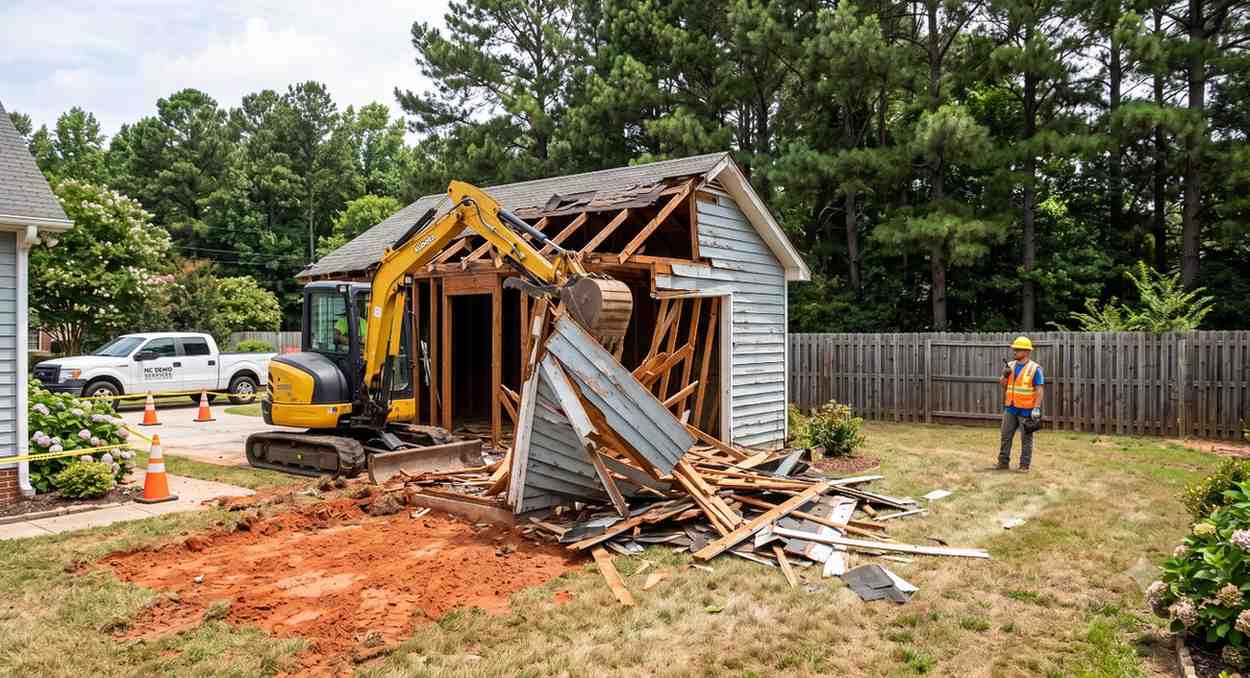
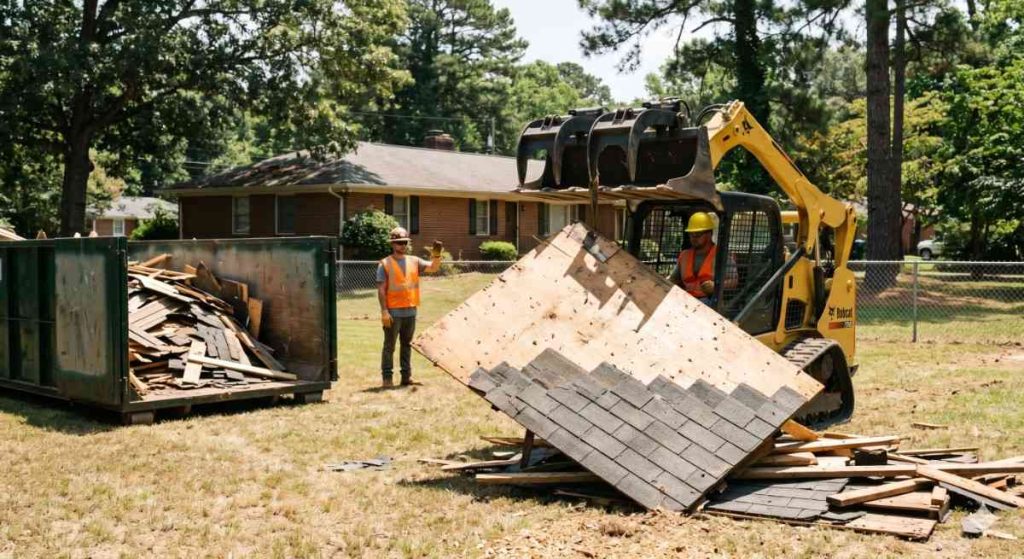
A professional crew with a skid steer or compact excavator can demolish and remove most residential sheds in half a day, including hauling and cleanup. Carolina Demo & Removal handles shed removal projects across North Carolina — from small backyard sheds to large outbuildings with concrete foundations.
| Factor | DIY | Professional |
|---|---|---|
| Best for | Small wood or metal sheds, no foundation | Any size, any material, any foundation |
| Time | Full day (with helper) | Half day to full day |
| Tools needed | Recip saw, pry bar, drill, truck/trailer | Crew brings everything |
| Foundation removal included? | You’d need to handle separately | Typically included in scope |
| Debris hauling | Your responsibility (dump runs or dumpster) | Included — crew hauls everything |
| Risk level | Low for small/simple sheds | Minimal — insured and experienced |
What to Do About the Foundation Underneath
Tearing down the shed is only half the job. What’s underneath matters too.
Gravel Pad or Bare Ground
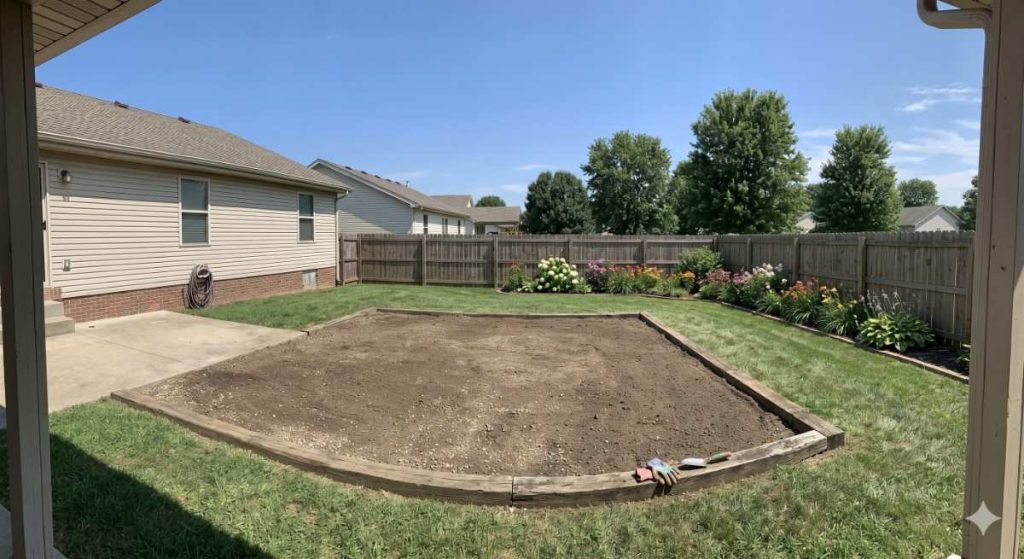
If the shed was sitting on a gravel bed, concrete blocks, or directly on the ground, cleanup is simple. Remove the blocks, rake the gravel level (or remove it), and the area is ready for grass seed or whatever you’re planning next.
Concrete Slab or Poured Foundation
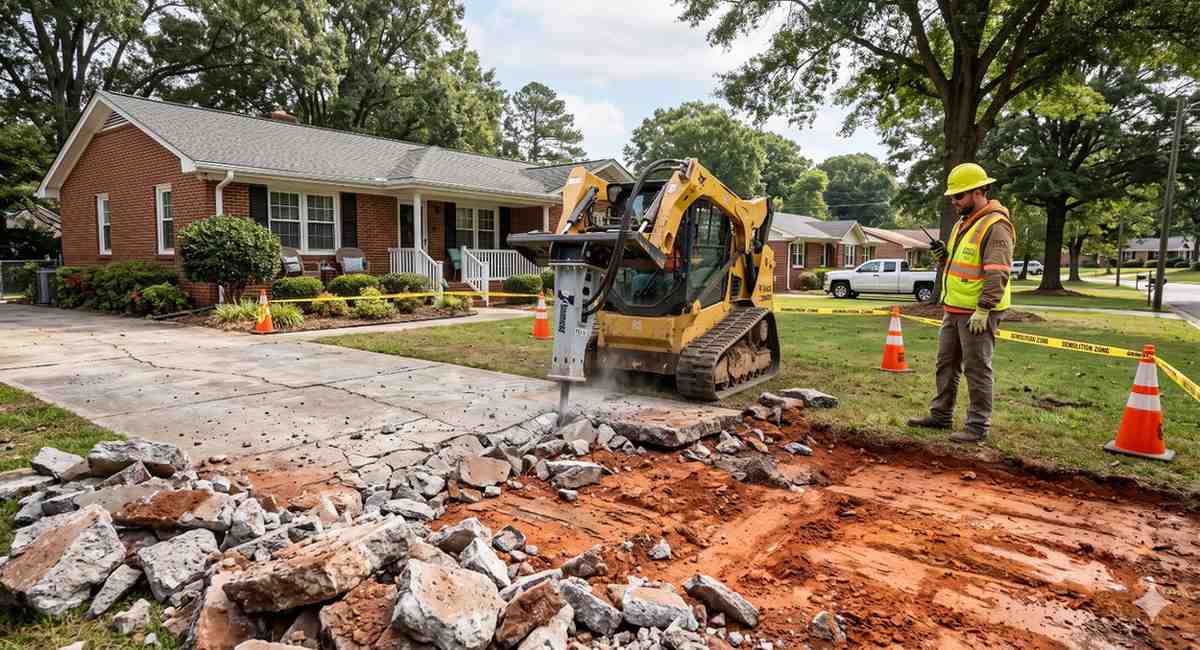
Many sheds in North Carolina sit on a 4-inch concrete slab. If the slab is in good condition and you want to reuse it — for a new shed, a hot tub base, a patio, or a basketball court — leave it in place. If it’s cracked, heaved, or you want the space clear, the slab needs to be broken up and removed.
Thin, unreinforced shed slabs (3 to 4 inches) can sometimes be broken with a rented electric jackhammer. Thicker slabs or slabs with wire-mesh reinforcement require heavier equipment. Concrete slab removal is often bundled with the shed demolition for efficiency.
Piers or Post Footings
Sheds built on pressure-treated 4×4 posts set in concrete footings require digging out the footings after the structure comes down. Each footing is typically 8 to 12 inches in diameter and 24 to 36 inches deep. A post-hole digger or small excavator makes quick work of this; a shovel makes it an afternoon ordeal.
What Drives the Cost of Shed Removal
Shed removal is one of the more affordable demolition projects, but the final price still depends on a handful of variables.
Size
A small 8×8 storage shed produces far less debris than a 12×24 workshop with a loft. More square footage means more material, more labor, and more hauling. Size is the single biggest cost factor.
Material
Wood and metal sheds are the least expensive to remove. Brick and block sheds cost more due to the heavier equipment needed and the weight of the debris. Concrete foundations add to the scope regardless of what the shed walls are made of.
Site Access
If a skid steer or small excavator can drive straight to the shed through a side gate or open yard, the job goes quickly. If the shed is surrounded by fencing, landscaping, or other structures that limit access, the crew may need to work by hand or take a longer path — both of which add time.
Debris Disposal
Disposal costs depend on the volume and type of material. Metal has scrap value and offsets costs. Clean wood can be recycled. CCA-treated lumber, roofing shingles, and mixed debris go to C&D landfills. Concrete goes to concrete crushing and recycling facilities. The number of loads and the distance to disposal sites factor into the price.
Foundation Removal
If the shed sits on a concrete slab and you want the slab removed too, that adds to the project. A simple gravel-pad cleanup costs almost nothing. Removal of a reinforced concrete slab is a separate scope item.
Call (888) 643-4199 for a free estimate on your specific shed removal project in North Carolina.
How to Handle Shed Demolition Debris
A demolished shed produces more debris than most people expect. Here’s how to handle it responsibly.
Metal
Steel roofing, aluminum siding, metal framing, hinges, bolts, and hardware all go to scrap recyclers. Separate metal from other materials during teardown — it’s easier to sort as you go than to pick through a mixed debris pile later. Metal recyclers typically accept shed metal at no charge and may pay by weight.
Clean Wood
Untreated, unpainted dimensional lumber (2×4s, 2×6s, plywood) can be recycled or repurposed. Some homeowners save usable lumber for future projects. If you’re doing a DIY teardown, pulling nails and stacking clean lumber takes extra time but keeps it out of the landfill.
Treated or Painted Wood
CCA-treated lumber and lead-painted wood require disposal at facilities that accept hazardous or regulated materials. Don’t burn it — burning CCA lumber releases arsenic and chromium into the air. Most C&D landfills in North Carolina accept treated wood, but check your local facility’s requirements. The EPA’s guidance on CCA-treated wood provides more details on safe handling.
Concrete and Masonry
If you’re removing a concrete slab or the shed had a block foundation, the concrete and block material can be recycled into aggregate. Carolina Demo & Removal’s recycling services process this material on every applicable project.
Roofing Shingles
Asphalt shingles can be recycled in some NC markets — they’re ground up and used in road paving. Check whether a shingle recycling facility operates near your area. Otherwise, shingles go to C&D disposal.
Disposal Options
For DIY projects, you have three main options: rent a roll-off dumpster (10 or 15-yard is usually sufficient for a standard shed), make multiple trips to a local C&D landfill with a truck and trailer, or hire a junk removal service to haul it for you. Professional shed removal includes debris hauling as part of the project scope.
Key Takeaways for Shed Removal in North Carolina
- Small wood-and-metal sheds on gravel pads are genuine DIY projects if you have basic tools and a way to haul debris. Budget a full day with a helper.
- Large sheds, brick or block sheds, and anything on a poured concrete foundation should be handled by a professional crew with the right equipment.
- Don’t forget the foundation. Removing the shed but leaving a cracked concrete slab behind defeats the purpose if you want to reclaim the space.
- Sort materials as you go — metal to scrap recycling, clean wood to reuse or wood recycling, treated/painted wood to proper disposal. Sorting during teardown saves time and disposal cost.
- Check your shed’s age before starting. Pre-1990s sheds may have lead paint; sheds with pressure-treated lumber from before 2004 likely contain CCA. Both require careful handling.
- Most NC municipalities don’t require a demolition permit for small accessory structures like sheds, but check with your local building department to confirm. Some HOAs also require advance notice.
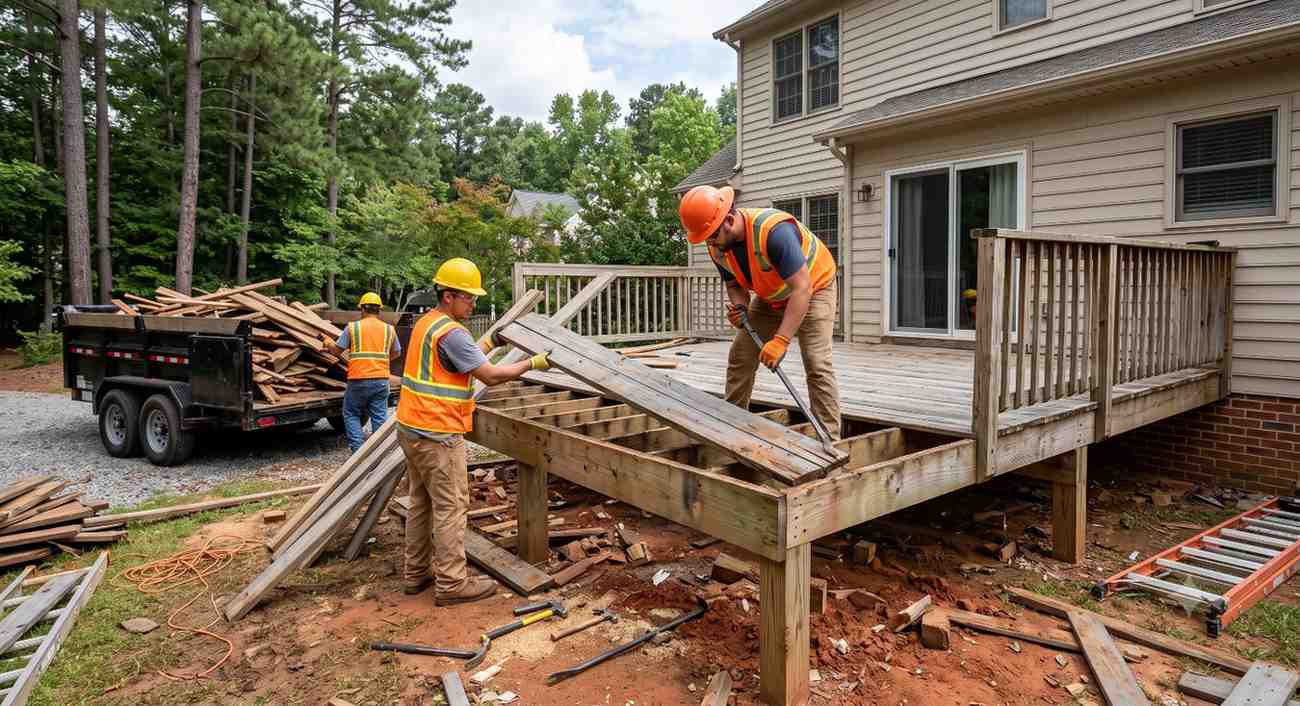
- If you’re removing the shed as part of a larger property cleanup — tearing down a deck, hauling away junk, or grading the lot — bundle the work into one project for efficiency.
Frequently Asked Questions
Q: Do I need a permit to tear down a shed in North Carolina? A: In most NC jurisdictions, small accessory structures like sheds don’t require a demolition permit. However, some cities and counties have thresholds based on square footage or whether the structure has electrical or plumbing connections. Check with your local building department before starting. HOA approval may also be required.
Q: How long does professional shed removal take?
A: Most residential shed removals take half a day to one full day, including demolition, debris loading, hauling, and basic site cleanup. Larger outbuildings or sheds with concrete foundations may take a full day or slightly longer.
Q: Can I burn my old shed instead of hauling it?
A: Open burning of construction debris is restricted or prohibited in most North Carolina counties, especially within city limits. Burning treated lumber or painted wood is illegal and hazardous. Even in rural areas with more lenient burn regulations, C&D material is typically excluded. Hauling and recycling are the proper disposal methods.
Q: What should I do with the concrete slab after the shed is removed?
A: If the slab is in good condition, consider repurposing it — it can serve as a base for a new shed, hot tub, fire pit area, or outdoor workspace. If it’s cracked or you want it gone, a demolition contractor can break it up and remove it as part of the project.
Q: Is there anything valuable in my old shed worth salvaging?
A: Possibly. Metal components (roofing, hardware, fasteners) have scrap value. Clean, dimensionally sound lumber in good condition can be reused for other projects. Vintage or antique sheds sometimes have old-growth lumber, hand-forged hardware, or other materials with salvage value. Do a walk-through before demolition to identify anything worth keeping.
Q: Will shed removal damage my yard?
A: Some minor disruption is normal, especially where equipment enters and exits. A professional crew minimizes damage by using plywood mats on soft ground and choosing the shortest access path. The area where the shed sat will need reseeding or resurfacing, regardless, since the ground underneath has been shaded and compacted for years.
Ready to Get Rid of That Old Shed?
An unused shed that’s rotting, leaning, or just taking up space doesn’t get better with time. Whether you tackle it yourself or bring in a crew, the result is the same — clean, open yard space you can actually use. Carolina Demo & Removal has been handling shed removal and residential demolition projects across North Carolina since 2010. Call (888) 643-4199 for a free estimate, or request a quote online.