That old single-wide out behind the house has been sitting empty for years. The skirting is caved in, the floor is soft in the middle, and something has been living under it that you’d rather not think about. Or maybe you just bought a piece of land with an abandoned manufactured home on it, and you need it gone before you can build.
Mobile home removal is a bigger job than most people expect. These structures are long, heavy, and often contain materials that require careful handling — especially if the home was built before 1976, when federal construction standards changed. This guide covers the two main approaches to getting a mobile home off your property in North Carolina, the factors that affect cost, the permits and paperwork involved, and what your lot looks like when it’s all done.
Demolition vs. Transport: Two Ways to Remove a Mobile Home
When people say “mobile home removal,” they usually mean one of two things: demolishing the home on-site or moving it to a different location in one piece. The right approach depends on the home’s age, condition, and whether anyone wants it.
On-Site Demolition
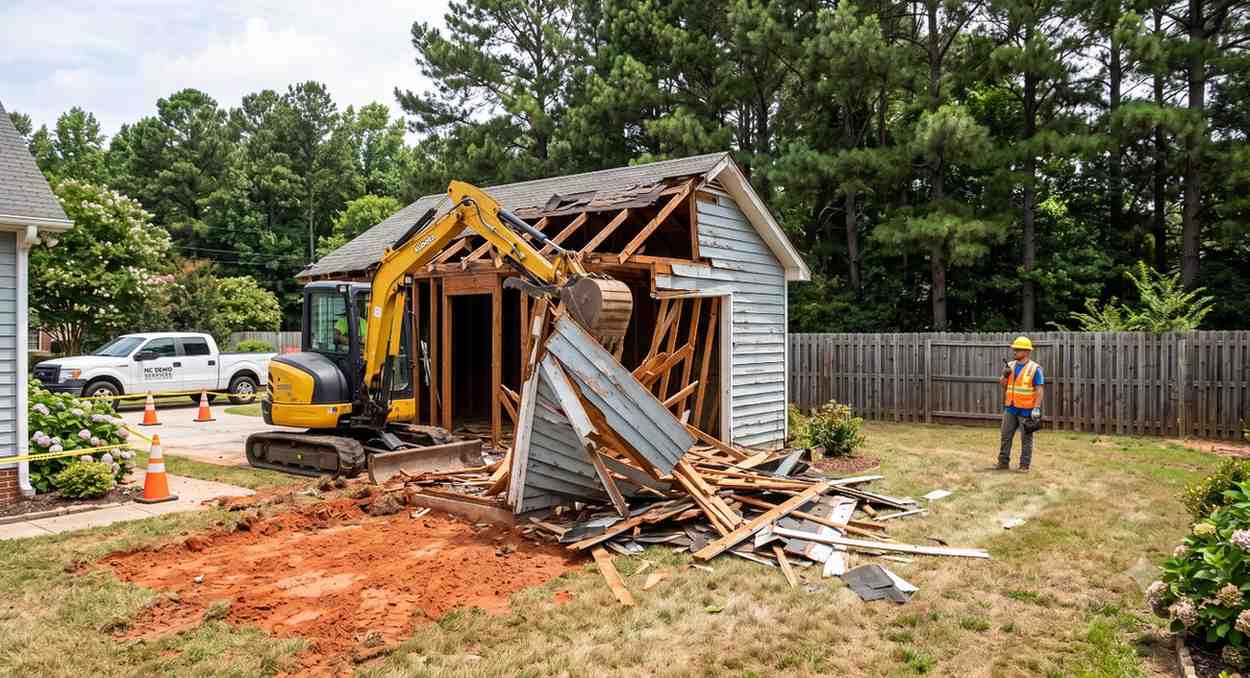
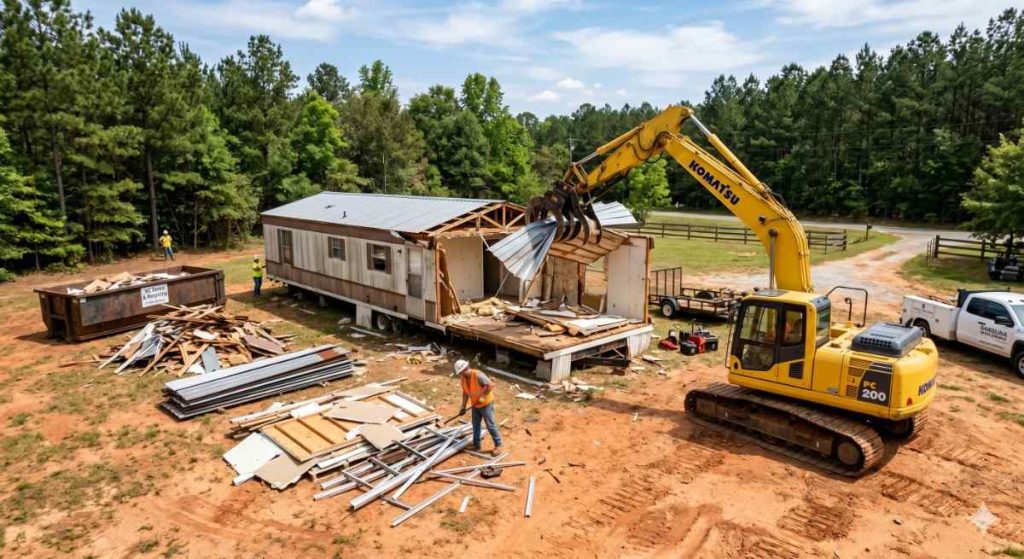
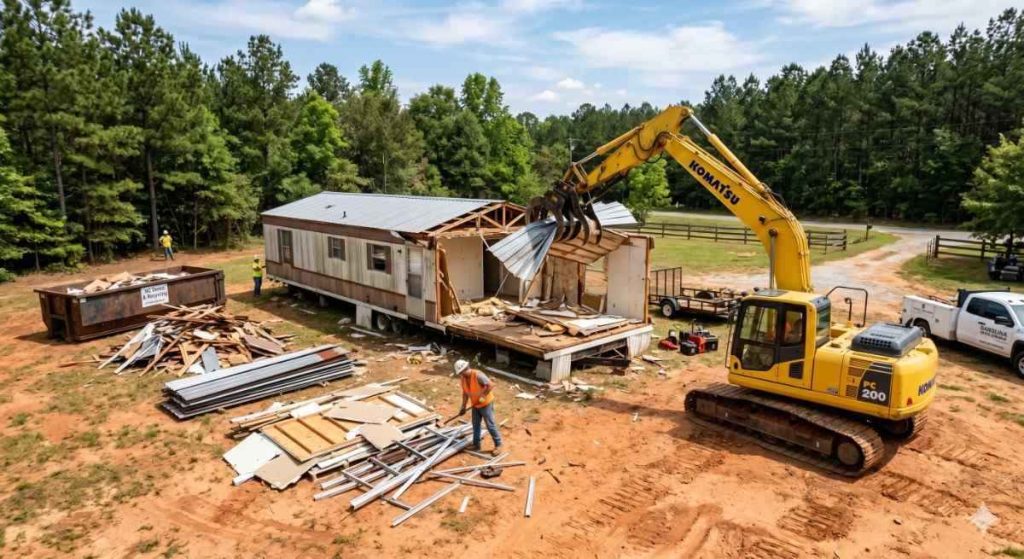
This is the most common method in North Carolina, especially for older single-wides and double-wides that are no longer livable. The crew disconnects utilities, removes hazardous materials (if present), and then tears the structure apart — typically with an excavator and a grapple attachment.
The materials get sorted on-site: metal framing and axles go to scrap recyclers, wood goes to recycling or disposal, and non-recyclable debris gets loaded into roll-off containers or dump trucks.
On-site demolition is faster, doesn’t require road permits or pilot cars, and works even when the home is too deteriorated to move. Most single-wide demolitions wrap up in one to two days. Double-wides take two to three days due to the larger footprint and heavier frame.
Whole-Home Transport
If the mobile home is in decent shape and someone else wants it — a buyer, a family member, or a relocation to another lot — it can be moved intact on its original chassis. This requires a specialized mobile home transport company with the right truck, axles, and towing setup. You’ll also need an NCDOT moving permit, a route survey to check for low bridges and narrow roads, and, if needed, an escort vehicle.
Transport makes sense when the home still has useful life in it. But it’s often more expensive than demolition once you factor in the moving permit, road escort, site prep at the receiving end, and setup costs. For homes that are deteriorated, water-damaged, or structurally compromised, demolition is the practical choice.
| Factor | On-Site Demolition | Whole-Home Transport |
|---|---|---|
| Best for | Deteriorated, abandoned, or unwanted homes | Homes in good condition with a receiving site |
| Timeline | 1–3 days | 1–2 days for prep, 1 day for move |
| Road permits needed? | No | Yes (NCDOT) |
| Cost drivers | Size, hazardous materials, disposal | Distance, route complexity, setup at new site |
| Most common in NC? | Yes — majority of removals | Less common |
What Drives the Cost of Mobile Home Removal
Mobile home removal pricing varies widely across North Carolina. A small, straightforward single-wide on open land is a very different job from a double-wide tucked behind a house with trees on three sides. Here are the main factors.
Single-Wide vs. Double-Wide
A single-wide mobile home is typically 14 to 18 feet wide and 60 to 80 feet long. A double-wide is roughly twice the footprint — 28 to 32 feet wide and the same length. More square footage means more material to demolish, more debris to haul, more labor hours, and more truckloads. Double-wide removal generally costs significantly more than single-wide.
Age and Construction Materials
Older mobile homes (pre-1976, before HUD standards took effect) were often built with materials that are now regulated: asbestos in floor tiles, siding, and insulation; lead-based paint; and fiberglass insulation that requires careful handling. If hazardous materials are present, they must be identified, contained, and removed by trained professionals before general demolition begins. This adds time and cost but is legally required and protects everyone on-site.
Homes built after 1976 are less likely to contain asbestos, but it’s not guaranteed — especially in components like HVAC duct insulation or floor tile adhesive. A pre-demolition inspection identifies what you’re dealing with. Carolina Demo & Removal handles asbestos abatement as part of the mobile home removal process when needed.
Site Access and Conditions
If the mobile home sits on a wide-open lot with easy road access, equipment can roll in and work efficiently. If it’s behind a house, surrounded by trees, or on a narrow rural road, the crew may need smaller equipment, more hand labor, or tree trimming to create access — all of which add to the project scope.
The foundation type also matters. Mobile homes on concrete block piers are straightforward to remove. Homes on permanent concrete foundations require additional foundation removal work after the structure comes down.
Utility Disconnection
Before any demolition starts, all utilities must be properly disconnected — electricity, gas (propane or natural gas), water, and sewer or septic. In some North Carolina counties, the utility company handles disconnection; in others, a licensed electrician or plumber is required. If the home has a septic system, the tank may need to be pumped and either removed or filled and abandoned per county health department regulations.
Debris Volume and Disposal
A single-wide produces roughly 10 to 15 tons of debris. A double-wide can produce 20 to 30 tons. Metal components (chassis, axles, framing, roofing) have scrap value, offsetting disposal costs. Wood, insulation, vinyl siding, and interior finishes need to be hauled to the appropriate facilities. The number of truckloads and the distance to disposal or recycling facilities directly affect the final price.
For an accurate cost on your specific property, call (888) 643-4199 to schedule a free on-site estimate.
Permits, Paperwork, and Title Cancellation
Mobile home removal in North Carolina involves more paperwork than most people realize. Here’s what you need to know before the crew shows up.
Demolition Permits
Most NC municipalities and counties require a demolition permit before you can tear down a mobile home. The permit application typically asks for a description of the structure, the scope of work, and proof that utilities have been or will be disconnected. Permit fees vary by jurisdiction. Your contractor should handle the application and any required inspections as part of the project.
Title and Registration
Mobile homes in North Carolina are titled through the NC Division of Motor Vehicles (DMV), similar to a vehicle. When a mobile home is demolished, the owner needs to cancel the title. This involves submitting a Cancellation of Title form to the NCDMV, along with proof that the home has been demolished (typically a letter from the demolition contractor). If there’s an outstanding lien on the home, the lienholder must also sign off.
Skipping this step can cause problems down the road — the home may continue to be assessed for property taxes even after it’s gone, or a future buyer may find a “structure” still on record for the parcel.
Tax Record Updates
After demolition, contact your county tax assessor’s office to have the mobile home removed from the property tax records. This can lower your annual property tax bill, since the assessed value drops when the structure is removed.
Septic System Decommissioning
If the mobile home was served by a septic system and you don’t plan to reuse it for a new structure, most NC counties require the tank to be pumped, crushed or removed, and the hole backfilled. This is handled through the county environmental health department. Your contractor can coordinate this or recommend a septic service provider.
The Mobile Home Removal Process, Step by Step
Site Assessment
A project manager visits the property to evaluate the mobile home—its size, type (single-wide or double-wide), age, condition, foundation type, and access. They check for visible signs of asbestos-containing materials, note the utility connections, and assess the lot for equipment access. You get a written estimate and projected timeline.
Utility Disconnection
Electric, gas, water, and sewer/septic connections are disconnected and capped by the appropriate providers or licensed professionals. This has to happen before any demolition work begins — no exceptions.
Hazardous Material Inspection and Abatement
If the home was built before 1976 (or if the pre-demo inspection flags suspect materials), a certified inspector tests for asbestos, lead paint, and other hazardous substances. Any confirmed hazardous materials are removed and disposed of in accordance with NC Department of Environmental Quality regulations before general demolition begins.
Demolition
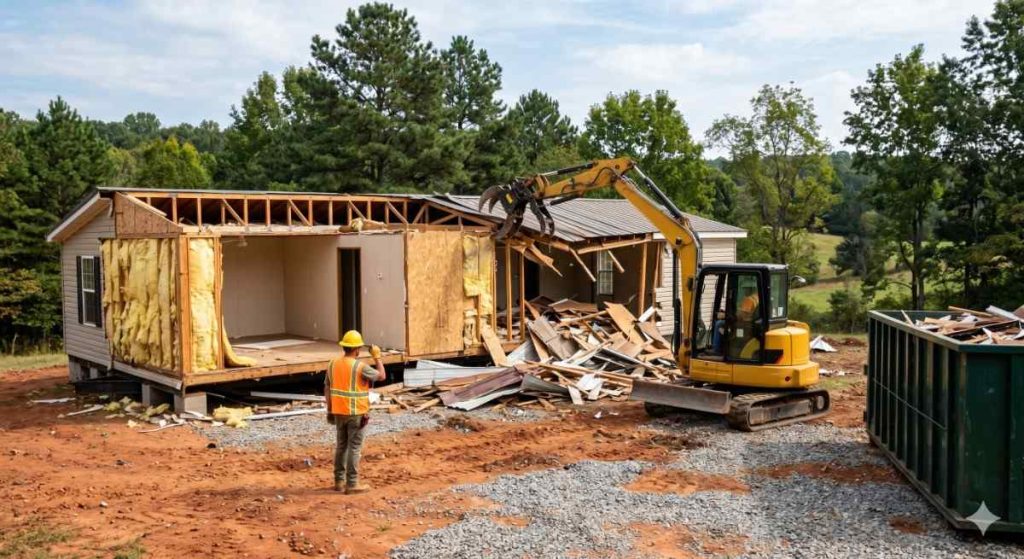
The crew works methodically — typically starting with the interior (cabinets, fixtures, wiring, plumbing), then the walls and roof, and finally the chassis and foundation supports. An excavator with a grapple or thumb attachment handles the heavy structural teardown. Materials are sorted as they come off the home: metal to one pile, wood to another, mixed waste to the dumpster.
Carolina Demo & Removal uses hydraulic excavators, skid steers, and specialized attachments sized to the job. Dust suppression keeps airborne particles under control, and the crew follows OSHA demolition safety standards throughout the process.
Debris Removal and Recycling
Everything gets loaded and hauled. Metal components — the chassis, axles, steel framing, and metal roofing — go to scrap recyclers. Wood framing and panels go to wood recycling facilities where available. Non-recyclable materials go to licensed disposal facilities. Carolina Demo & Removal’s waste hauling and disposal crews handle every load.
Site Restoration
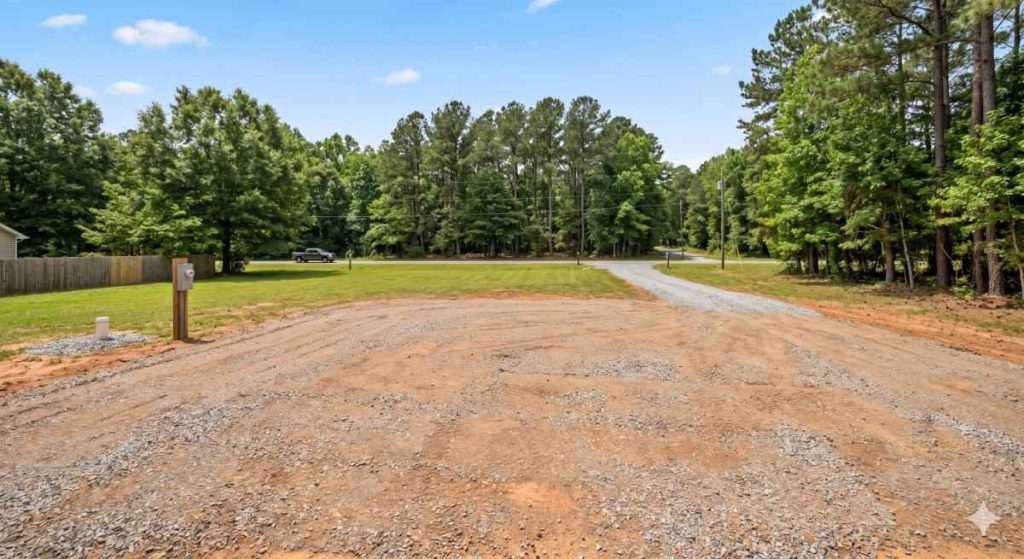
Once the home and all debris are gone, the site is graded and clean. If concrete block piers or a concrete slab foundation remain, those can be removed as part of the project or left in place, depending on your plans for the lot. Land grading ensures the surface drains properly and is ready for whatever comes next — new construction, landscaping, or simply clean open land.
What Happens to Your Property After Mobile Home Removal
Most property owners want to know what the lot looks like when the crew leaves — and what they can do with it.
Immediately after removal, the site is bare, level ground. If the home was on concrete block piers, the blocks are removed, and the pier locations are filled and compacted. If it were on a permanent foundation, you may need separate foundation removal work depending on your plans.
Common next steps for the cleared lot include building a new home or manufactured home on the same site, installing a garage, shop, or storage building, planting grass, and reclaiming the space as a yard, or selling the land as a cleared, build-ready parcel (which typically commands a higher price than land with a deteriorating structure on it).
If the mobile home was the only structure on the property, removing it often increases the land’s market value. Buyers and appraisers see a clean lot as an opportunity; they see a rotting mobile home as a liability and a demolition cost they’ll have to absorb.
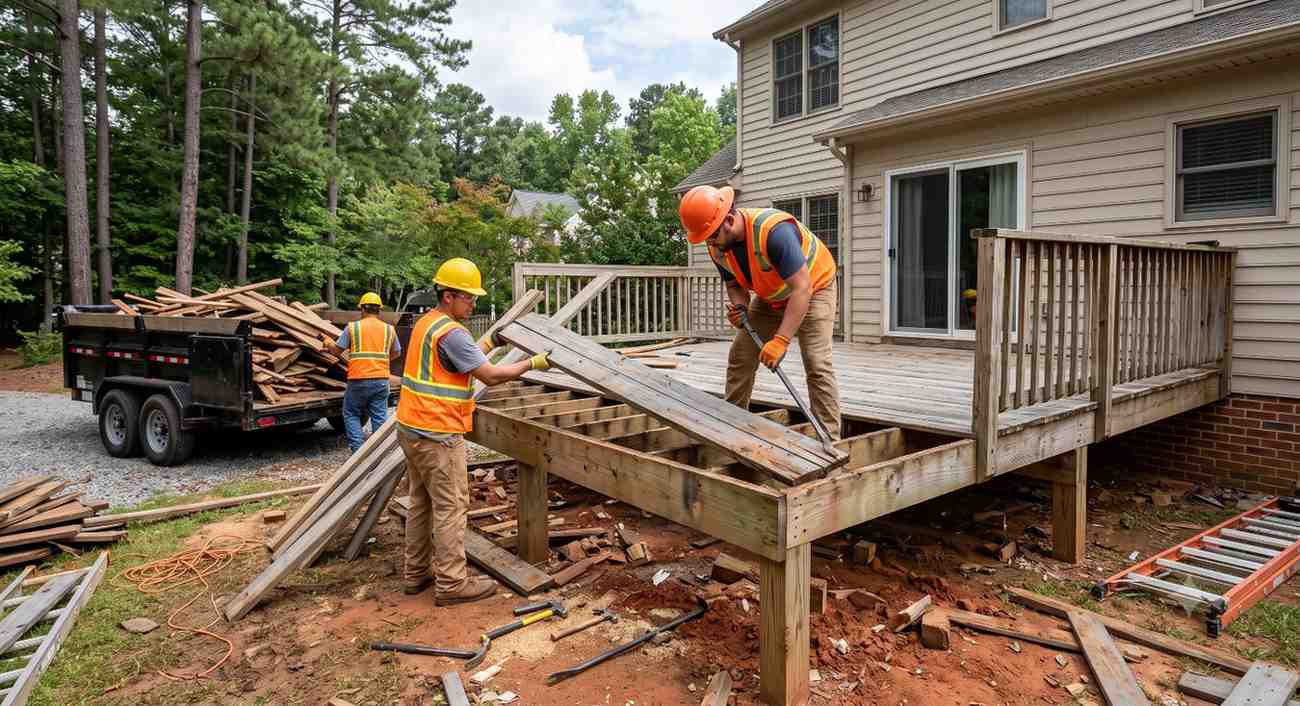
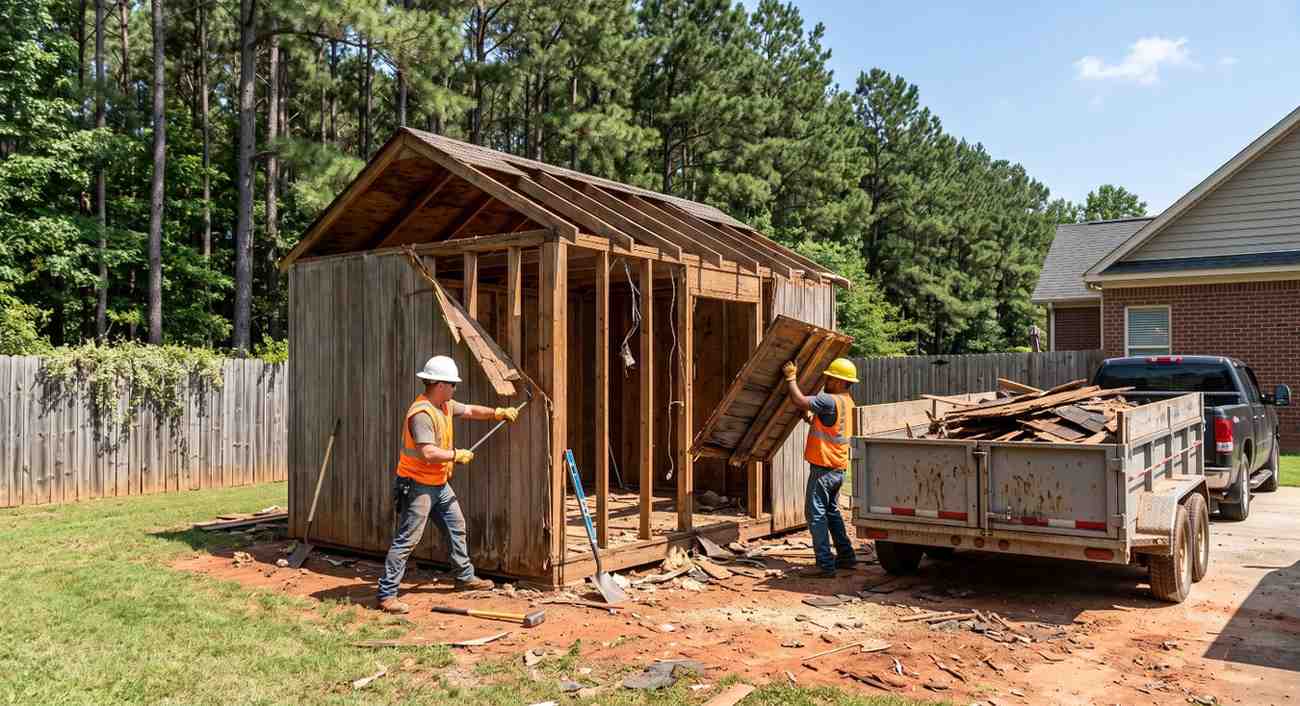
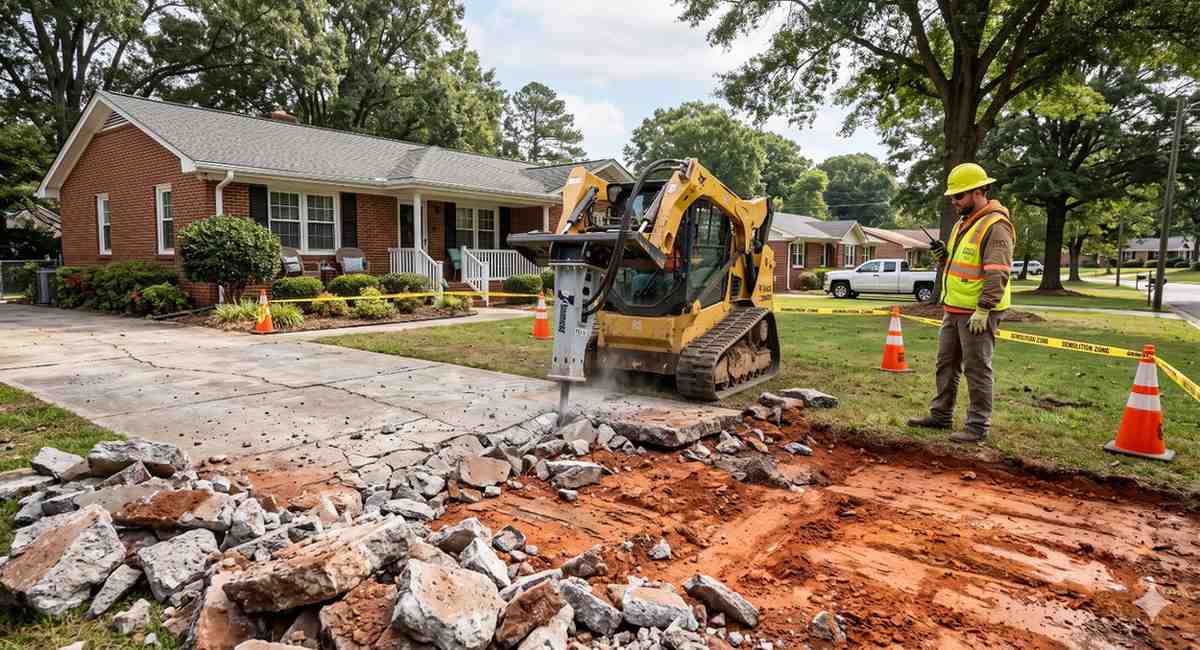
If you’re bundling mobile home removal with other cleanup work — clearing an old shed, removing a crumbling concrete slab, or hauling away accumulated junk — doing it all in one project saves on equipment mobilization and crew time.
Key Takeaways for Mobile Home Removal in North Carolina
- Determine whether your mobile home should be demolished on-site or transported. If it’s deteriorated, water-damaged, or structurally unsound, demolition is the practical and cost-effective choice.
- Homes built before 1976 may contain asbestos, lead paint, or other hazardous materials that must be professionally inspected and removed before demolition.
- Cancel the title through the NC DMV after demolition to avoid continued tax assessments on a structure that no longer exists.
- Contact your county tax assessor to have the mobile home removed from property tax records — this can reduce your annual tax bill.
- If the home was on a septic system, the tank likely needs to be pumped and decommissioned per county health department rules.
- Double-wide removal costs significantly more than single-wide due to the larger footprint, heavier materials, and more debris.
- Bundle mobile home removal with other site work (shed removal, junk hauling, land grading) to save on mobilization costs.
- Get two to three on-site estimates. Cost varies based on size, age, site access, hazardous materials, and the distance to the disposal site.
Frequently Asked Questions
Q: How long does mobile home removal take? A: A single-wide typically takes one to two days from start to finish. Double-wides take two to three days. Add time if hazardous material abatement is needed before general demolition can begin.
Q: Do I need a permit to demolish a mobile home in North Carolina? A: Yes — most NC counties and cities require a demolition permit. Your contractor handles the application and any required inspections as part of the project scope.
Q: What happens to the mobile home’s title after demolition? A: You need to cancel the title through the NC Division of Motor Vehicles by submitting a Cancellation of Title form along with proof of demolition. This prevents the home from remaining on tax records.
Q: Can an old mobile home be sold or given away instead of demolished? A: Sometimes, if the home is in livable condition and can be legally transported. However, most mobile homes that need removal are too deteriorated to move safely. Transport also requires NCDOT permits, a route survey, and setup at the receiving site — often costing more than demolition.
Q: How do I know if my mobile home has asbestos? A: Homes built before 1976 are most likely to contain asbestos in floor tiles, siding, pipe insulation, or duct wrap. A certified asbestos inspector can test suspect materials before demolition. This inspection is typically arranged by your demolition contractor.
Q: What do I do about the septic system after the mobile home is removed? A: If you won’t be reconnecting a new structure to the existing septic system, most NC counties require the tank to be pumped, crushed or removed, and backfilled. Contact your county environmental health department for specific requirements.
Ready to Remove That Old Mobile Home?
An abandoned or deteriorating mobile home drags down your property’s value, attracts pests, and creates liability. Removing it is simpler than most property owners expect — especially when you have a contractor who handles permits, utility disconnection, hazardous material abatement, demolition, debris hauling, and site grading from start to finish.
Carolina Demo & Removal has been handling mobile home removal and residential demolition projects across North Carolina since 2010. Call (888) 643-4199 for a free on-site estimate, or request a quote online.