Pool Removal in North Carolina: What It Costs, How It Works, and What to Expect (2026)
That in-ground pool behind your house looked great in 2005. Now it’s cracked, the liner is shot, and you spent last summer staring at green water instead of swimming in it. Or maybe the pool is fine — you’re just tired of writing checks for chemicals, electricity, and annual inspections on something nobody uses anymore.
Pool removal is one of the most common residential demolition projects across North Carolina, and for good reason. Removing an unused pool can cut your annual maintenance costs, reduce liability, and open up your backyard for something you’ll actually enjoy. This guide walks through everything you need to know before you start — from the two main removal methods to the factors that drive cost, the permits involved, and what your yard looks like when it’s done.
Partial vs. Full Pool Removal: Which One Makes Sense for You
Every pool removal project starts with the same question: Do you want the pool partially removed or fully removed? The answer depends on what you plan to do with the space afterward, how much you want to spend, and whether you might sell the property down the road.
Partial Pool Removal
With partial removal (sometimes called “pool fill-in”), the contractor breaks up the top portion of the pool walls — typically the upper 18 to 36 inches — and punches holes in the bottom of the shell for drainage. The remaining cavity gets filled with gravel, crushed concrete, and clean fill dirt, then compacted and graded level with the surrounding yard.
Partial removal works well if you want to turn the area into a lawn, a garden bed, or an open play space. It’s faster and less expensive than full removal because less material needs to be hauled away. Most partial removals in the Carolinas wrap up in two to three days.
The tradeoff: because the lower portion of the pool shell stays in the ground, the filled area may not support heavy structures. If you ever want to build a deck, patio, garage, or addition over that spot, you’d likely need to go back and remove the remaining shell, which means paying twice. Partial removal also needs to be disclosed to future buyers, and some buyers see it as a negative.
Full Pool Removal
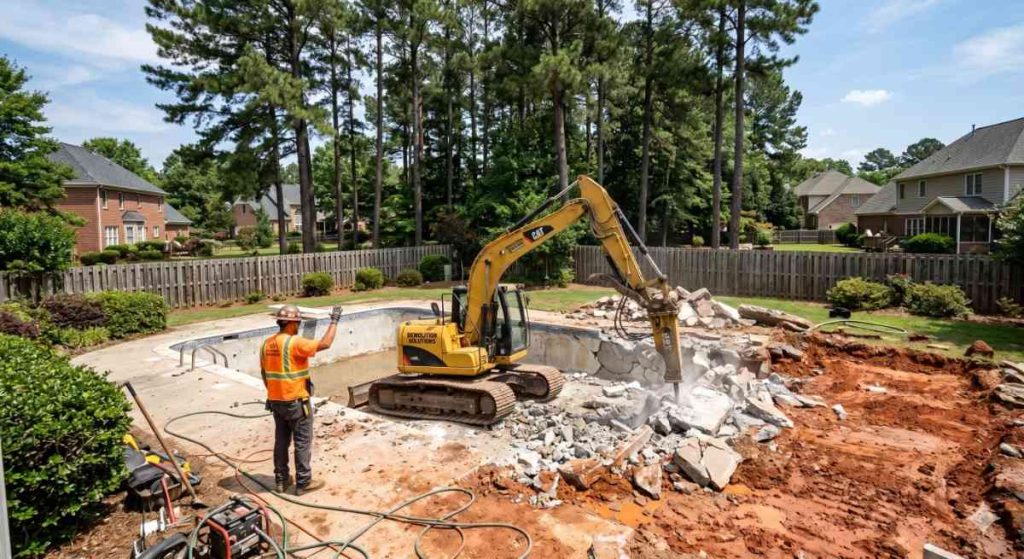
Full removal means the entire pool structure comes out — walls, floor, plumbing, rebar, everything. The hole is then backfilled with clean engineered fill, compacted in lifts, and graded. Once the soil settles (usually a few months with proper compaction), you can build on it, pour a new patio, or do anything else you’d do on undisturbed ground.
Full removal costs more and takes longer — typically four to seven days depending on pool size and access. But it gives you complete flexibility with the space and avoids any disclosure complications if you sell the property.
| Factor | Partial Removal | Full Removal |
|---|---|---|
| Timeline | 2–3 days | 4–7 days |
| Cost | Lower | Higher |
| Can you build on the area? | No (risk of settling) | Yes, after compaction and settling |
| Disclosure required at sale? | Yes | No |
| Best for | Lawn, garden, open space | Patios, additions, resale |
For homeowners in North Carolina who plan to stay in their home and just want the pool gone, partial removal is often the practical choice. If you’re selling within a few years or want to build something permanent on the site, full removal is worth the extra investment.
What Drives the Cost of Pool Removal
Pool removal costs vary widely from project to project, and anyone who quotes a flat price without seeing your pool first is guessing. That said, here are the main factors that push the number up or down.
Pool Size and Depth
A small plunge pool (say, 10×20 feet) produces far less debris than a full-size 20×40 pool with an 8-foot deep end. More concrete, more rebar, more fill material, more truck loads — it all adds up. Depth matters just as much as surface area because deeper pools require more backfill and more compaction.
Pool Construction Material
Concrete (gunite or shotcrete) pools are the most labor-intensive and expensive to remove. The shell is thick, heavily reinforced with rebar, and requires hydraulic breakers or excavator-mounted hammers to demolish. Fiberglass pools are lighter and can sometimes be lifted out in one piece. Vinyl-lined pools with steel or polymer walls are the simplest — the walls come apart relatively easily, and the concrete bottom (if there is one) is thinner.
Access to the Pool
If a full-size excavator can drive straight into the backyard through a wide side gate or open lot, the job goes faster. If the pool is behind a house with narrow side yards, a fence that needs to come down, or landscaping that has to be protected, the crew may need smaller equipment, more hand labor, or creative staging — all of which add time and cost.
Disposal and Hauling
Demolished pool material has to go somewhere. Concrete and rebar can often be recycled — concrete crushing and recycling diverts material from landfills and turns it into reusable aggregate. Other materials, such as tile, coping, plaster, and plumbing, are sorted and hauled to the appropriate facilities. The number of truckloads required is one of the biggest variables in project pricing.
Permits and Inspections
Most municipalities in North Carolina require a demolition permit for pool removal. Permit fees vary by county — some are a flat fee, others are calculated based on project scope. Your contractor should pull the permit on your behalf and coordinate any required inspections.
Backfill Material
The type and quality of fill material matter. Clean engineered fill compacted in layers is the standard for full removal. For partial removal, a combination of gravel and clean fill dirt is typical. The cost of sourcing, transporting, and placing backfill varies by region and availability.
Because every project is different, the most reliable way to get an accurate number is to have a contractor walk the site. Carolina Demo & Removal provides free on-site estimates across North Carolina — call (888) 643-4199 to schedule one.
The Pool Removal Process, Step by Step
Knowing what happens on demo day (and the days before and after) takes a lot of the anxiety out of the project. Here’s how a typical pool removal unfolds.
Site Assessment and Estimate
A project manager visits your property to evaluate the pool — its size, construction type, depth, condition, and access. They’ll also check for underground utilities, nearby structures, and drainage considerations. You’ll get a detailed written estimate and a projected timeline.
Permits and Utility Disconnection
Before any equipment arrives, the contractor pulls the necessary demolition permit from your local building department. Gas lines, electrical feeds to the pool equipment, and water supply lines all need to be properly disconnected and capped. In some North Carolina jurisdictions, a plumbing permit is also required to cap or remove pool drain lines.
Draining the Pool
The pool has to be drained before demolition begins. Most municipalities have rules about where pool water can be discharged — it typically can’t be discharged directly into storm drains due to chlorine and other chemicals. Your contractor will handle this in compliance with local stormwater regulations.
Demolition
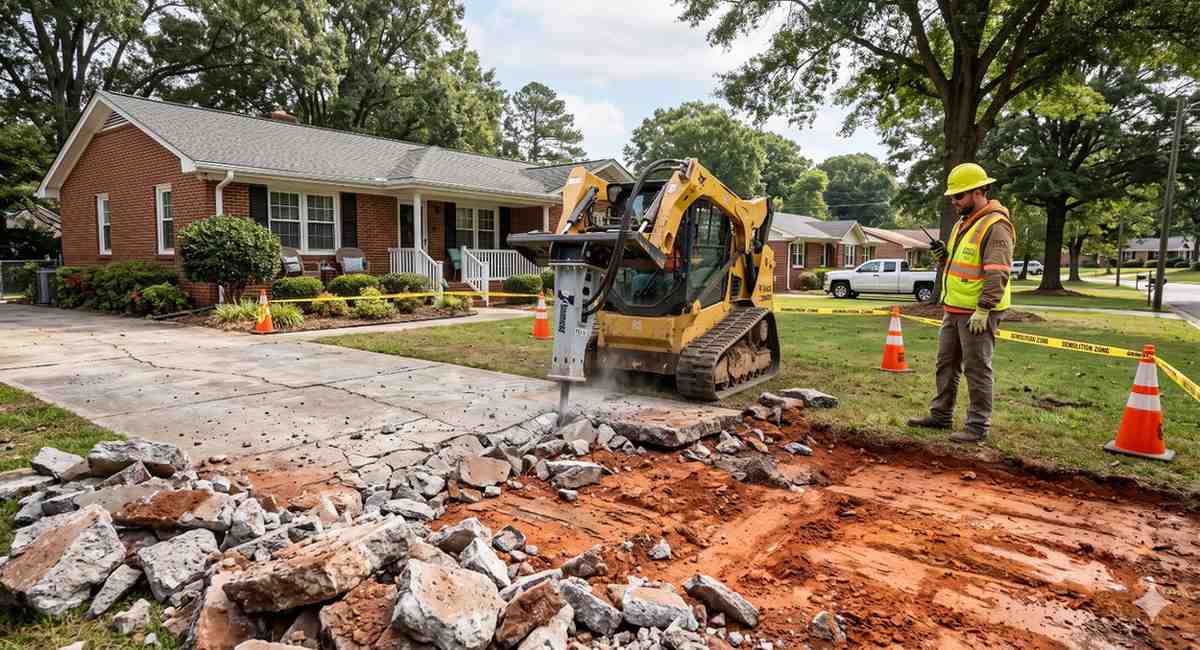
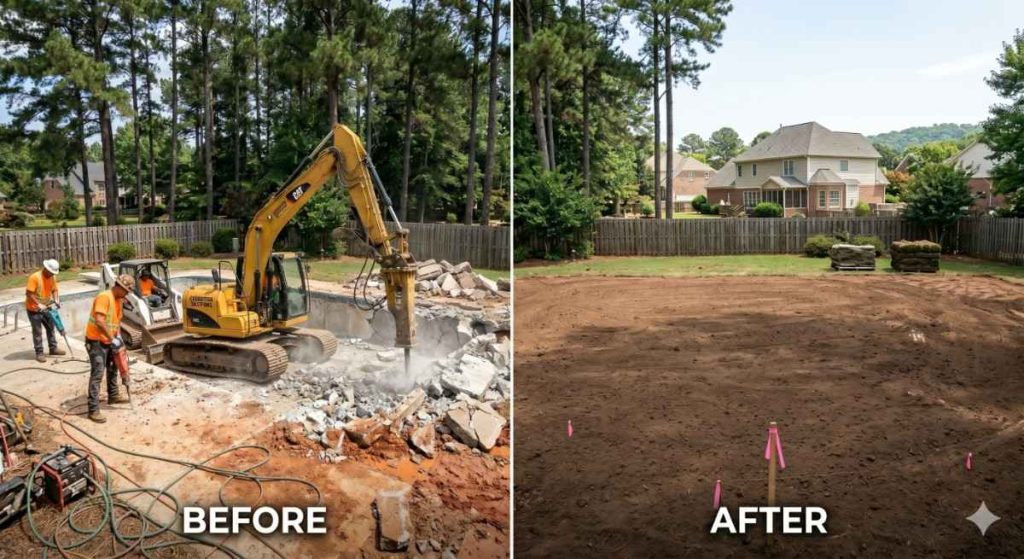
For partial removal, the crew breaks down the upper walls, punches drainage holes in the floor, and then begins filling. For full removal, the entire shell gets demolished — usually with an excavator-mounted hydraulic breaker — and the debris is loaded into dump trucks or roll-off containers. Rebar is cut and separated for metal recycling.
This is where equipment matters. Carolina Demo & Removal uses appropriately sized hydraulic excavators, along with concrete saws and jackhammers, for precision work near foundations or utility lines. Dust suppression systems keep airborne particles under control throughout the process.
Backfill and Compaction
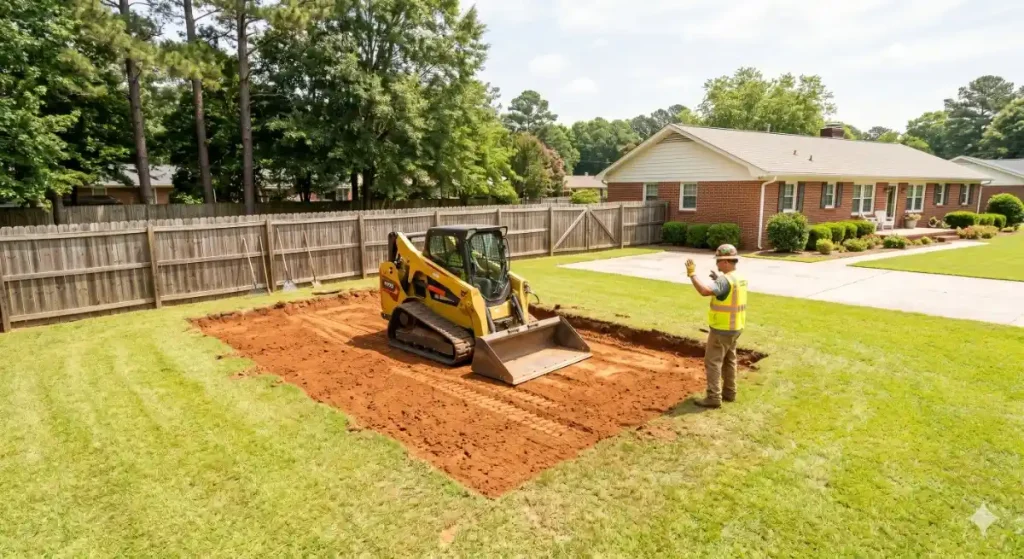
The cavity is filled in lifts — typically 12 to 18 inches at a time — with each layer compacted before the next is added. Proper compaction is critical. Poorly compacted fill will settle unevenly over months and years, leaving you with a sunken spot in your yard. This is one of the main reasons to hire an experienced contractor rather than attempting a DIY fill.
Final Grading and Cleanup
Once the fill reaches grade level, the area is graded smoothly and sloped slightly away from the house to ensure proper drainage. All debris is removed from the property, the driveway is swept clean, and the site is left ready for sod, seed, landscaping, or whatever comes next.
If you’re planning to landscape or build on the area, land grading services can fine-tune the surface to match your plans.
Do You Need a Permit to Remove a Pool in NC
Short answer: almost certainly yes.
In North Carolina, most counties and cities require a demolition permit for pool removal. The permitting process is typically straightforward — you submit an application describing the scope of work, pay a fee, and schedule any required inspections (usually a final inspection after backfill and compaction). Some jurisdictions also require you to show proof that utilities have been disconnected.
A licensed demolition contractor handles permitting as part of the job. Carolina Demo & Removal pulls permits, coordinates utility disconnections, and manages inspections on every project so you don’t have to chase down paperwork or schedule appointments with building departments.
One thing to check on your own: if your property is in an HOA, review your covenants. Some HOAs require approval before removing a pool, and a few even prohibit it.
What Happens to Your Yard After Pool Removal
Most homeowners want to know what the finished product will look like — and how long it will take for their yard to feel normal again.
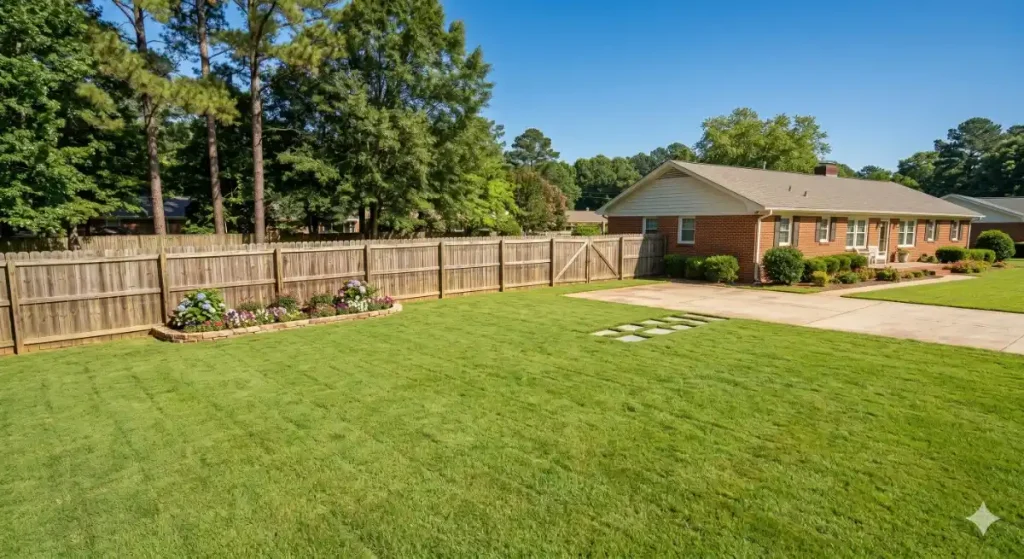
Immediately after removal, the filled area will be bare dirt graded to the same level as the surrounding yard. If the fill was properly compacted, settling should be minimal—typically an inch or two over the first six months. Some contractors recommend waiting 60 to 90 days before planting sod to allow for initial settling, though seeding with grass can happen sooner.
Common uses for the reclaimed space include a new lawn area for kids and pets, expanded patio or deck space (with full removal), a garden or outdoor kitchen, a fire pit area, or simply a more open backyard. In neighborhoods across Charlotte, Raleigh, Greenville, and Columbia, homeowners are increasingly replacing aging pools with low-maintenance outdoor living areas that add more daily value to their property.
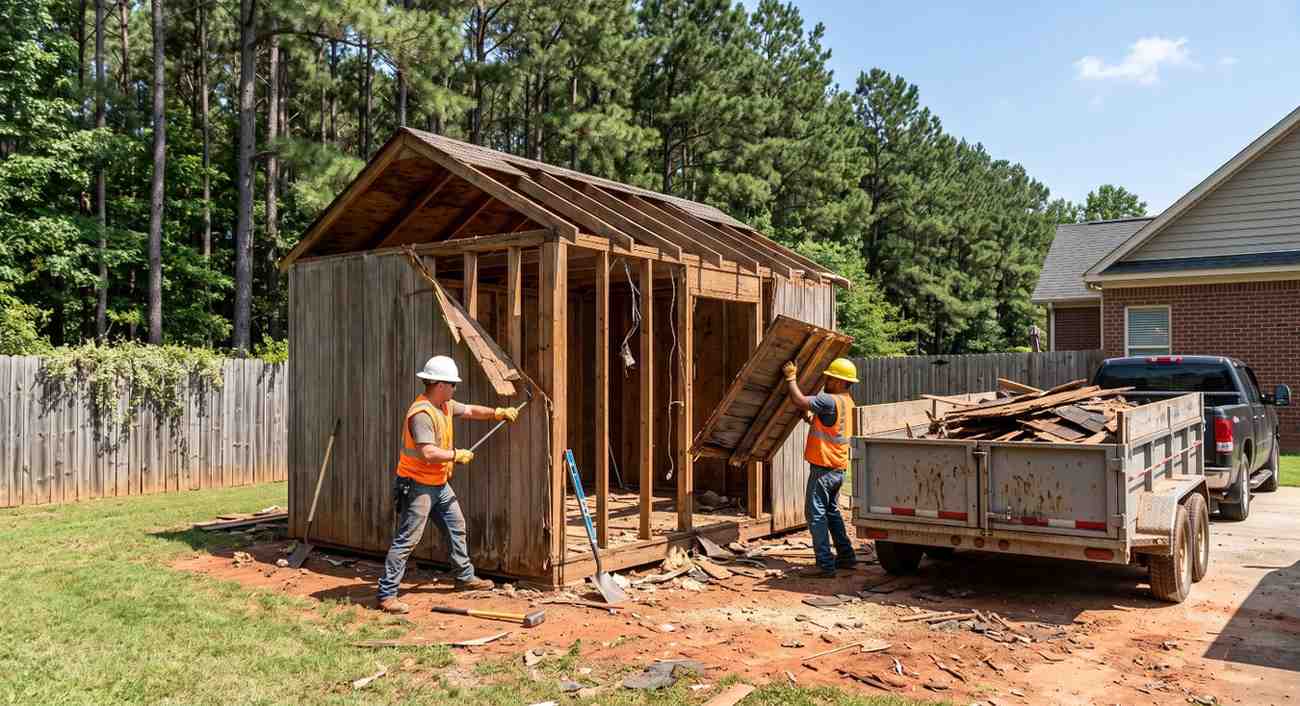
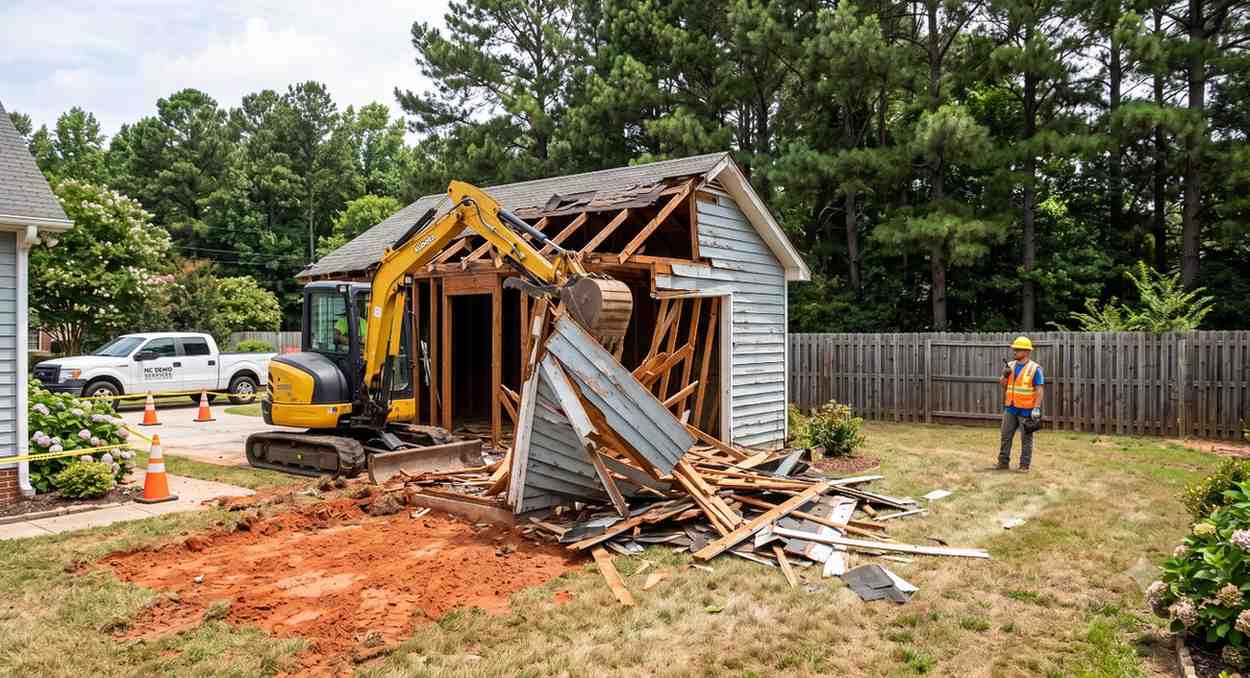
If your pool removal is part of a larger property renovation — say you’re also tearing down an old shed or removing a cracked concrete patio — bundling the work into a single project usually saves on mobilization and equipment costs.
Key Takeaways Before You Start a Pool Removal Project
- Decide between partial and full removal based on your future plans for the space — partial is cheaper but limits what you can build there.
- Get at least two to three on-site estimates. Pool removal costs depend heavily on size, construction material, depth, and site access — no two projects are identical.
- Confirm permit requirements with your local building department or let your contractor handle it as part of the scope.
- Ask your contractor about their backfill and compaction process. Skimping on compaction leads to settling, drainage issues, and uneven ground down the road.
- Check your HOA covenants before committing. Some associations require advance approval for pool removal.
- Plan for 60 to 90 days of settling before laying sod over a filled pool area.
- Bundle pool removal with other demolition work (old shed, cracked driveway, retaining wall) to save on mobilization costs.
- Choose a contractor who recycles concrete and metal rather than sending everything to a landfill.
Frequently Asked Questions about Pool Removal in NC
Q: How long does pool removal take?
A: Partial removal typically takes two to three days. Full removal takes 4 to 7 days, depending on pool size, depth, and site access. Add a day or two for permit processing if the contractor hasn’t started that ahead of time.
Q: Do I need to drain the pool before the crew arrives?
A: No — your contractor handles draining as part of the project. Pool water must be discharged in compliance with local stormwater regulations, so it’s best to let the professionals manage it.
Q: Will pool removal damage my yard or landscaping?
A: Some disruption is inevitable — heavy equipment needs a path in and out, and the area around the pool will be disturbed. A good contractor protects the surrounding landscaping as much as possible and restores the immediate work area upon completion.
Q: Can I fill in the pool myself to save money?
A: Technically yes, but it’s risky. Improper compaction is the number one cause of settling and drainage problems after pool removal. Professional crews compact fill in measured lifts using vibratory equipment — this isn’t something a rented skid steer and a few loads of dirt can replicate reliably.
Q: Does removing a pool increase or decrease property value?
A: It depends on the market and the pool’s condition. An unused, deteriorating pool is a liability that many buyers don’t want. According to the U.S. Consumer Product Safety Commission, pools are also a leading cause of accidental drowning for young children, which makes them a concern for families. In many neighborhoods across the Carolinas, a clean, open backyard is more appealing to buyers than an aging pool that needs work.
Q: What happens to the concrete and debris?
A: Reputable contractors recycle as much material as possible. Concrete and rebar get processed through concrete crushing and recycling operations and turned into reusable aggregate. Metal is sent to scrap recyclers. Non-recyclable material goes to licensed disposal facilities.
Ready to Remove Your Pool? Here’s the Next Step
If that old pool has been sitting unused in your backyard long enough, removing it is simpler than most homeowners expect — especially with the right contractor handling permits, demolition, backfill, and grading from start to finish. Carolina Demo & Removal has been handling pool removal and residential demolition projects across North Carolina since 2010. Call (888) 643-4199 for a free on-site estimate, or request a quote online. We’ll walk your property, explain your options, and give you a clear price before any work begins.