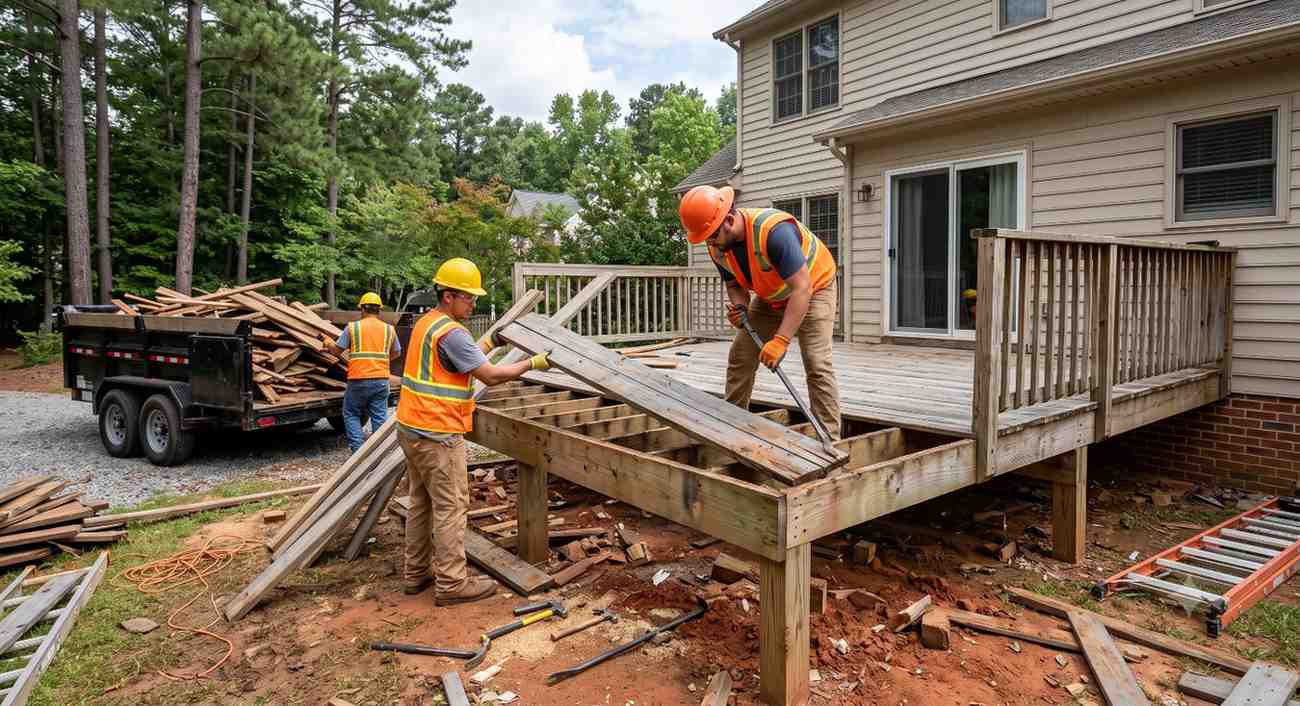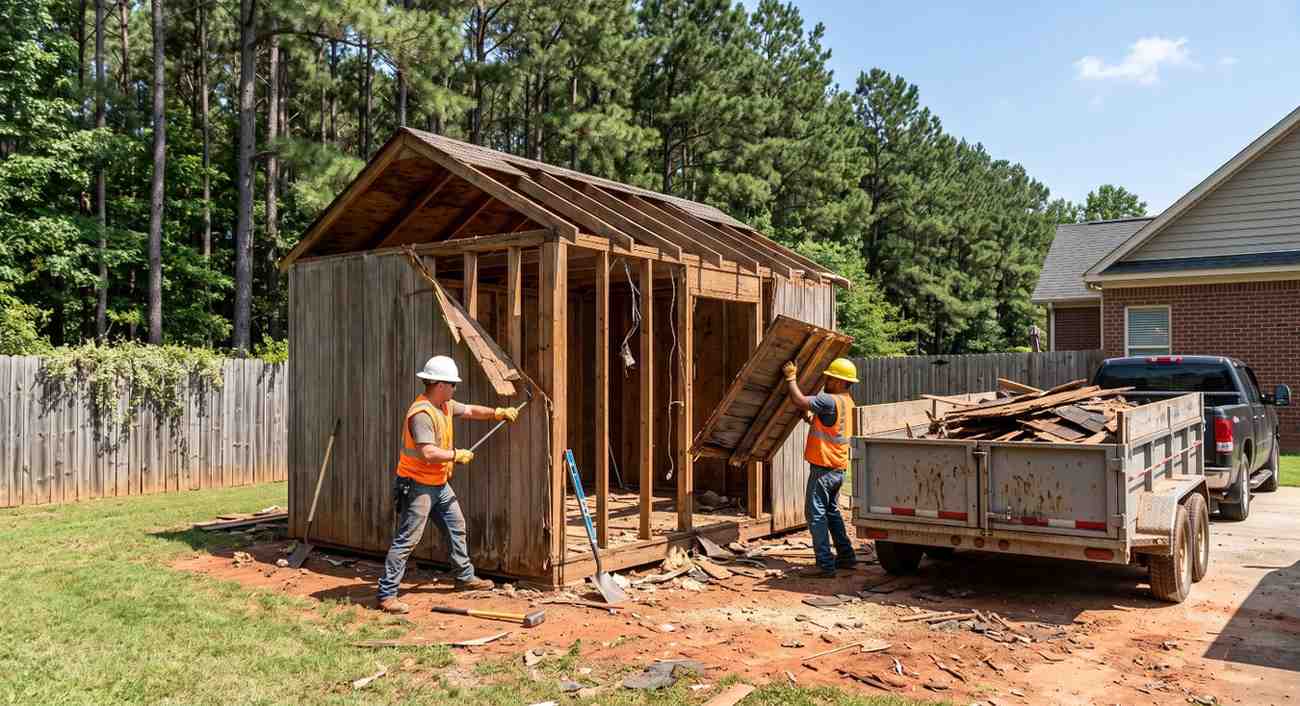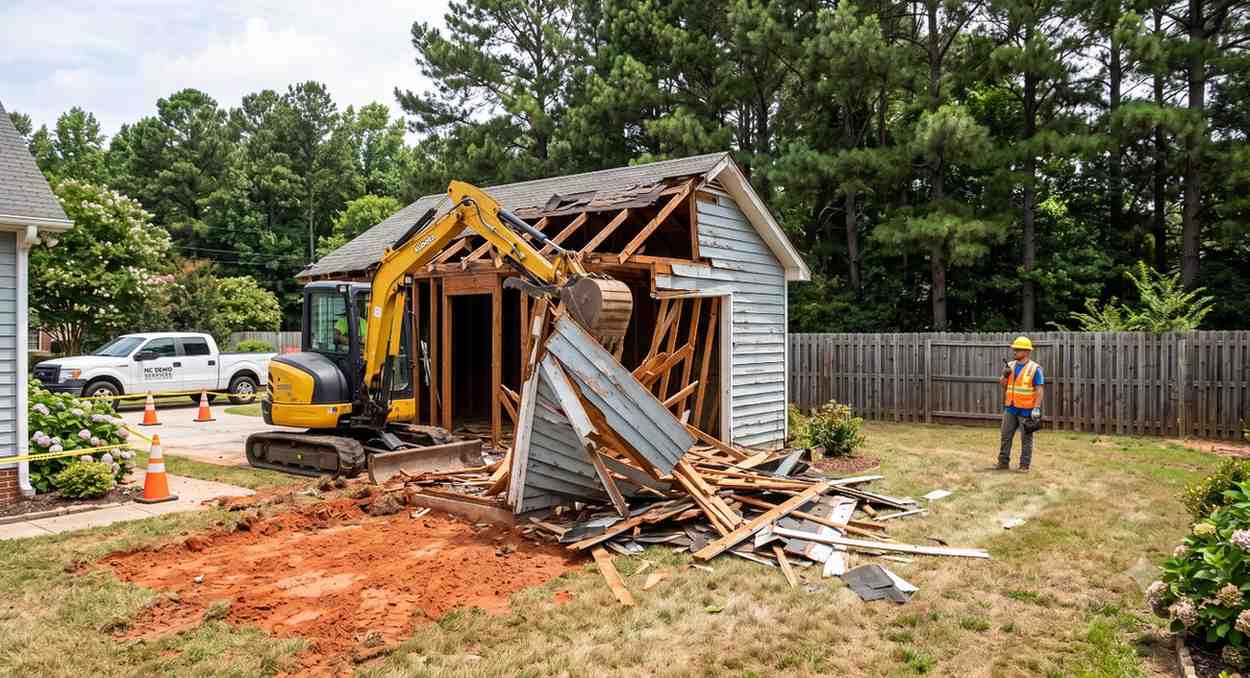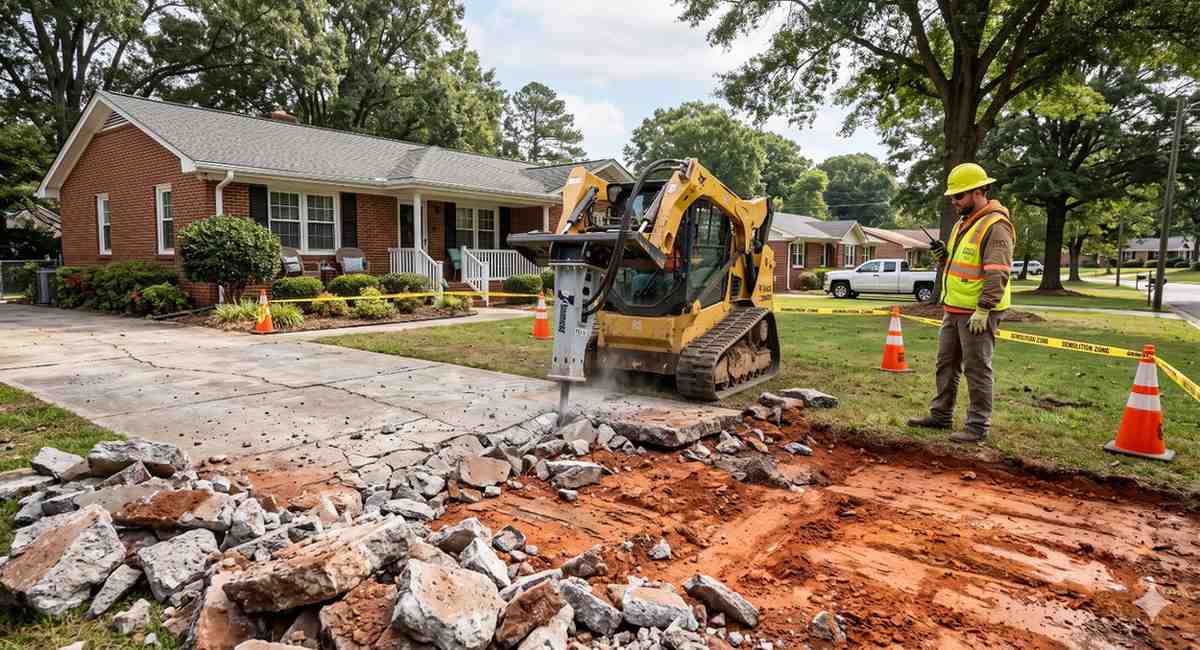
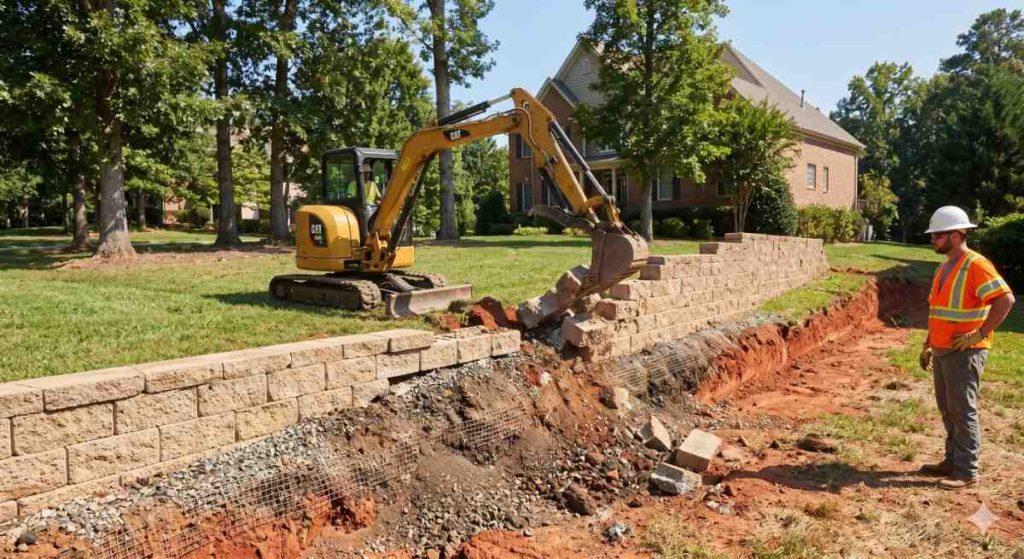
Retaining wall removal in North Carolina involves more than tearing down the wall — because the wall holds back a slope, the soil behind it must be managed to prevent erosion or collapse. Cost depends on the wall’s material, size, height, and what happens to the retained soil afterward. Most residential retaining wall removals take one to three days, and removal may require a permit for taller or structural walls.
A retaining wall isn’t like a fence or a shed. It’s a structural element doing a real job — holding back tons of soil that would otherwise slide, slump, or wash downhill.
That’s what makes retaining wall removal different from almost any other residential demolition. You can’t just knock it down and haul it away, because the moment the wall is gone, the soil it was holding has nowhere to go but down.
This guide covers the things that actually matter before you remove a retaining wall in North Carolina — the different wall types, the drainage and soil-stability issues, cost factors, and what you’ll need to do with the slope once the wall is out.
Why Retaining Wall Removal Is More Complicated Than It Looks
The wall itself is the easy part. What’s behind it is the challenge.
A retaining wall holds back a slope. When you remove it, that soil is suddenly unsupported and will move — sometimes slowly through erosion, sometimes quickly in a collapse.
This is the single most important thing to understand before removing any retaining wall. The project isn’t “demolish the wall,” it’s “manage the slope that the wall was holding.”
The Three Possible Approaches
Full removal with re-sloping. The wall comes out completely, and the retained soil is regraded into a stable, natural slope that doesn’t need a wall to hold it. This works when you have room for the slope to “lay back” at a stable angle.
Full removal with replacement. The old wall comes out, and a new wall goes in — usually because the original failed, used outdated materials, or no longer matches the property’s needs. The slope stays where it is, supported by the new structure.
Partial removal. Only a section of the wall is removed, often to create an opening for a path, driveway, or drainage feature. The remaining wall sections need to be properly terminated so they don’t fail at the new edges.
Which approach is right depends on the height of the slope, how much room you have, your local soil conditions, and what you plan to do with the space.
Types of Retaining Walls and How They Come Out
The material and construction method determine how the wall is removed and what equipment is needed.
Segmental Concrete Block Walls
These are the interlocking concrete blocks (brands like Allan Block, Versa-Lok, Keystone) common in newer North Carolina subdivisions. They stack without mortar and are held together by their weight, geometry, and sometimes geogrid fabric anchored back into the soil.
Removal is relatively straightforward — the blocks are unstacked from the top down, often by hand for small walls or with an excavator for larger ones. If a geogrid is used, it extends several feet back into the retained soil and gets excavated along with the wall.
Poured Concrete Walls
Solid poured concrete retaining walls, often reinforced with rebar, are the most labor-intensive to remove. They require a hydraulic breaker or excavator-mounted hammer to break apart.
The concrete is heavy, and the rebar has to be cut as the wall comes down. This is similar to other concrete removal work and produces debris that can be recycled into aggregate.
Timber Walls
Older NC properties often have retaining walls built from pressure-treated landscape timbers or railroad ties. These deteriorate over time and are a common removal candidate.
Timber walls come apart with a chainsaw, reciprocating saw, and pry bar. The catch: older railroad ties are soaked in creosote, and landscape timbers may contain CCA. Both require disposal at facilities that accept treated wood — they can’t be burned or chipped.
Stone and Boulder Walls
Natural stone and large boulder walls are removed with an excavator. Individual stones and boulders may be heavy enough to require the machine to lift them out one at a time.
Salvaged stone and boulders often have resale or reuse value for landscaping, so they may be set aside rather than hauled off.
Brick and Mortared Walls
Mortared brick or stone walls break apart with jackhammers and hand tools. The mortar makes them more monolithic than dry-stacked walls, so they come down in chunks rather than individual units.
The Drainage Problem Behind Every Retaining Wall
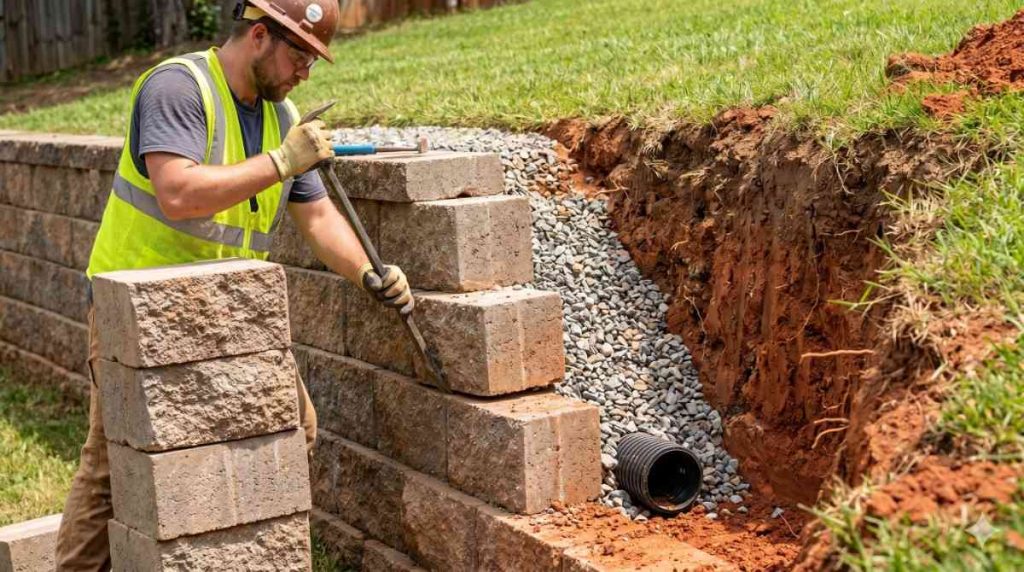
A properly built retaining wall has a drainage system behind it — usually a layer of gravel and a perforated pipe (a “French drain”) that carries water away from the wall. This matters enormously during removal.
When you remove the wall, you’re also disturbing that drainage system. If water was being channeled away by the wall’s drainage, that water now needs somewhere else to go.
Ignore this, and you can end up with a soggy slope, a wet basement, or water pooling where it never did before. A good demolition contractor accounts for drainage as part of the removal plan, not as an afterthought.
This is especially important on North Carolina’s red clay soils. Clay holds water and drains slowly, which puts extra pressure on slopes once the supporting wall is gone.
What Happens to the Slope After the Wall Is Gone
This is the part most homeowners don’t think about until the wall is already down.
Re-Grading to a Stable Slope
If you’re removing the wall permanently, the retained soil has to be regraded to an angle where it’s stable on its own. For most soils, that’s a slope no steeper than about 3:1 (three feet horizontal for every one foot vertical), though clay-heavy NC soils sometimes need a gentler angle.
This requires room. A 4-foot-tall wall holding back a steep slope might need 12 or more feet of horizontal space to lay the slope back safely.
Land grading is the service that handles this — reshaping the soil so it drains properly and stays put without a wall.
Erosion Control
Bare, freshly graded soil erodes fast, especially on a slope and especially in a North Carolina thunderstorm. The new slope needs to be stabilized quickly with grass seed, sod, erosion control matting, or ground-cover plantings.
Without erosion control, the first heavy rain can wash your newly graded slope into your neighbor’s yard or the street.
Replacement Walls
If you’re replacing the wall, the slope stays supported. But the transition between removing the old wall and building the new one needs to be timed carefully so the soil isn’t left exposed and unsupported for long.
What Drives the Cost of Retaining Wall Removal
Retaining wall removal pricing in North Carolina depends on several factors beyond just the wall’s size.
Wall Material and Construction
Dry-stacked block and timber walls are the least expensive to remove. Poured concrete with rebar is the most labor-intensive and costly.
Mortared stone and brick fall in between. The harder the wall is to break apart, the higher the removal costs.
Wall Height and Length
A low 2-foot garden wall is a quick job. A 6-foot structural wall holding back a significant slope is a major undertaking with serious soil-management requirements.
Height matters more than length because taller walls hold back more soil and create bigger stability challenges when removed.
What Happens to the Soil
This is often the biggest cost variable. Simply removing a low decorative wall is cheap. Removing a tall structural wall and regrading the slope, installing erosion control, and managing drainage is a much larger project. The soil work can cost more than the wall demolition itself.
Site Access
Sloped properties are harder to work on than flat ones. If the wall is in a backyard with limited equipment access, the crew may need smaller machines or more manual labor.
Debris Disposal
Concrete and block can be recycled into aggregate through concrete crushing and recycling. Treated timber requires special disposal.
Salvageable stone and boulders may offset costs if they’re set aside for reuse rather than hauled away.
Call (888) 643-4199 for a free on-site assessment of your retaining wall removal project in North Carolina.
Why This Usually Isn’t a DIY Project
Small decorative garden walls under 2 feet are sometimes a reasonable DIY job. Anything taller or structural is a different story.
Here’s the risk: a retaining wall holding back a real slope can fail suddenly during removal if the soil isn’t managed properly. That’s not just a property-damage problem — it’s a safety hazard.
The Occupational Safety and Health Administration outlines specific hazards around excavation and soil collapse, which are exactly the risks that come with retaining wall removal.
There’s also the question of your neighbors. Many retaining walls sit on or near property lines, and removing one can affect the soil stability on the adjacent property.
Getting this wrong can mean erosion onto a neighbor’s land, a collapsed slope, a damaged foundation, or a drainage problem that shows up months later. A professional crew assesses all of this before the first block comes off.
Key Takeaways for Retaining Wall Removal in North Carolina
- The wall is the easy part — managing the soil it holds back is the real project. Never remove a structural retaining wall without a plan for the slope.
- Identify your wall type before getting estimates. Block, poured concrete, timber, stone, and brick walls all come out differently and cost differently.
- Account for drainage. Removing a wall disturbs the drainage system behind it, and that water needs somewhere to go.
- Plan for the slope. Permanent removal usually requires regrading the soil to a stable angle, which needs horizontal space and erosion control.
- North Carolina’s red clay soils hold water and drain slowly, which increases slope-stability risks once a supporting wall is removed.
- Check whether a permit is required. Taller and structural retaining walls often need a permit for removal or replacement in NC jurisdictions.
- Consider your neighbors. Walls near property lines affect adjacent soil stability — coordinate and communicate before removal.
- Bundle the soil work. Retaining wall removal almost always pairs with land grading and erosion control — plan them together.
Frequently Asked Questions
Q: How do I know if my retaining wall needs to be removed?
A: Common signs include leaning or bulging, cracks running through the wall, blocks or stones separating, soil or water seeping through, and tilting at the top. A wall that’s actively failing is a safety risk and should be assessed by a professional promptly.
Q: How long does retaining wall removal take?
A: Most residential retaining wall removals take one to three days, depending on the wall’s size, material, and whether the slope needs to be regraded afterward. Tall structural walls with significant soil management take longer than low decorative walls.
Q: Do I need a permit to remove a retaining wall in North Carolina?
A: It depends on the wall’s height and location. Many NC jurisdictions require permits for walls over a certain height (often 4 feet) or for structural walls. Walls near property lines or public right-of-ways may also require permits. Your contractor can check local requirements.
Q: What happens to the soil the wall was holding back?
A: It has to be managed — either regraded into a stable slope, supported by a replacement wall, or stabilized with erosion control. This is the most important part of the project. Leaving disturbed soil unsupported leads to erosion or collapse.
Q: Can I remove a retaining wall myself?
A: Small decorative garden walls under 2 feet are sometimes a reasonable DIY project. Taller or structural walls should be handled by professionals because of the soil-collapse risk, the drainage complexity, and the potential to affect neighboring property.
Q: What can be recycled from a removed retaining wall?
A: Concrete and block can be crushed into reusable aggregate. Natural stone and boulders often have reuse value for landscaping. Treated timber and railroad ties, however, require disposal at facilities that accept treated wood — they can’t be recycled or burned.
Planning a Retaining Wall Removal? Start With an Assessment
Removing a retaining wall is one of those projects where what you can’t see — the soil, the drainage, the slope behind the wall — matters more than what you can. Getting it right means assessing all of it before the demolition starts.
Carolina Demo & Removal has been handling retaining wall removal, concrete demolition, and land grading projects across North Carolina since 2010. Call (888) 643-4199 for a free on-site assessment, or request a quote online.