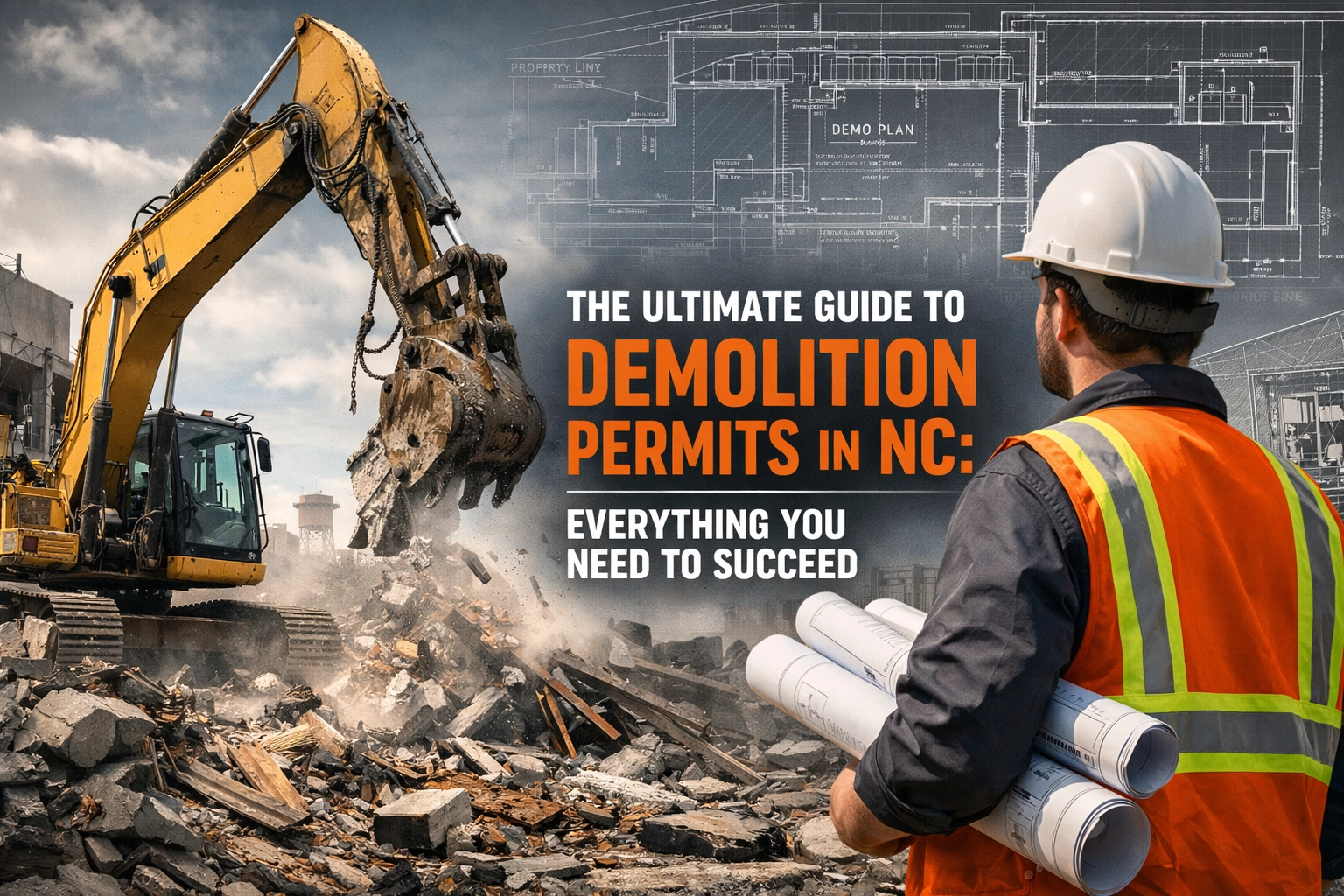
Key Takeaways
- Every demolition project in North Carolina requires contacting your local building department first; permit requirements vary by county and municipality
- Asbestos inspections are mandatory for structures built before 1980, and certified professionals must handle any removal before demolition begins
- Required documentation typically includes property deed, site plan, demolition plan, contractor licenses, and utility disconnection confirmations
- Permit fees range from $50-$100 for residential projects, but total regulatory costs can reach $500-$3,000 when including inspections and compliance
- Demolishing without proper permits can result in stop-work orders, fines up to $10,000, and significant legal liability
- Historic properties require additional Certificate of Appropriateness approval before a permit application
- Your approved permit must be visibly displayed at the job site throughout the entire demolition process
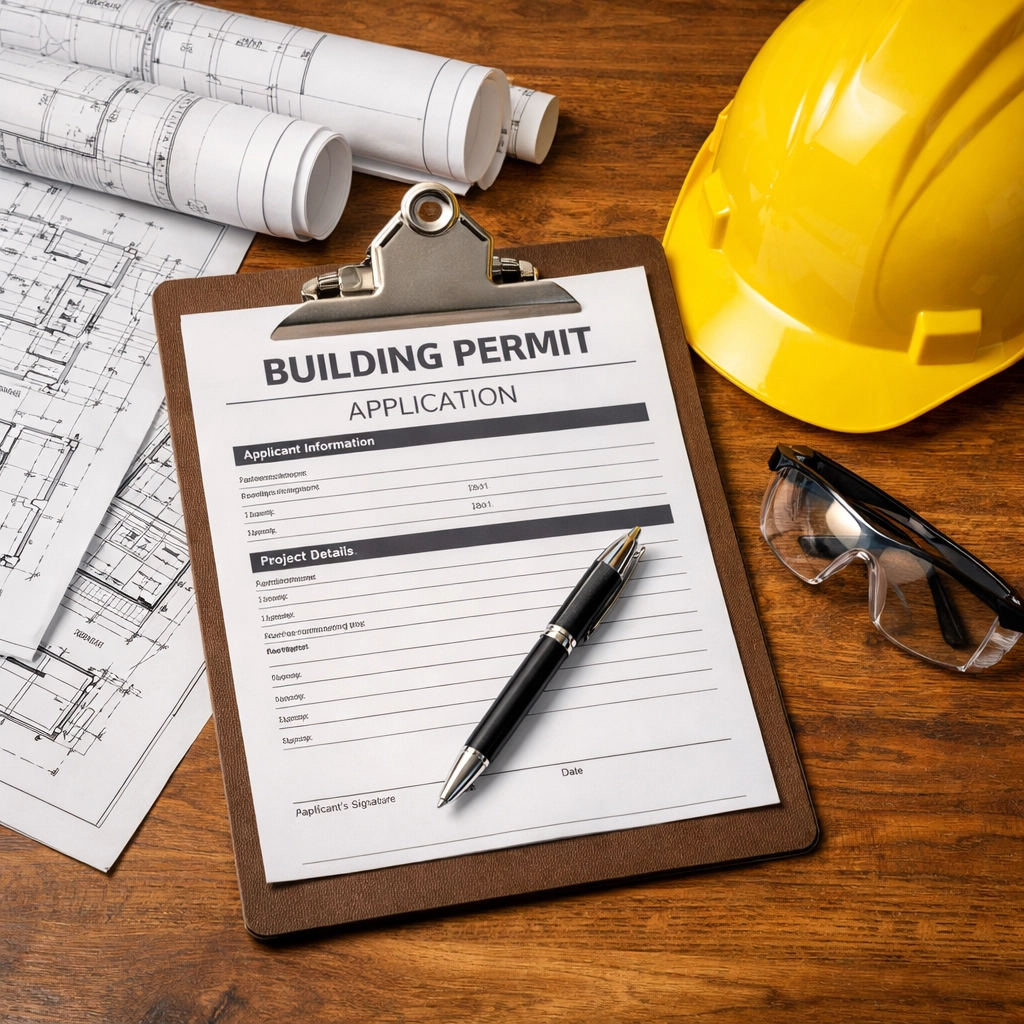
Understanding the Demolition Permit NC Process
Planning a demolition project in North Carolina requires more than heavy equipment and a clear schedule. Whether you’re tackling a small shed removal or a major building demolition, getting the proper demolition permit in NC is your first critical step.
This guide walks you through the process so your project stays safe, efficient, compliant, and on schedule.
The demolition permit NC system exists to protect property owners, neighbors, and the environment. These rules cover structural safety, utility shutoffs, hazardous materials, and local zoning.
Skipping permits isn’t just risky—it’s illegal. And it can cost far more than doing it right the first time.
Step 1: Contact Your Local Building Department
North Carolina uses a decentralized permitting system. That means each county and municipality runs its own building inspection office with its own rules.
What applies in Charlotte can differ from requirements in smaller or rural counties. Before you schedule contractors or lock in timelines, call your local building department.
Ask for a written checklist of required documents, current permit fees, and estimated processing times. That single step can save you days (or weeks) later.
Most offices provide a packet outlining demolition permit NC requirements for your specific jurisdiction. Ask about recent code updates, seasonal backlogs, and any special zoning overlays on your property.
This quick pre-check prevents costly mistakes and keeps your project compliant from day one.
Step 2: Gather Required Documentation for Your Demolition Permit NC
Assembling complete documentation speeds up approvals and shows the inspector’s office you’re organized. Most North Carolina municipalities ask for the items below.
Step 2A: Proof You Can Demo the Property
Bring documentation that proves you’re authorized to remove the structure.
- Property deed or legal proof of ownership verifying your authority to demolish structures
Step 2B: Plans That Show Scope + Site Conditions
These documents tell the city/county exactly what’s coming down and how you’ll do it.
- Detailed site plan or professional survey clearly identifying all structures marked for removal and disturbed areas
- Comprehensive demolition plan describing the project scope, methodology, and timeline
Step 2C: Contractor + Insurance Information
Most jurisdictions want to see you’re using qualified, properly covered professionals.
- Licensed contractor information, including certifications and insurance documentation
Step 2D: Utility Disconnect Confirmations
Utilities must be safely terminated before equipment ever touches the structure.
- Utility disconnection confirmations for electric, gas, water, and sewer services
Step 2E: Environmental / Health Documentation
Older buildings often trigger extra requirements for public health and compliance.
- Asbestos inspection report for any structure constructed before 1980
Properties with private wells or septic systems may need additional sign-off from your county environmental services department.
If your property is in a Historic District (or has a landmark designation), you’ll typically need a Certificate of Appropriateness from your local historic development commission before submitting your demolition permit NC application.
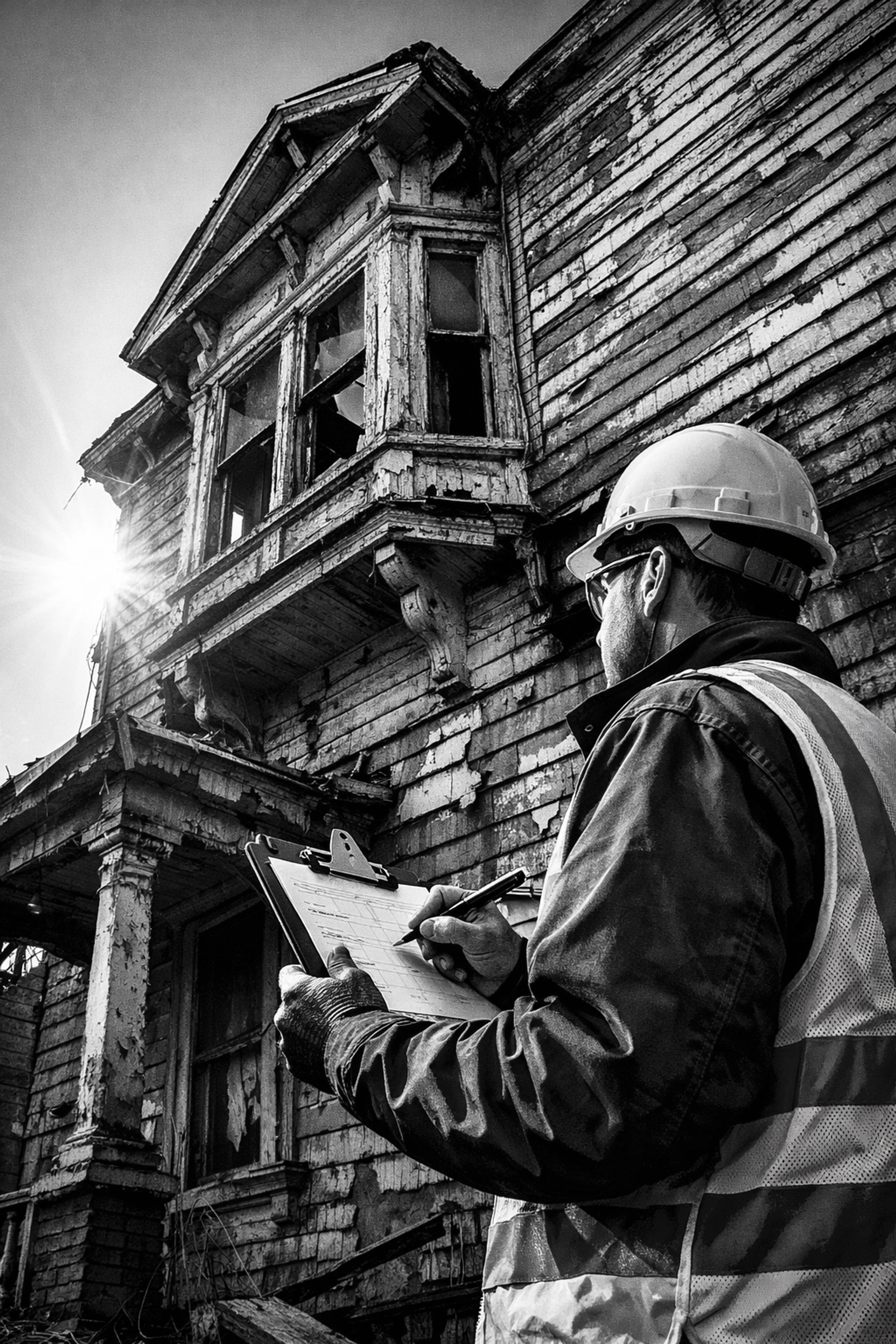
Step 3: Navigate Asbestos Inspection Requirements
North Carolina law requires asbestos inspections for many older structures. This is a public-health protection, and it’s not something you can “work around.”
The North Carolina Department of Health and Human Services provides official guidance on asbestos testing and removal requirements.
Step 3A: When an Asbestos Inspection Is Required
If a structure was built before 1980, plan on an asbestos inspection as part of your demolition permit NC workflow. Some jurisdictions may also require it based on building type and scope.
If asbestos-containing materials are found, only certified professionals can remove them before demolition begins.
Step 3B: Notification Thresholds + Waiting Period
For projects involving 160 square feet, 260 linear feet, or 35 cubic feet of regulated asbestos-containing material, you must submit an asbestos removal permit at least 10 working days before your start date.
That waiting period allows proper review and helps ensure federal and state compliance.
Step 3C: How Pros Keep You Compliant
Professional demolition contractors typically coordinate asbestos testing and abatement as part of full project management. That removes guesswork, avoids delays, and keeps your project safe and compliant.
Understanding Demolition Permit NC Costs and Fees
Budget planning means understanding permit fees and the compliance costs tied to them. Residential demolition permits often run $50 to $100, while commercial permits can be higher based on size, risk, and scope.
Those base fees are usually only a slice of the total.
Total regulatory expenses commonly land in the $500 to $3,000+ range once you factor in asbestos inspections, environmental assessments, utility disconnects, and inspection fees.
Projects disturbing 12,000 square feet or more may require additional Mass Grading permits before demolition approval. In some jurisdictions (like Durham), projects over $40,000 may require a licensed General Contractor, which can add professional service fees.
Working with experienced demolition professionals creates cost transparency and reduces surprises. Reputable companies will quote permitting, testing, and compliance upfront so you can budget confidently.
Types of Demolition Projects and Permit Requirements
Different demo scopes come with different permit requirements and timelines. Knowing the category you’re in helps you avoid surprises and stay compliant.
Interior vs. Structural Demolition
Selective demolition (non-structural removal) often falls under different rules than full structural teardown.
Interior work like removing walls, fixtures, and finishes may be covered under renovation permits in some areas. Full structure removal typically requires a full demolition permit NC every time.
Specialized Demolition Methods
Projects involving core demolition or explosive demolition usually face additional scrutiny.
Expect specialized certifications, longer review windows, and tighter safety controls. These are the jobs where an experienced contractor can save you serious time by anticipating what inspectors will require.
Post-Demolition Requirements
Your demolition permit NC doesn’t end the moment the building hits the ground.
Post-demolition cleanup and site restoration often require final inspections for debris removal, grading, and environmental compliance before the permit can be closed out.
Step 4: Submit Your Application and Navigate Processing Times
Complete your permit application carefully, attach all required documentation, and submit payment. Double-check every field—missing or incorrect info often triggers rejection and restarts the timeline.
Many jurisdictions now offer online portals, which can speed things up and give you real-time status updates.
Processing times vary based on project complexity, local workload, and seasonal demand. Simple residential projects may be approved the same day in smaller counties.
Complex commercial demolitions in busier areas can take weeks (sometimes longer). Build buffer time into your schedule for requests, corrections, and follow-up documents.
Keep communication open with permitting officials during review. Quick responses show professionalism and often help approvals move faster.
Inspection Requirements and Permit Display
Once your demolition permit NC is approved, plan for inspections. These site visits confirm safety, compliance, and that your work matches the approved plan.
Typical inspections include a pre-demo walkthrough (utilities off, hazards addressed), progress checks during demolition, and a final inspection to confirm debris removal and site restoration.
Professional demolition contractors usually schedule and manage inspections as part of project management. That keeps your job moving and helps address inspector questions on the spot.
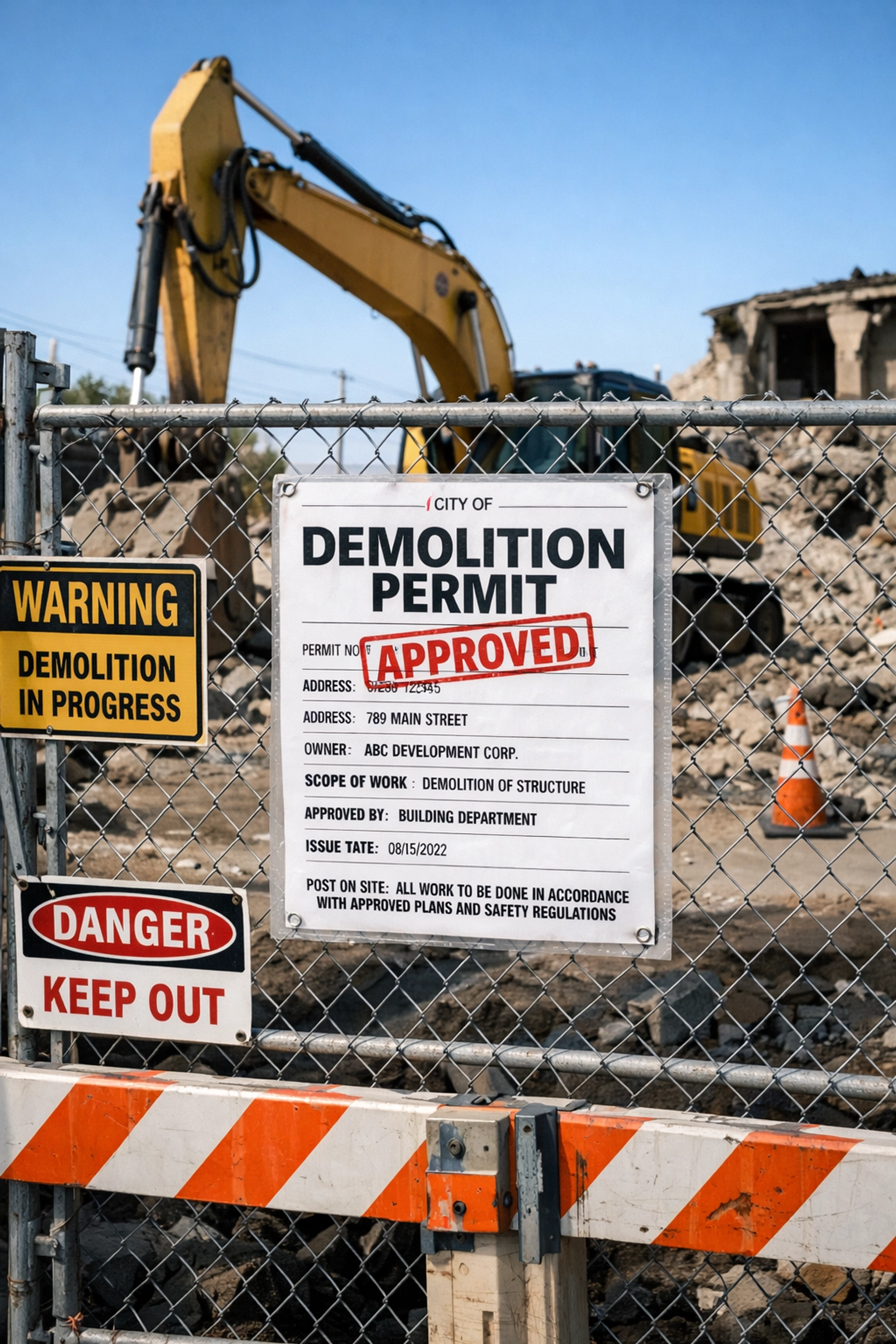
You must also post the approved demolition permit at the job site for the full duration of the project. It signals that the work is authorized and compliant.
Failing to display the permit can cause a stop-work order—even if the permit itself is valid.
The Serious Consequences of Proceeding Without a Demolition Permit NC
Skipping the permitting process to “save time” almost always costs more in the end. Demolishing without a required demolition permit in NC can trigger immediate stop-work orders that shut your entire site down.
It can also bring civil fines (often up to $10,000 per violation), and even criminal exposure when hazardous materials or public safety are involved.
You can also be personally liable for injuries or property damage tied to unpermitted work. And unpermitted demolition can show up in title searches and disclosures, making your property harder to sell.
Beyond the money, permit violations create long-term headaches. Title insurance can be denied, lenders may refuse financing, and buyers may walk when they discover unresolved compliance issues.
Doing it the compliant way protects your project, your timeline, and your peace of mind.
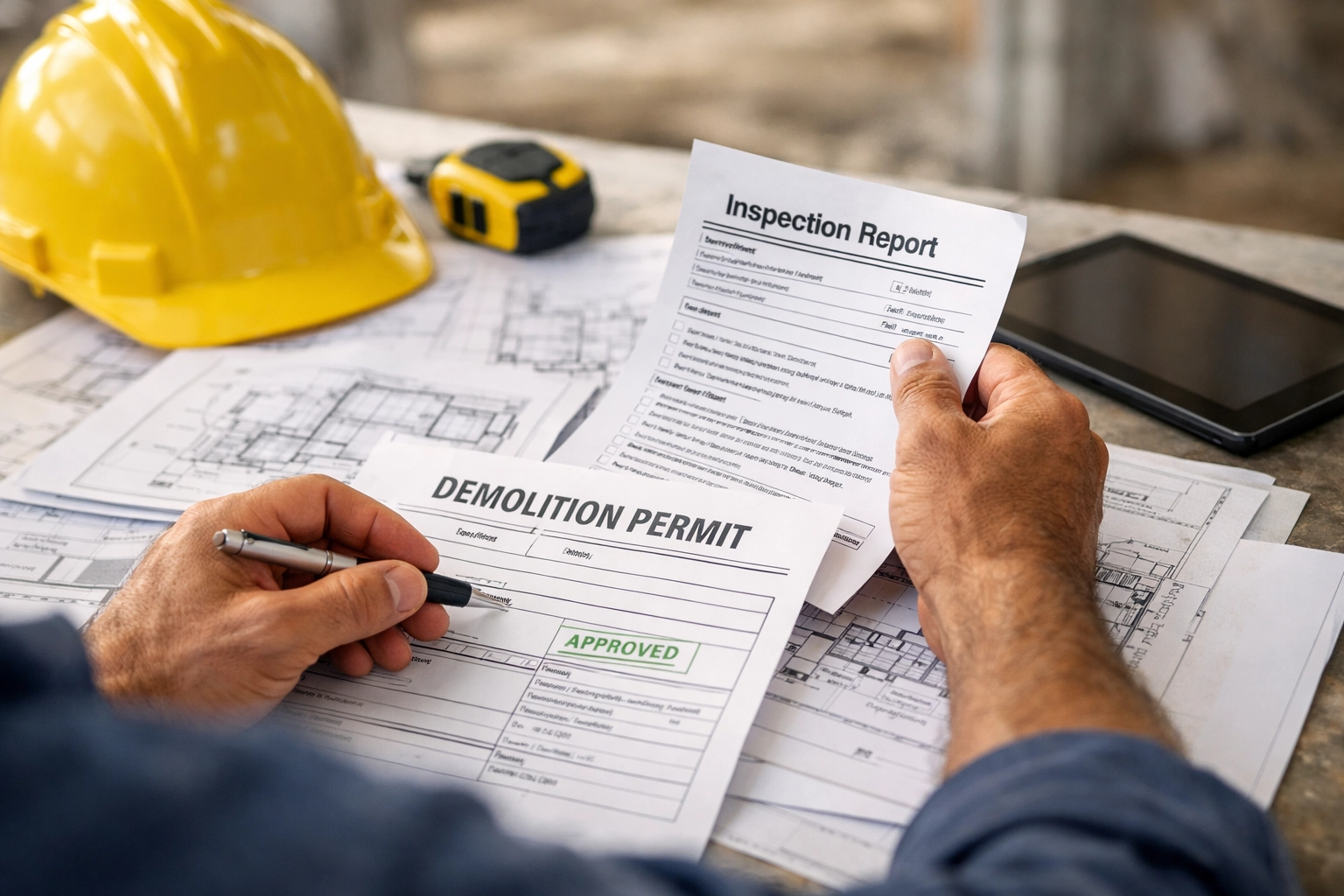
Working With Professional Demolition Contractors
Navigating the demolition permit NC process is much easier when you work with experienced, licensed demolition professionals. A good contractor understands local rules and already knows how the permitting office expects documents to be packaged.
Professional teams typically handle documentation prep, application submission, inspection scheduling, and compliance checks. That keeps your job efficient, safe, and legal—without you having to chase paperwork.
What to Look for in a Demolition Contractor
Before you hire anyone, verify:
- Current licensing
- Comprehensive insurance coverage
- Local experience and reputation
- Transparent pricing that includes permit and compliance costs
- Clear communication from start to finish
The right partner turns regulations into a predictable, step-by-step process. You stay focused on your property goals, while the technical details are handled correctly.
For North Carolina property owners, permitting is the foundation of a successful demo. Whether you’re removing slabs with concrete slab removal services or planning a full teardown, proper permitting protects your investment and keeps the site safe and compliant.
Have questions about your scope? Check our comprehensive FAQs for additional guidance.
Frequently Asked Questions About Demolition Permits in NC
Q: How long does it take to get a demolition permit in NC?
A: Processing times vary by jurisdiction and project complexity. Simple residential projects in smaller counties may receive approval within 1-3 business days, while complex commercial demolitions in urban areas can take 2-6 weeks. Contact your local building department for specific timeline estimates.
Q: Can I demolish a shed without a permit in North Carolina?
A: Most jurisdictions require permits even for small structure removal, though requirements vary by location and structure size. Always contact your local building department before demolishing any structure, regardless of size.
Q: What happens if I start demolition before getting a permit?
A: Starting work without proper permits results in immediate stop-work orders, fines up to $10,000, potential criminal charges, and difficulty selling your property. Always obtain permits before beginning any demolition work.
Q: Do I need an asbestos inspection for newer buildings?
A: North Carolina law requires asbestos inspections for structures built before 1980. Newer buildings generally don’t require asbestos testing unless specific materials or construction methods raise concerns.
Q: How much does a residential demolition permit cost in NC?
A: Base permit fees typically range from $50-$100 for residential projects, but total compliance costs including inspections, asbestos testing, and environmental assessments can reach $500-$3,000 or more depending on project specifics.
Q: Can I get a demolition permit as a homeowner, or do I need a contractor?
A: Most jurisdictions allow property owners to obtain permits for their own properties, though some cities require licensed contractors for projects exceeding certain values. Check with your local building department for specific requirements.
Q: What utilities must be disconnected before demolition?
A: All utilities, electric, gas, water, and sewer, must be properly disconnected by licensed professionals before demolition begins. You’ll need written confirmation of disconnections for your permit application.
Q: Do historic homes require special permits for demolition?
A: Yes. Properties in Historic Districts or carrying historic landmark designations require Certificate of Appropriateness approval from local historic commissions before standard demolition permits can be issued.
Q: How long is a demolition permit valid in North Carolina?
A: Permit validity periods vary by jurisdiction, typically ranging from 6 months to 1 year. Extensions may be available if projects face legitimate delays. Check with your local building department for specific timelines.
Q: What documentation do I need to apply for a demolition permit?
A: Required documents typically include property deed, site plan or survey, demolition plan, contractor license information, utility disconnection confirmations, and asbestos inspection reports for structures built before 1980.
Ready to Start Your Demolition Project?
Understanding demolition permit requirements represents your first step toward successful project completion. At Carolina Demo and Removal, we handle every aspect of the permitting process, from initial documentation through final inspections, ensuring your project proceeds smoothly and legally. Our experienced team navigates local regulations efficiently, saving you time and eliminating compliance headaches.
Contact us today for a free consultation and detailed project estimate. Let our expertise transform your demolition project from an overwhelming regulatory challenge to seamless execution. Your peace of mind is our priority.